
Are you familiar with the term Microwave Link? This is one of the new terms that has emerged and become part of our daily lives as technology develops.
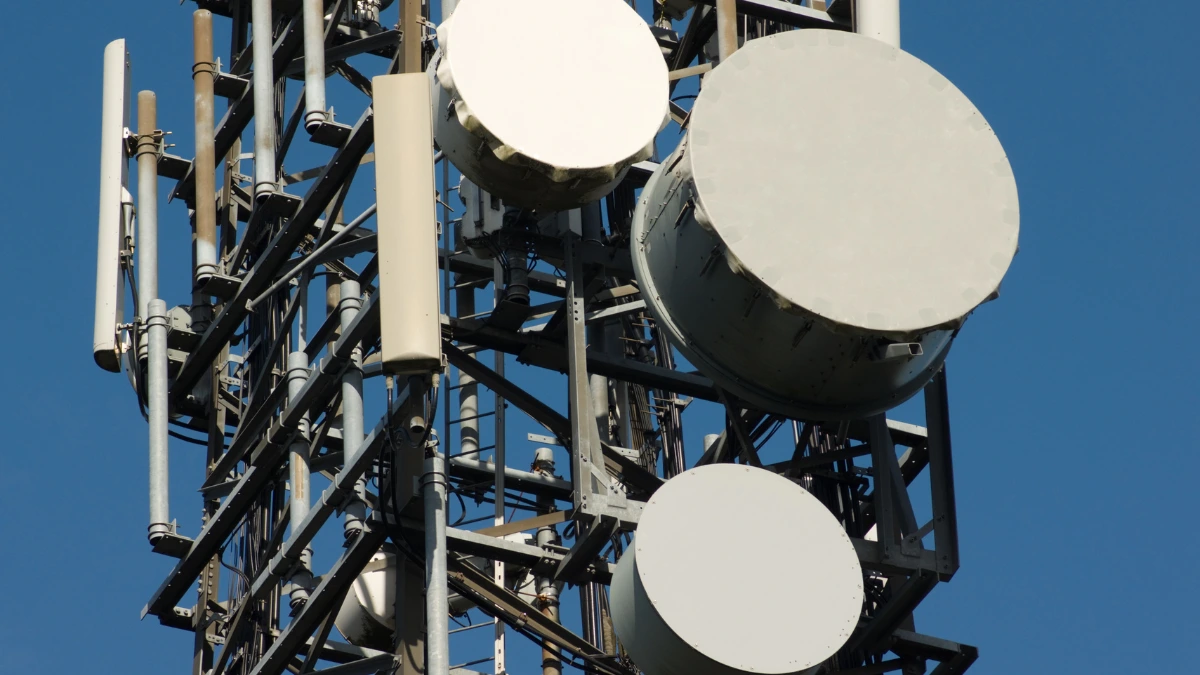
If we walk around and see a Base Transceiver Station (BTS) tower and there is something like a drum, it can be called a Microwave Link.
In this article, we will review more about Microwave Link, from its definition, workings, functions, and regulations in Indonesia.
What is a Microwave Link?
Simply put, a microwave link is a wireless communication system that uses microwaves to transmit information from one point to another.
Microwaves are electromagnetic waves with shorter wavelengths than radio waves, so they have higher frequencies. The frequencies used typically range from 3 GHz to 300 GHz.
This technology is commonly used in various communication applications, such as telecommunications, broadcast radio, and radar systems.
The main advantage of microwave links is their ability to transmit data at high speeds and large capacities. In addition, due to their wireless nature, installation and maintenance are easier than with wired systems.
Components
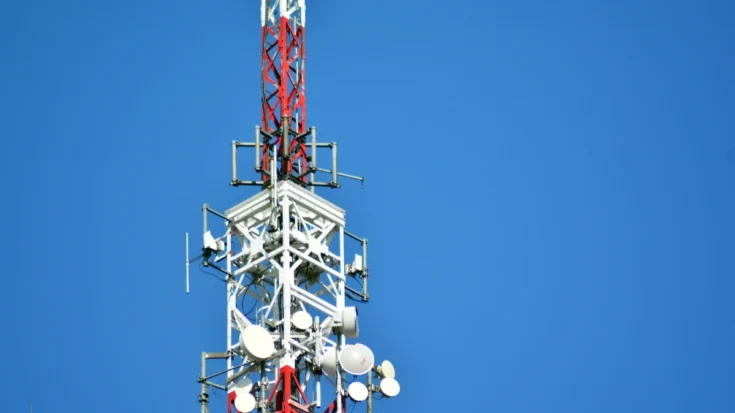
To understand how microwave links work, we need to discuss some of the main components involved in these systems:
Transmitter
A transmitter is a device that converts information (voice, video, data, etc.) into microwave signals. This process involves modulation, where information is encoded into the microwave signal by changing the amplitude, frequency, or phase of the signal.
Antenna
An antenna is a device that converts microwave signals into electromagnetic waves that are emitted into the air. Antennas also serve to receive electromagnetic waves reflected or received from other points in the system.
Receiver
A receiver is a device that converts the received microwave signal back into the original information. This process involves demodulation, where the microwave signal is decoded to retrieve the information contained in it.
How it Works
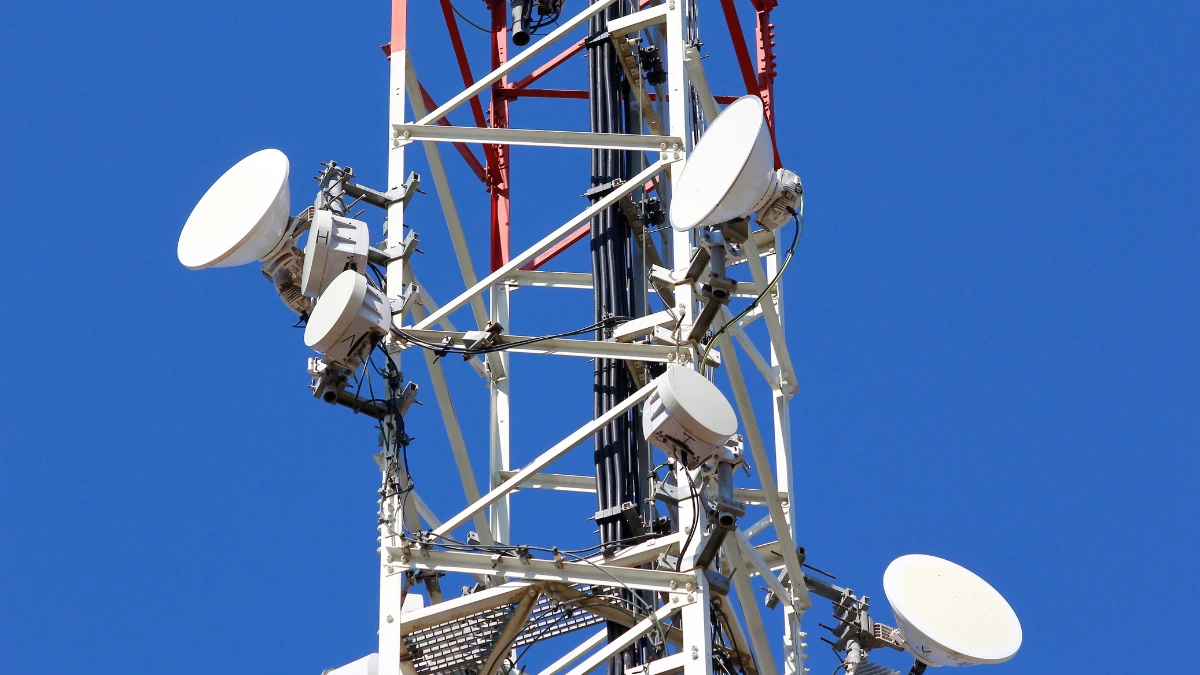
The way microwave links work is quite simple. A transmitter sends microwave signals encoded with information through an antenna. These waves are then received by an antenna at another point in the system, and further decoded by the receiver to retrieve the original information sent.
Along the way, the signal may experience attenuation or interference, so it is necessary to perform amplification and filtering processes to ensure the quality of the information received remains good.
The Function
The following are some of the main functions of microwave links in various applications:
Telecommunication
Microwave links are widely used in telecommunications systems to connect telephone, internet, and cable television networks. In this context, this system works as a link between the telecommunications center or cellular base station and the end user.
Remote connection
Microwave links can be used to provide internet connections or private networks in remote areas that are difficult to reach by cable infrastructure.
Radar
Radar is one of the main applications of microwaves. Radar systems use microwave links to send signals to targets and receive reflected signals to detect the target’s position, speed, and direction of movement.
Supervision
Surveillance systems that use cameras and sensors often utilize microwave links to transmit data from the monitoring point to a control center.
Broadcast radio
Radio stations use microwave links to send broadcast signals from studios to transmitters and antennas that broadcast the signals into the air.
Regulations in Indonesia

Microwave links transmit data using high-frequency radio waves, so their deployment is subject to national telecommunications laws. In this regard, their operation is strictly regulated by the Ministry of Communications and Digital Affairs (KOMDIGI) through the Directorate General of Digital Infrastructure (DJID).
Every microwave link device must meet the DJID Type Approval certification requirements. This certification is necessary to prevent frequency overlap and network interference. Devices undergo testing to ensure that frequency range, output power, bandwidth, and spurious emissions comply with established standards.
Operating uncertified equipment or using frequencies without a license will result in penalties. DJID may impose administrative sanctions, seize equipment, and shut down networks. Compliance with these regulations is necessary to ensure long-term operational stability and lawful distribution in the Indonesian telecommunications market.