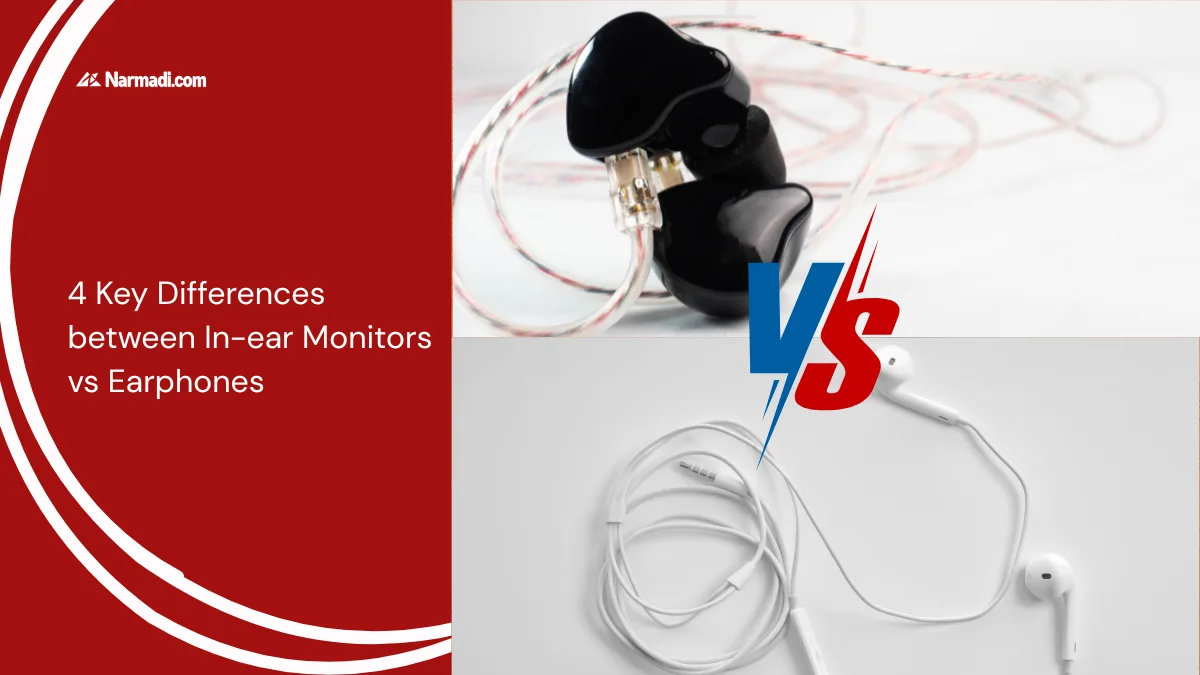

To the naked eye, in-ear monitors and earphones may look the same. You might not even realize the difference between in-ear monitors vs earphones.
This difference will be clearly felt when you listen to the two devices alternately. In-ear monitors vs earphones have very different audio quality.
Another obvious difference between in-ear monitors vs earphones is the design, purpose, and materials.
This article will inform you of the essential difference between an in-ear monitor vs an earphone that you can consider for comfortable listening to audio.
What is an In-ear monitor?
In-Ear Monitors (IEMs) are audio devices designed to be inserted into the user’s ears. These devices offer superior sound quality.
IEMs are often used by musicians, audio engineers, and audiophiles to achieve an optimal listening experience. They use them to listen to music or a mix of vocals and instruments.
These devices are frequently used in live performances. For example, when artists are performing, they can hear their own voices even while surrounded by stage noise.
What is an Earphone?
Earphones are designed only for everyday use, such as listening to music, watching movies, playing games, or communicating.
With standard quality, earphones are designed for those activities that do not require high-level audio quality or extensive noise isolation.
Comparison of In-ear Monitor vs Earphone
Here is the comparison between in-ear monitors vs earphones:
| Feature | In-Ear Monitors (IEMs) | Earphones |
| Design | Fits inside the ear canal | Rest on the outer ear |
| Purpose | Stage monitoring, studio work | General listening |
| Sound Quality | High-fidelity, good isolation | Good, but less isolation |
| Materials | Premium (acrylic, metal) | Lightweight (plastic) |
The Differences
1. Design
In-Ear Monitors (IEMs): Designed to fit inside the ear canal, often with tips that can be replaced to ensure a good seal.
Earphones: Designed to sit on the outside of the ear, not inside the ear canal. These devices do not have ear tips like IEMs.
2. Purpose
In-Ear Monitors: Used by musicians and audio professionals for stage monitoring and studio work. This allows them to hear their performance accurately.
Earphones: Used for general listening purposes, such as listening to music, podcasts, or audiobooks. They are not intended for professional applications that require accurate audio reproduction.
3. Sound Quality
In-Ear Monitors: They offer clear sound quality and effectively block out ambient noise. You can listen at lower volumes while still enjoying superior sound clarity.
Earphones: Some brands offer good sound quality. However, in terms of noise isolation and sound quality, they are not as good as IEMs.
4. Materials
In-Ear Monitors: Often made from premium materials such as acrylic, metal, and resin. They offer better durability and comfort during use.
Earphones: Often made from lightweight materials such as plastic. They are more comfortable for long listening sessions.
Which One Should You Choose?
Once you’ve narrowed down your options, it all comes down to your personal needs and preferences. However, based on the simple comparison of IEMs and earphones above, you can make a decision.
If you’re a musician, audio professional, or audiophile, then choosing IEMs is the best option. However, you’ll need to be prepared to pay a higher price to get the best sound quality with premium materials and a custom-fit design.
On the other hand, if you just need earphones for casual music listening in your daily life, regular earphones will suffice. Their lightweight construction tends to be more comfortable for long, relaxed listening sessions.
That is the fundamental difference between in-ear monitors and earphones that you need to know. Both have their own advantages and disadvantages in terms of design, purpose, sound quality and materials.
Choose the right device for the right purpose. Are you looking for sound quality for professional use, or for everyday use for casual listening over long periods?