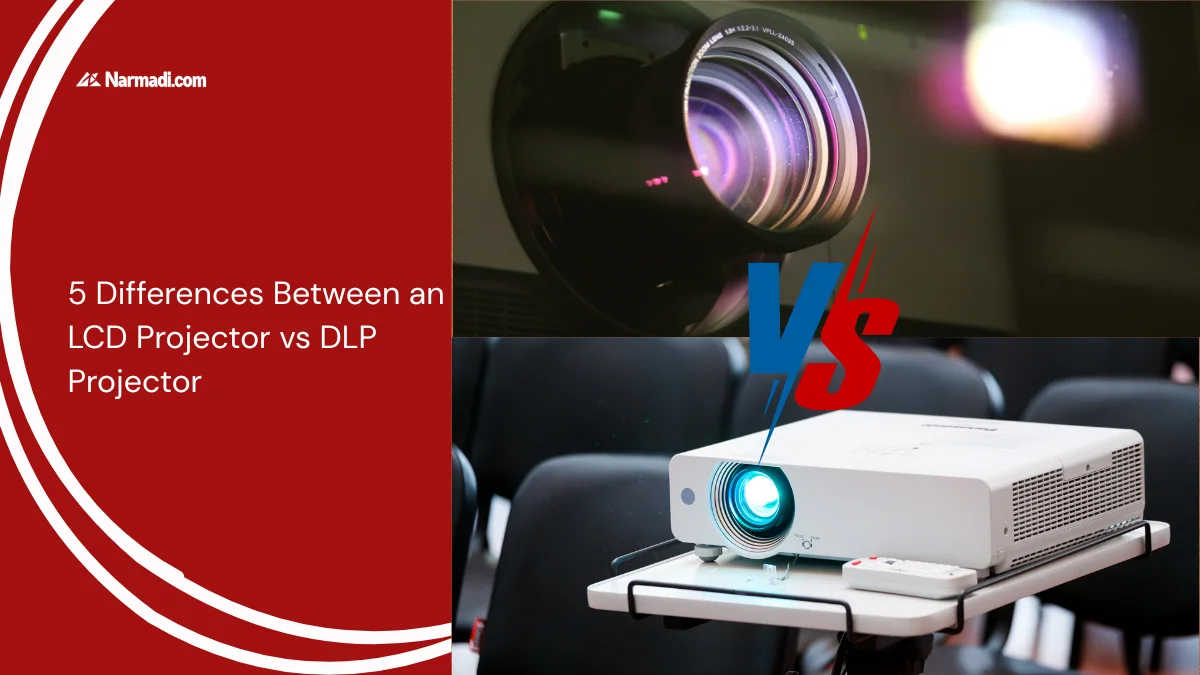

LCD Projector and DLP Projector are two types of projectors that are popularly used. Of course, the LCD Projector vs DLP Projector has some notes that need to be considered before deciding to use it.
The differences between an LCD Projector vs DLP Projector include video sharpening quality, pixel quality, color output, projector size, and electricity usage efficiency.
This article will inform you about the differences between an LCD Projector vs DLP Projector as your consideration in choosing one.
What is an LCD Projector?
This projector represents a more advanced generation, having undergone substantial improvements compared to the older Overhead Projector (OHP) technology.
In the case of the OHP, the projected content was limited to text printed on transparent sheets. In contrast, this modern projector comes with a range of advanced features and enhanced capabilities, making it much easier to present information more efficiently and dynamically.
What is a DLP Projector?
A Digital Light Processing (DLP) projector is a device that uses a Digital Micromirror Device (DMD) chip. This chip is used to project images that produce 16.7 million colors.
This single chip contains millions of microscopic aluminum mirrors that rotate rapidly thousands of times per second to reflect light. As a result, you’ll enjoy images that look more natural, with high color accuracy, sharp resolution, and no issues like ghosting.
The Difference Between LCD Projector vs DLP Projector
Here are 5 differences between LCD Projector vs DLP Projector:
1. Image Sharpness and Text Clarity
- LCD Projectors: Offer pixel-to-pixel sharpness for clear text readability. This type is ideal for displaying detailed spreadsheets, slide presentations, and documents.
- DLP Projectors: Offer response times measured in microseconds, resulting in smooth, cinematic video playback. This type provides the best experience when watching fast-paced movies or sports broadcasts.
2. Pixel Structure and Gaps
- LCD Projectors: They have a pixel structure with slightly wider spacing. This often results in a subtle grid pattern, known as the “screen-door effect”, when viewed up close.
- DLP Projectors: These projectors have a tightly packed pixel structure because the micro-mirrors are positioned very close together. This results in a smoother image, free of grid patterns, and with deeper blacks.
3. Color Output and Saturation
- LCD Projectors: Process RGB light simultaneously using three separate panels. This results in higher overall color brightness and more vivid color saturation.
- DLP Projectors: Single-chip models use a rotating color wheel to project colors sequentially. As a result, colors may appear slightly less saturated in bright ambient light conditions, but they are resistant to long-term color degradation.
4. Form Factor and Portability
- LCD Projectors: These tend to be larger and heavier. This is due to their internal prism, optical path, and specialized cooling fan.
- DLP Projectors: These feature a much smaller design, are highly portable, and include mini smart projectors. This is due to their compact optical engine.
5. Optical Efficiency and Dust Resistance
- LCD Projectors: Use an open optical path that allows for maximum light transmission in well-lit rooms. However, these devices require regular air filter maintenance to prevent dust buildup.
- DLP Projectors: Use a hermetically sealed optical engine that completely blocks dust particles. These devices no longer require filters and offer consistent performance over the long term.
Which Projector Best Fits Your Specific Needs?
By considering the differences outlined above, you can now make the right choice. Both types are designed to meet specific needs.
Choose an LCD projector if you need:
- A bright image in a room with ambient light.
- Sharp, easy-to-read text for spreadsheets, documents, and static presentations.
- Maximum color saturation without breaking the bank.
Choose a DLP projector if you need:
- A home theater setup for watching action movies and live sports broadcasts.
- Performance in dimly lit rooms.
- High-speed video games without motion lag.
- A compact and portable mini projector.
Selecting between LCD and DLP comes down to your primary use case. If you need maximum color brightness and crystal-clear text for classrooms or offices, an LCD projector is the ideal fit. However, if you prioritize high contrast, fast action response, zero maintenance, and portability for home entertainment, a DLP projector is the superior choice.