
Are you familiar with a smart ring? This ring continues to grow as another wearable device that is penetrating the digital era nowadays.
A smart ring that works with sensors can monitor various body parameters, such as physical activity and health, to control another smart device.
In this article, we will examine the smart ring from its definition, underlying working mechanisms, primary functions, and essential wireless hardware performance requirements.
What is a Smart Ring?
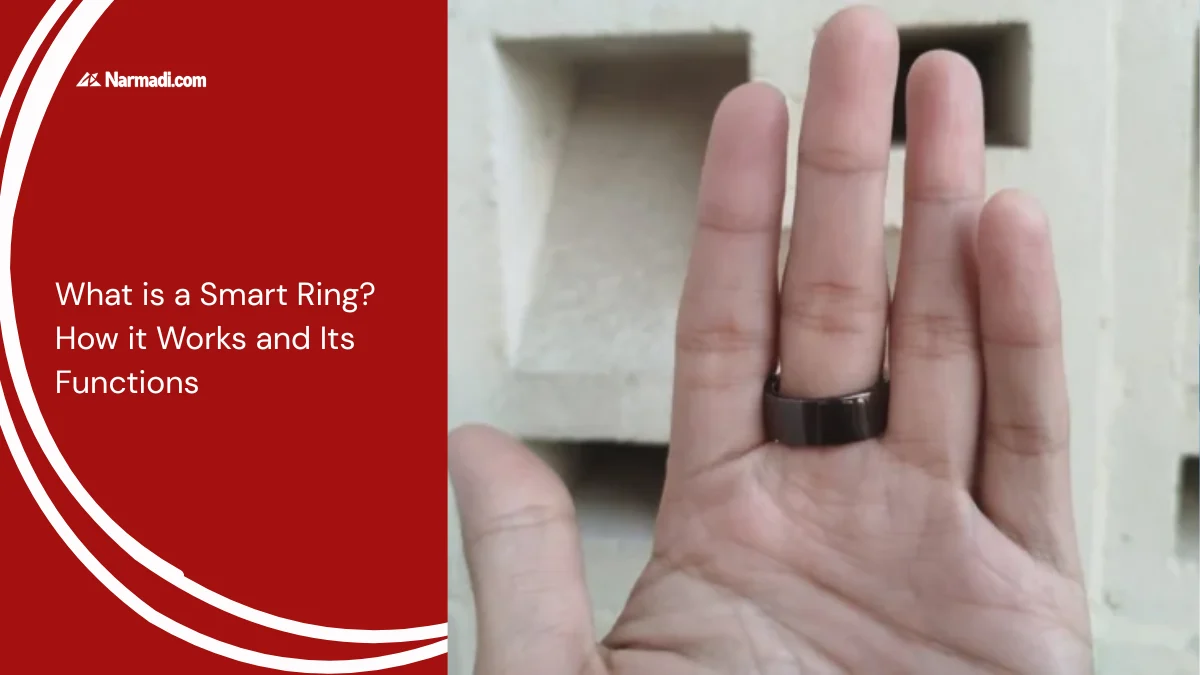
Smart rings are often referred to as mini-computers that are worn on people’s fingers. They are equipped with sensors that are useful for tracking fitness, physical activity, and health.
Despite their small size, these devices have an amazing ability to collect data and interact with other smart devices. They can monitor heart rate and sleep patterns and even measure stress levels.
How It Works?
The smart ring is equipped with Bluetooth, NFC, and WiFi connections, which basically work by using sensors to collect data and then connecting the data to other smart devices. Here’s how the technology works:
- Collect data: Sensors on the smart ring measure various data, such as heart rate, body temperature, blood oxygen levels, and steps.
- Connects to other smart devices: The technology connects to other smart devices via Bluetooth or NFC.
- Data is forwarded to the connected device’s app: The data collected by the sensors is processed and forwarded to the app on the connected device.
The Function
The smart ring has the following main functions and additional functions:
- Continuous Biometric Tracking: Monitors 24/7 heart rate variability (HRV), resting heart rate, skin temperature, and sleep stages (Light, Deep, REM).
- NFC Contactless Payment: Enables fast, secure payments at retail POS terminals using embedded NFC technology with a simple tap of your hand.
- Smart Access Control: Functions as a digital security key to unlock compatible smart door locks, laptops, or mobile devices.
- Gesture Control: Detects subtle hand gestures to control smartphone cameras, slide presentations, or media playback.
- Activity & Fitness Tracking: Automatically logs daily steps, distance covered, calories burned, and overall workout intensity.
- Discreet Notifications: Delivers gentle haptic (vibration) feedback or micro-LED signals for incoming calls, text messages, and app notifications.
Compact RF Antenna Design and Signal Attenuation
Smart rings are designed to meet unique hardware challenges. Despite their tiny size, they must incorporate active Bluetooth Low Energy (BLE) and NFC transceivers. This requires precise optimisation of the radio frequency (RF) antenna.
Another challenge is that human skin can absorb radio signals (known as signal attenuation) and metal casings can block electromagnetic waves. This means that devices must have type approval certification.
Certification will verify RF emission stability, Electromagnetic Compatibility (EMC) and antenna efficiency. Furthermore, in some countries, Specific Absorption Rate testing is required for devices worn directly on the body.
Devices that have been tested and certified are guaranteed to maintain a stable connection with mobile devices, prevent signal dropouts during synchronisation, and operate with maximum battery efficiency. This means they are safe to use and do not interfere with other devices.
Since 2008, Dimulti has been providing comprehensive technical compliance services for telecommunications and IoT hardware. We assist global manufacturers, importers and distributors in obtaining type approval certification. This ensures that your smart device products can enter the market seamlessly.