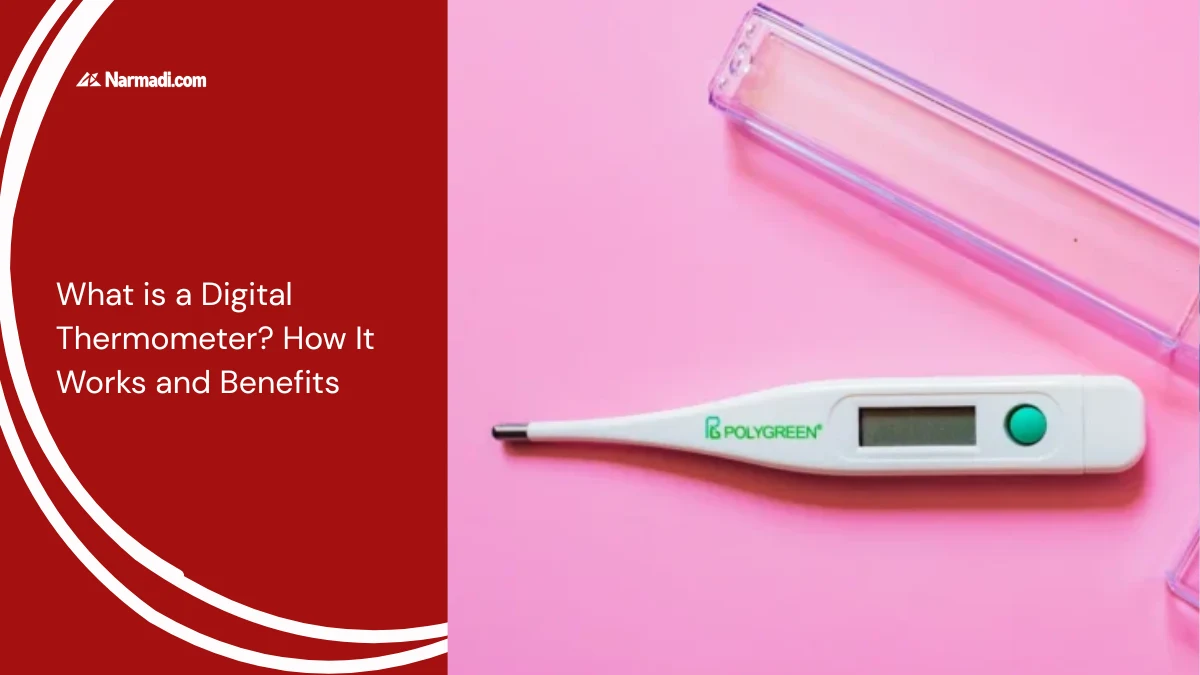

Technology has penetrated various industrial sectors, one of which is healthcare. A Digital Thermometer is one of the tools that support digital development.
But are you familiar with how a digital thermometer works and its benefits? The technology has a bundle of benefits, from battery life and energy efficiency to fast measurement.
This article will inform you about digital thermometers, from the definition, how they work, their benefits, and the differences between traditional models.
What is a Digital Thermometer?
Digital thermometers work by utilizing electronic heat sensors to measure body temperature. They can be used through the mouth, armpit, or rectum, and the results are displayed as digital numbers on a screen.
Unlike traditional thermometers that use liquid mercury, the digital type is considered safer, provides a high level of accuracy, and is easy to read.
It is also designed to provide fast and precise measurements, usually taking only a few seconds.
How it Works?
Digital thermometers have a different working principle from conventional thermometers. Here is an explanation of how the technology works:
- Temperature Detection by Sensors: Components such as thermistors or thermocouples serve as sensors that detect changes in temperature through the resulting difference in electrical voltage.
- Conversion into Electrical Signal: The detected temperature change is converted into an electrical signal whose value is proportional to the measured temperature.
- Processing by Electronic Circuits: This electrical signal is then processed by an internal electronic system, usually using a microprocessor or specialized chip, to convert it into displayable temperature data.
- Calibration and Adjustment: Digital thermometers are equipped with an automatic calibration system that ensures the measurement results remain accurate through internal corrections.
- Displaying Results: After processing, the body temperature is displayed directly in the form of digital numbers on the LCD screen.
The Benefits
According to various sources, here are the benefits of a digital thermometer:
1. Better durability
Compared to mercury thermometers, which break easily, the technology has a sturdier and more durable structure, making it more durable in daily use.
2. Energy saving
The technology usually uses long-lasting batteries and comes with power-saving features, making it an efficient choice for long-term use.
3. High safety
Unlike mercury thermometers, which contain toxic substances, the technology does not contain any harmful ingredients. This makes them safer, especially when used by or for children.
4. Measurement precision
This device provides more accurate results than traditional thermometers. This precision is especially important in monitoring the body temperature of infants and children, where small changes can be clues to medical conditions.
5. Fast measurement
The technology can show results in a short time, even in just a few seconds. This speed is especially useful in emergencies or when taking the temperature of a patient who is difficult to cooperate with.
Digital Thermometer vs Mercury Thermometer
In this day and age, digital thermometers have replaced traditional ones. There is no denying that there are differences between the two. Here is a brief comparison:
Safety
Digital thermometers use electronic sensors and a plastic casing. This offers greater safety compared to traditional devices.
Mercury thermometers contain toxic mercury liquid inside a fragile glass tube. For safety reasons, traditional devices are being phased out.
Speed
When it comes to displaying measurement results, digital models are faster than traditional ones. The difference can be a matter of minutes.
Digital models can display results within 10 to 30 seconds. Mercury thermometers, on the other hand, usually take 3 to 5 minutes to stabilise.
Ease of Reading
Digital thermometers with digital displays show precise numerical values clearly. You do not need to guess the reading displayed.
In contrast, readings from mercury thermometers need to be estimated, as the readings are very small on the marked glass scale.
Durability
With its plastic casing, the digital thermometer offers greater durability. This model can withstand the impact of being accidentally dropped.
Mercury thermometers, on the other hand, are more prone to breakage and are hazardous. If dropped, they pose an immediate risk of chemical exposure and glass shards.
It is therefore undeniable that digital thermometers are the superior choice for modern health monitoring.