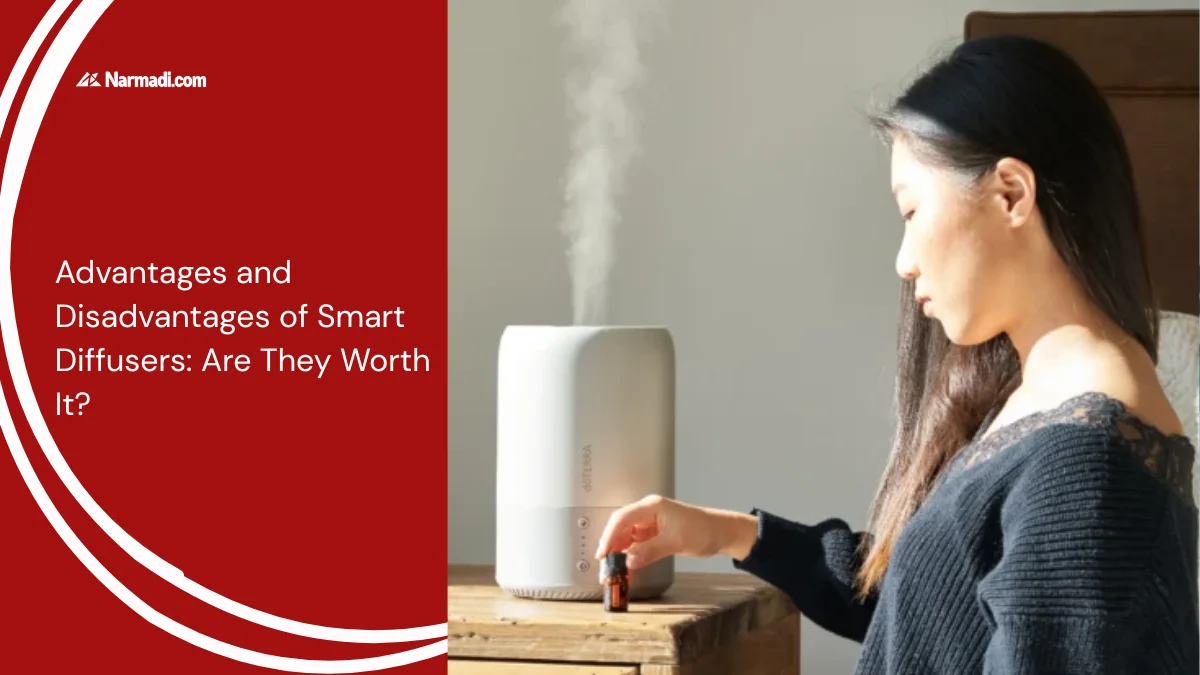

Smart diffusers provide many benefits, especially in making the air in the room better for us to breathe and making the atmosphere calm. However, the advantages and disadvantages of smart diffusers cannot be separated, even though we can feel the benefits.
The advantages and disadvantages of smart diffusers include ease of use, time use, price, and potential compatibility issues.
This article will inform you about some of the advantages and disadvantages of smart diffusers for your consideration before deciding to use them.
The Advantages
Here are some of the advantages of using a smart diffuser:
1. Ease of use
The time, aroma intensity, and aromatherapy cycle of the smart diffuser can be operated easily through an app on a smartphone. This helps make it easier for users to use.
2. Remote control
Through a smartphone or other smart devices, the smart diffuser can be controlled remotely. This gives you flexibility in using it.
3. Timing
The smart diffuser has a timer feature that allows users to set the time when the diffuser will turn on and off. This feature allows you to determine the use of the diffuser according to your needs and schedule.
4. Integration with smart home systems
Smart diffusers can be integrated with other smart home systems. This certainly makes it easier for users to manage various devices simultaneously.
5. Voice commands
Some smart diffusers are equipped with voice commands. This allows users to control the appliance, either to turn it on or off, with just their voice commands.
6. Mode selection
Some smart diffusers offer various modes that can be customized according to user needs, such as sleep mode, relaxation mode, or energy mode.
The Disadvantages
Here are some of the disadvantages of using a smart diffuser:
1. Higher price
With the various features offered, of course, smart diffusers generally have a higher price compared to conventional diffusers.
2. Potential compatibility issues
While it is possible to connect to multiple devices, a smart diffuser may not be compatible with all smart devices or smart home systems. This may cause problems in the future.
3. Dependence on technology
Smart diffusers rely heavily on technology to operate; if the smart device or app being used has problems or interruptions, users may not be able to control the diffuser effectively.
4. More complex maintenance
With the technology offered, of course, smart diffusers require more complicated maintenance, such as software updates or repairs if problems occur.
5. Security risk
If a smart diffuser is not used properly or is not properly maintained, such as leaving an operating diffuser unattended, it may pose safety risks, such as fire or device damage.
How to Choose the Right Smart Diffuser for Your Needs
Once you’ve considered the pros and cons of smart diffusers, you can decide whether or not to buy one. Before doing so, you should consider your personal lifestyle needs. This will ensure you make the best investment for your home.
Here are a few tips before you buy:
- Check for Ease of Cleaning: Choose a design with an easily removable lid so you can clean out any residual essential oils with ease.
- Check App Compatibility: Check whether the device supports your smartphone’s operating system and your main smart home ecosystem.
- Look out for the Auto-Shut-Off Feature: Choose a model with an automatic sensor that detects when the water has run out to prevent overheating and extend the product’s lifespan.
- Consider the Tank Capacity: Match the size of the water tank to the size of your room and your desired operating time.