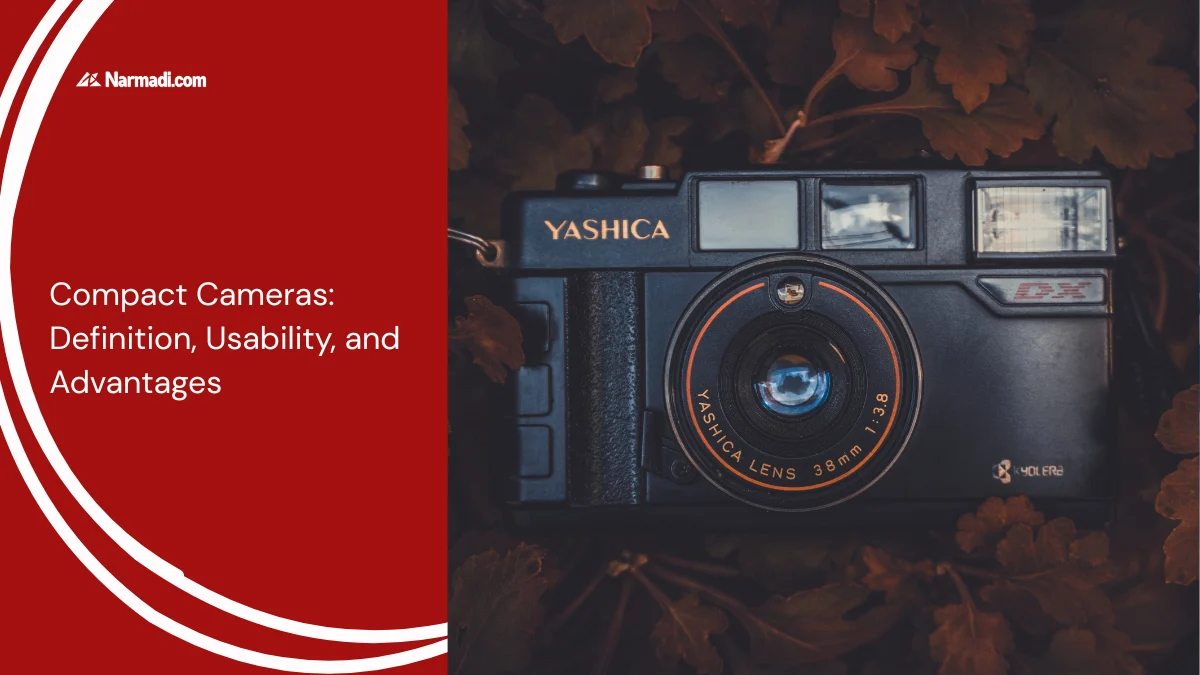

If you are starting to take up photography as a hobby, you can use a compact camera to hone your interest.
Compact cameras are suitable for beginners because they are easy to use, and the results are no less good than DSLR and other compact cameras.
If you are interested in knowing more about compact cameras, starting from their definition, usability, and advantages, let’s discuss it together below.
What is a Compact Camera?
Compact or point-and-shoot cameras are digital cameras designed for ease of use, especially for beginners or those who do not want to bother with manual settings. They are designed for ease of use and usually have non-interchangeable lenses.
This camera is suitable for beginners or those looking for a device that is easy to carry and use. They are usually small, compact, and easy to carry, with features such as automatic settings, built-in zoom, and fixed lenses.
The Usability
Compact (Point-and-Shoot) cameras are usually used for everyday documentation, travel, and family events.
- Daily documentation: This camera is perfect for capturing spontaneous moments in everyday life, such as during vacations, family gatherings, or simply walking around the city.
- Travel: With its small size and lightweight design, this camera is a great choice for travel, allowing you to capture sights and experiences wherever you are.
- Beginners and casual users: For those who are just learning photography or just want to shoot without the hassle of many settings, this camera offers ease and convenience in use.
The Advantages
Compact cameras have several advantages, from ease of use to good image quality. Here are the advantages of compact cameras that you can take advantage of:
1. Ease of use
One of the advantages of this camera is its ease of use. They often have automatic modes that are very easy to use, so users do not have to worry about complicated settings such as aperture or shutter speed.
2. Portability
This camera is small and lightweight, allowing for easy portability. They have easy to carry, even in small pockets or bags.
3. Zoom capability
Good zoom capability is another advantage of this camera. The zoom lens allows the user to bring the subject closer from a long distance.
4. Larger image sensor
This camera generally has a larger image sensor compared to smartphone cameras, which results in better image quality, especially in low-light conditions.
5. Good image quality
Another advantage of this camera is good image quality. While not as complex as DSLR or mirrorless cameras, this camera can still produce good-quality images, especially with higher resolutions.
Compact Camera vs Mirrorless Camera
With so many types of cameras available, it’s only natural to compare one type to another. Beginners are often faced with the choice between compact cameras and mirrorless cameras.
This is a choice between an easy system and a more advanced system. Compact cameras are best suited for users who prioritize maximum portability, a compact size that fits in a pocket, and fully automatic shooting.
On the other hand, mirrorless cameras offer better image quality, the flexibility of interchangeable lenses, and more advanced manual controls. They’re a great choice for those who plan to develop their photography skills.
Compact cameras combine pocket-sized portability, optical zoom capabilities, and easy operation. They’re perfect for beginners as an accessible and enjoyable starting point for entering the world of photography.