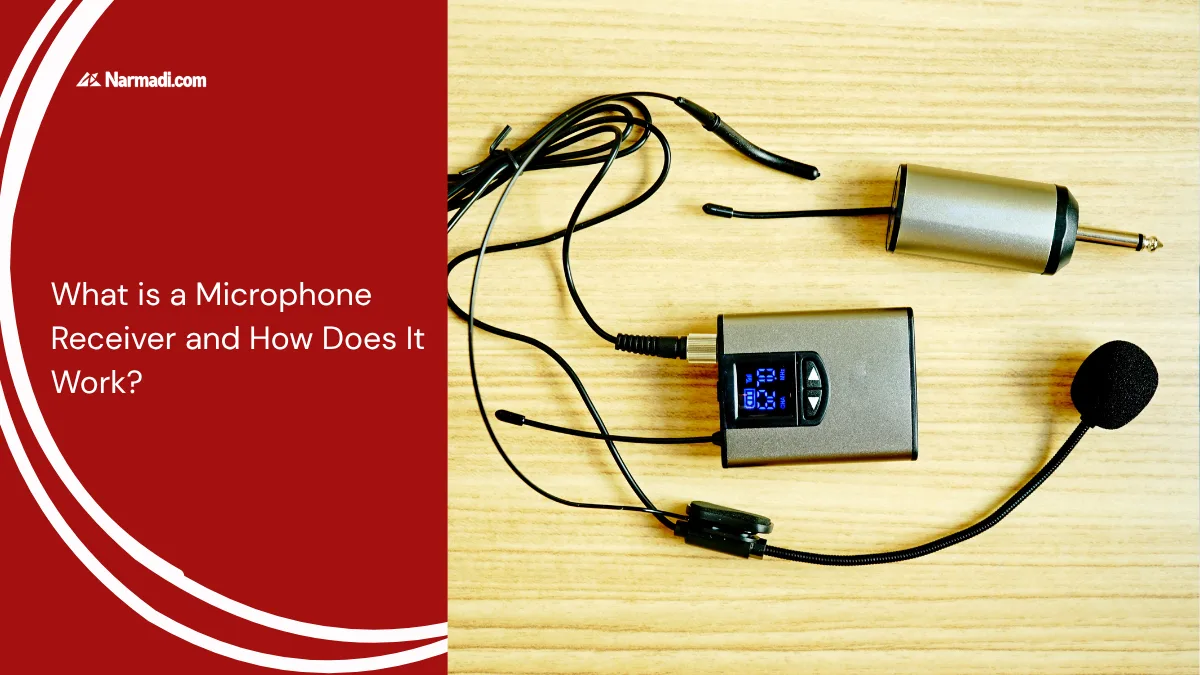

Microphone receivers are an important part of wireless microphones because sound cannot be produced without this tool.
Microphone receivers function to receive signals from wireless microphones and convert them into audio to be distributed to various output devices.
Therefore, it is important to know the function of the microphone receiver, how it works, and the types.
What is a Microphone Receiver?
A Microphone Receiver is part of a wireless microphone that receives sound signals sent by the microphone through the transmitter via radio waves.
The sound signal generated by the microphone is received by the microphone receiver and then converted from radio waves into audio signals that can be further processed or forwarded to other audio devices, such as speakers or recording systems.
How it Works
Broadly speaking, the microphone receiver works by receiving sound signals sent by the transmitter (transmitter) via radio waves, then converting them back into audible audio signals. Here’s a more detailed explanation of how the receiver works:
- Receiving signals: The receiver is equipped with an antenna to receive radio wave signals emitted by the transmitter.
- Demodulation: Once the signal is received, the receiver’s demodulator processes it to convert the radio signal back into the original audio signal.
- Signal amplification: To be heard clearly, the demodulated audio signal is then amplified.
- Connection to an output device: Receivers are usually connected to speakers or other audio systems via audio cables to play back the received sound.
The Function
The role of the microphone receiver is so important in wireless microphone devices. Here are the functions of the receiver:
1. Receiving sound signals
The receiver has the main function of receiving signals sent by microphones. The receiver is able to capture the various sound frequencies produced by the microphone accurately thanks to its high sensitivity.
2. Processing sound
In order to be processed further, the sound signal received by the receiver will then be processed. This process includes signal amplification, filtering to reduce noise, and other adjustments to maximize the sound produced.
3. Converting radio signals into audio signals
The receiver is capable of converting received radio signals into audio signals that can be used by output devices such as speakers, amplifiers, mixers, or recording devices. This process is done through the audio output on the receiver, which connects to other audio devices to produce good-quality sound.
4. Frequency and channel settings
The frequency and channel settings feature allows you to customize the use of your microphone receiver in frequency-dense environments or when using multiple microphones simultaneously.
5. Ensuring stable connectivity
The receiver is also responsible for ensuring stable connectivity between the microphone and the output device. Good connectivity reduces the risk of signal interference or loss, thus ensuring consistent sound quality.
Types of Microphone Receivers
Microphone receivers are generally divided into two types: non-diversity receivers and diversity receivers. The type you choose depends on your audio setup and the requirements of your event venue.
A non-diversity receiver is a type of receiver that uses a single antenna to pick up radio signals. This type is suitable for small rooms where the distance between the microphone and the receiver is relatively short.
A diversity receiver is a type of receiver that uses two independent antennas operating simultaneously. Given signal disruptions and interference, this type is well-suited for large-scale live performances or events requiring high mobility.
Ultimately, understanding what a microphone receiver is, how it works, and its various functions will help you build a more reliable wireless audio system. Choosing the right receiver will ensure stable signal conversion and clear, professional-quality sound.