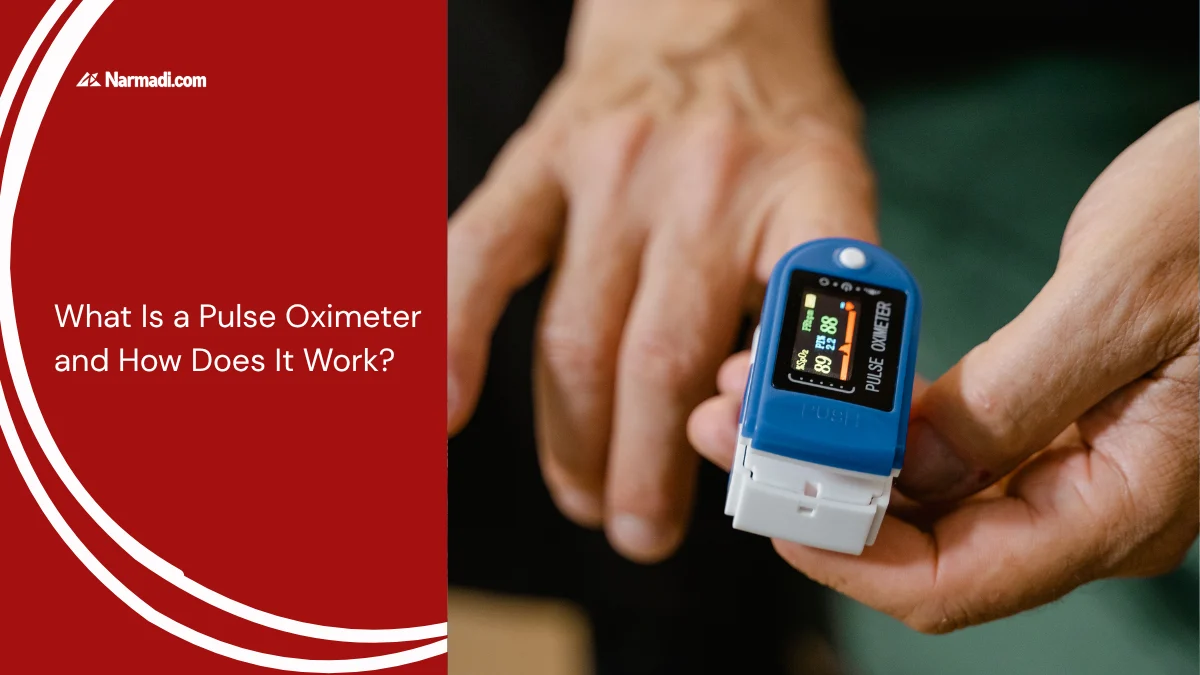

The pulse oximeter, a compact, clip-shaped device that is usually attached to the fingertip, has become an increasingly recognized tool for measuring blood oxygen saturation and pulse rate.
With pulse oximeters playing an important role in various health monitoring scenarios, knowing one’s pulse oxygen level can be easy.
This article will discuss pulse oximeters from their definition, mechanism of action, various functions, and the technical compliance and wireless standards required for connected medical deployment.
What is a Pulse Oximeter?
A pulse oximeter is a clip-shaped device that is generally attached to the finger. It measures blood oxygen saturation and pulse rate. With this tool, information about oxygen levels in the blood may be obtained without the need for a blood draw procedure.
Currently, oximeters are widely sold in pharmacies, and some smartphones, smartwatches, and smart bands have features to measure blood oxygen saturation and pulse rate.
How Does it Work?
Pulse oximeters work by using light to measure oxygen saturation in the blood, specifically in the arteries. Here are the details of how the oximeter works:
- Light emission: The pulse oximeter emits light of different wavelengths, red light (around 660 nm) and infrared light (around 940 nm).
- Absorption of light by hemoglobin: This light passes through the finger and is absorbed by the hemoglobin in the blood.
- Measuring the amount of light: Hemoglobin bound to oxygen (oxyhemoglobin) absorbs more infrared light, while hemoglobin not bound to oxygen (deoxyhemoglobin) absorbs more red light.
- Calculation of oxygen saturation: The device then uses an algorithm to compare the amount of red and infrared light absorbed to calculate the proportion of oxygenated and deoxygenated hemoglobin.
- Results displayed: The results of the oxygen saturation and heart rate (pulse rate) measurements are displayed on the device’s screen.
The Benefits
Pulse oximeters are often used by healthcare professionals to monitor patients with conditions that affect blood oxygen levels. It is useful for monitoring blood oxygen levels in a variety of conditions, including respiratory diseases, heart conditions, and during self-isolation, such as COVID-19 patients. Here are some other benefits that doctors commonly use with an oximeter:
- Monitoring the results of lung medications that have been administered.
- Evaluating the need for respiratory support.
- Assessing how the ventilator is assisting the patient’s breathing.
- Monitoring a patient’s blood oxygen level during or after surgery using sedatives.
- Identify the patient’s need for external oxygen support.
- Measure the success of supplemental oxygen administration, especially when the patient starts a new medication.
- Measure how the patient responds to increased body movement.
- Check for short pauses in breathing during sleep, which may indicate sleep apnea.
Limitations
Despite its many benefits, the pulse oximeter has limitations for monitoring the condition of patients with oxygen saturation below 70% and may not provide accurate results in patients with certain conditions, such as vasoconstriction or hypotension.
Technical Compliance and Wireless Standards
Modern pulse oximeters are typically equipped with smart, wearable monitors and Bluetooth. Wireless communication modules are used to transmit oxygen saturation and pulse rate data in real time to mobile apps or patient monitoring systems.
Devices that operate using wireless communication must ensure patient safety, signal reliability, and data accuracy. Therefore, these medical devices must meet technical compliance standards and obtain type approval certification.
Testing and certification will ensure that Radio Frequency (RF), Electromagnetic Compatibility (EMC), and Safety parameters comply with applicable requirements. Since pulse oximeters are used close to the body, some countries also require Specific Absorption Rate (SAR) testing.
The test results will determine whether the device is safe and does not interfere with other devices when in use. If the device is found to be compliant, a type approval certificate will be issued as proof of the product’s legality for marketing and use in the destination country.