
Currently, digital payment systems continue to evolve, leading to an increase in cashless transactions. EDC machines are the solution to the business world’s need for efficient cashless payments.
EDC machines offer numerous conveniences and security features for making cashless payments. Therefore, this tool is often used in various commercial activities as a practical, fast, and seamless payment method.
This article provides an in-depth discussion of EDC machines, beginning with their definition, operating principles, various types, their benefits, and the technical compliance and security standards required for modern payment terminals.
What is an EDC Machine?
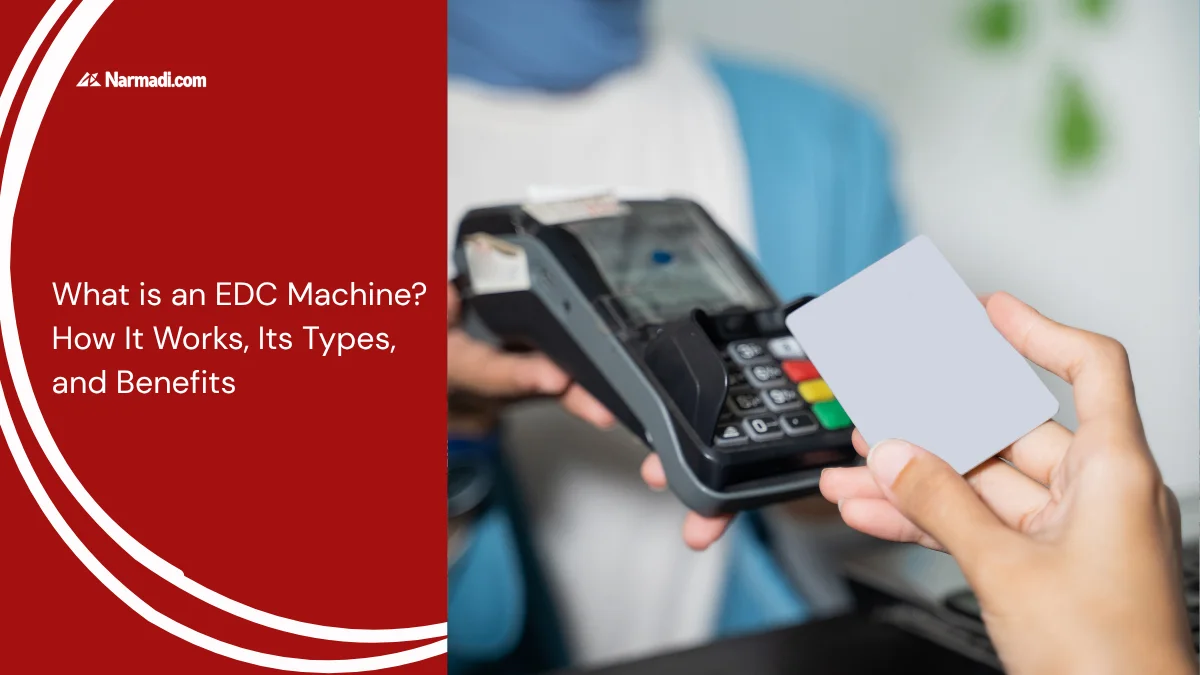
An EDC (Electronic Data Capture) machine is a device used to make cashless payments. Typically, payments are made using credit cards, debit cards, or QRIS.
These machines are commonly found in stores, restaurants, and other businesses that accept card payments. Their presence helps the business sector support fast and secure payment transactions.
EDC machines are equipped with scanners that can read the magnetic strip or chip on a card. The scanner sends payment information to the card-issuing bank, enabling real-time payment transactions.
How Does It Work?
In general, EDC machines work by capturing data from inserted cards, then providing access for payment authorization. Here is how it works in detail:
- Connect to the network: To perform real-time transactions, the machine must first be connected to the internet or a cellular network.
- Card data scanning: The card inserted by the user is scanned to read the data via the magnetic strip or chip on the card.
- Transaction processing: The machine sends the transaction information to the banking server for verification and validation.
- Authentication and authorization: The customer enters their card PIN to confirm the transaction, and the banking server verifies the data to check the balance or credit limit.
- Transaction completion: If the data and balance match, the transaction is approved, and the machine will immediately print a receipt as proof of payment. However, if it is not approved, the transaction will be rejected.
- Settlement: Funds from the transaction do not immediately enter the seller’s account in real-time.
The Types
Several types of EDC machines can be tailored to suit your needs and business type. Here are some of them:
- GPRS EDC Machine: Uses a cellular network, suitable for use in locations without a wired network.
- LAN EDC Machine: Utilize the internet via a LAN cable, typically employed in locations with a stable internet connection.
- NFC EDC Machine: Uses NFC technology; this type of EDC allows contactless payments by simply tapping a card on the device.
- Bluetooth EDC Machine: Utilizes Bluetooth technology to connect with devices featuring digital cash register systems.
The Benefits
By using an EDC machine, customers and merchants can enjoy several key benefits. Here are some of them:
- High level of security: Cashless transactions provide a high level of security, as customers do not need to carry cash, and transactions require PIN verification.
- Improved customer convenience: EDC offers ease and speed of transactions, with faster automatic payments and reduced queues.
- Expanded customer base: The ability to accept various types of payments according to preferences will further develop and attract many customers.
- Simplifying daily reports: This machine records all transaction processes in real-time, making daily financial reports faster and minimizing recording errors.
Technical Compliance, Wireless Protocols, and Security Standards
Modern Electronic Data Capture (EDC) terminals are equipped with a complex multi-radio architecture. The devices are capable of integrating cellular networks (4G LTE), Wi-Fi, Bluetooth Low Energy (BLE), and Near Field Communication (NFC).
This technology greatly supports real-time financial transaction processing. These devices can handle sensitive cardholder data, perform encrypted PIN authorization, and operate over public cellular networks.
It is important to note that devices using wireless telecommunications technology must comply with type approval certification requirements, including EDC machines. The certification process includes, at a minimum, testing for Radio Frequency (RF), Electromagnetic Compatibility (EMC), and Electrical Safety.
This is intended to ensure RF safety, the absence of electromagnetic interference, and resistance to static electricity discharge. Certified devices are therefore safe from these issues.
This certification must be obtained before the device can be used commercially in retail and banking networks. The certificate serves as legal validation that allows the EDC device to enter a country that is a target market.



thanks for this information
With pleasure, Kamir. I hope this information is useful to you.