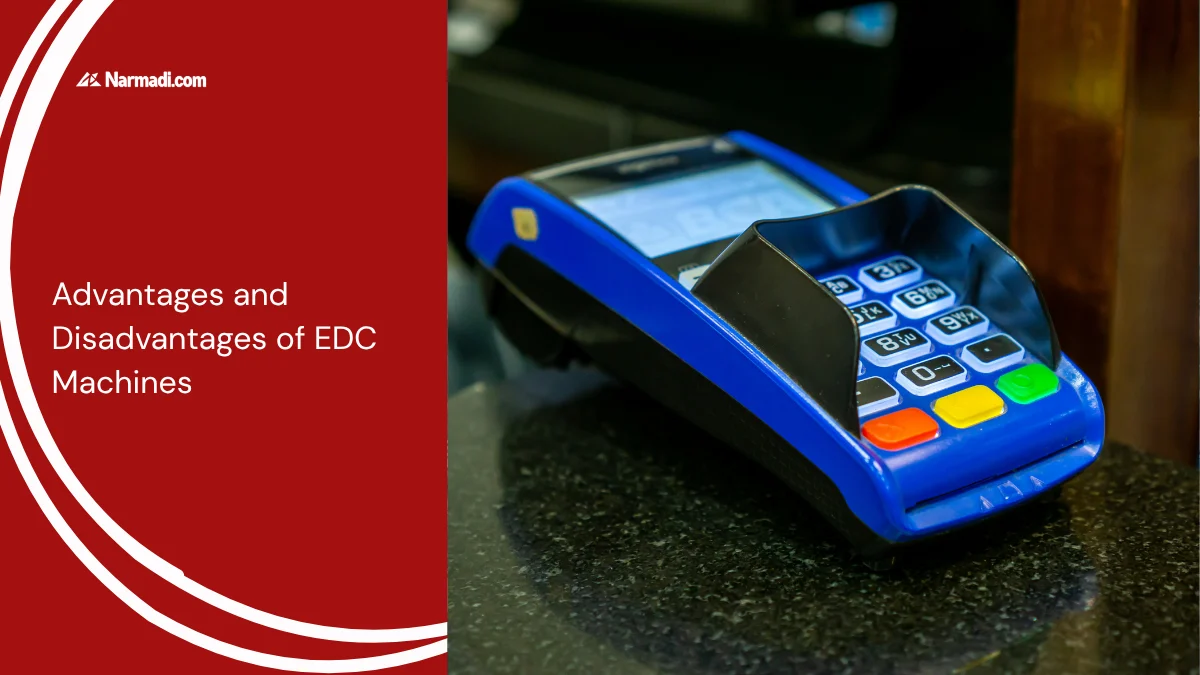

An EDC machine provides many benefits, especially the ability to help the business sector support fast and secure payments. However, the advantages and disadvantages of EDC machines cannot be separated, even though we can feel the benefits.
The advantages and disadvantages of EDC machines include speed of transaction, payment security, connection disruption, and machine maintenance.
This article will inform you about some of the advantages and disadvantages of EDC machines that you can consider.
The Advantages of EDC Machine
Here are some of the advantages of EDC machines:
1. Speed of transaction
One of the advantages of EDC machines is their speed of transaction. By using this machine, you simply swipe your card or tap it, then enter your PIN number to verify the payment after the transaction amount is shown. This takes less time than counting cash before payment and waiting for the cashier to give you change.
2. Ease of non-cash transactions
Ease of non-cash transactions is another advantage of EDC machines. The existence of this machine makes it easier for you without having to carry cash everywhere. You can simply bring your debit card, credit card, or cellphone to make payments. This avoids the risks of cash management, such as loss or theft.
3. Improve business image
With EDC machines in stores, restaurants, or other non-cash payment places, it gives a professional and modern impression. With the development of the digital world and the increasing use of non-cash payments, of course, the choice of payment using an EDC machine will give a good image to the business being run.
4. Payment security
Another advantage of EDC machines is their payment security. As the owner of the machine, you don’t have to worry about customers giving you counterfeit money. From the customer’s perspective, EDC machines help ensure that there are no payment errors such as overpayments.
The Disadvantages
Here are some of the disadvantages of EDC machines:
1. Connection disruption
One of the shortcomings of the EDC machine is its need for an internet connection. The possibility of network problems can certainly occur, if this is like this, of course, your transaction payment process will be hampered.
2. Banking network disruption
Not only depends on the Internet network, but EDC machines also depend on the banking network. When there are problems or maintenance on the banking network, of course, it will hamper your payment transaction process and make your transaction fail.
3. Depends on the machine
Payments using EDC machines still depend on the physical availability of the device and the customer’s card. Of course, in this age of increasingly sophisticated technology, the presence of innovations such as QRIS can slowly shift this trend.
4. Machine maintenance
Another drawback of non-cash transactions using EDC machines is the existence of machines that require maintenance. These machines need regular maintenance to avoid damage to the machine.
Operational Risk Management and Technical Evaluation
An EDC machine’s ability to successfully process payments depends on striking a balance between transaction speed and convenience on one hand, and operational risks on the other. Fast card scanning and automatic recording improve cashier efficiency.
Key considerations for this device include vulnerabilities such as network disruptions, server downtime, and hardware wear and tear. To minimize these issues, it is necessary to implement modern terminals that integrate connectivity from two mobile carriers as a backup to Wi-Fi.
In addition, strict hardware durability standards are also required. This is achieved by ensuring that the devices are equipped with rugged thermal printers, long-lasting batteries, and protective cases.
From a technical compliance and security perspective, payment terminals must satisfy EMVCo/PCI-PTS frameworks and undergo rigorous testing to verify their Radio Frequency (RF) stability, Electromagnetic Compatibility (EMC), and resistance to Electrostatic Discharge (ESD). This compliance ensures the security of the devices and prevents any disruptions during use.