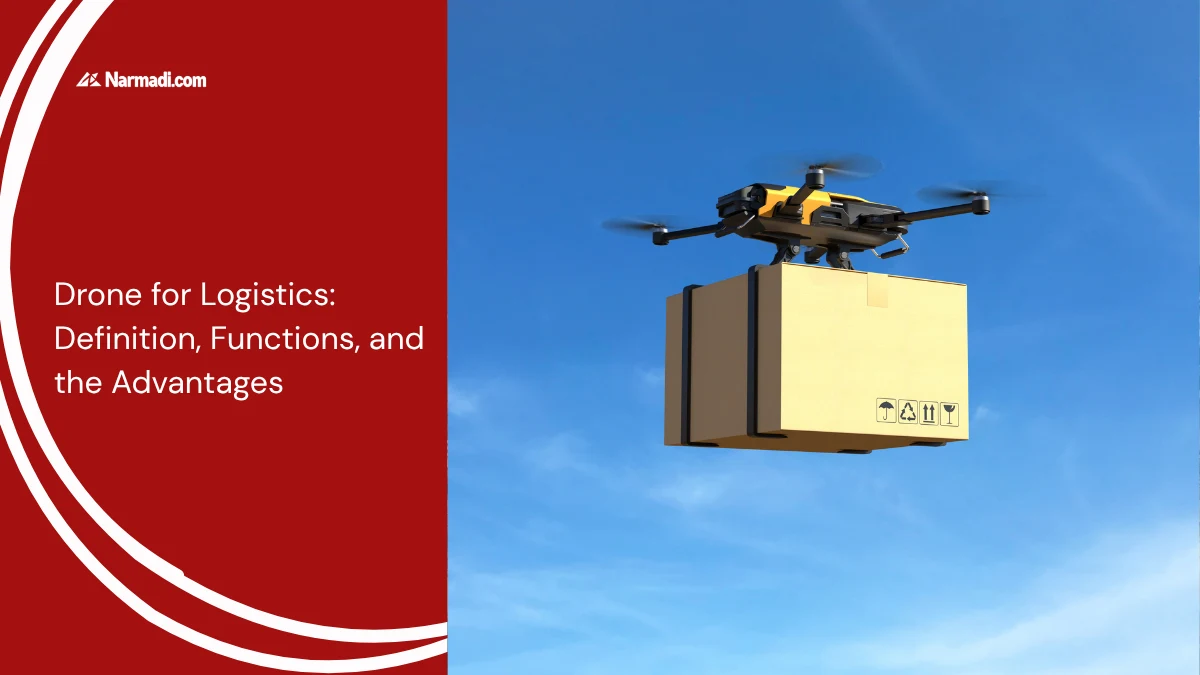

The presence of drones as a recording tool for more efficient aerial imaging needs has benefited various sectors, one of them being logistics. Drones for logistics have some functions and advantages.
The functions of drones for logistics include freight delivery and inventory management. The advantages include high delivery speed, efficient inventory management, to reducing greenhouse gas emissions.
This article will give you information on drones for logistics, including their definition, functions, and advantages that they have.
What is a Drone for Logistics?
In the world of logistics, drones can be used to deliver goods to remote areas or in emergency conditions. The speed and mobility of drones are invaluable in emergencies, as they can deliver medical aid or other necessities to hard-to-reach locations.
The Functions
Drone logistics have several functions, from freight delivery to inventory management. Here are some of its functions:
- Freight delivery: Drones are capable of fast delivery, military logistics, disaster delivery, package delivery, and delivery to remote areas.
- Data collection and inspection: Drones are capable of aerial mapping of delivery areas, warehouse inspections, and product quality inspections.
- Inventory management: Drones are capable of counting and monitoring stock in warehouses, as well as capturing inventory data for analysis to optimize logistics processes.
The Advantages
Drone logistics have several advantages, from high delivery speed and efficient inventory management to reducing greenhouse gas emissions. Here are some of its main advantages:
1. High delivery speed
One of the advantages of drones is their high delivery speed. By using drones, the delivery of goods is no longer hampered by traffic density, so the delivery time can be faster.
2. Access to hard-to-reach areas
Their ability to access hard-to-reach areas is another advantage of drones. With their ability to fly into hard-to-reach areas, drones can easily access rural areas, remote islands, or areas affected by disasters.
3. Efficient inventory management
Not only capable of delivering goods, but drones in warehouses also provide benefits for efficient inventory management. By using drones, the stock of goods can be automatically counted, making the process of checking inventory in the warehouse easier.
4. Reducing dependence on human labor
In the world of logistics, the need for human labor is inevitable. However, with drones, the need for human labor in the delivery and inspection process can be reduced, thereby reducing the risk of human error and improving safety.
5. Reduce greenhouse gas emissions
So far, the logistics world has wasted a lot of fuel to make deliveries by vehicle. By using drones, greenhouse gas emissions can be reduced, as they do not use fossil fuels.
Battery-Payload Trade-offs and Autonomous Fleet Management
The use of commercial drones in logistics operations is not without its challenges. Balancing battery capacity and payload weight is a key consideration.
Heavy cargo packages significantly drain energy reserves, thereby directly limiting the flight range and operational radius of delivery UAVs. To efficiently expand the delivery network, automated drone docking stations and an Unmanned Traffic Management (UTM) system are required.
These platforms enable autonomous takeoff, precision landing, battery replacement, and real-time route planning for beyond-visual-line-of-sight (BVLOS) missions. Logistics drones are indeed focused on transporting goods and dynamically managing warehouse inventory.
As we know, drones are indeed used in many sectors. In addition to the logistics industry, there are also drones for infrastructure inspection applications that are used for ongoing monitoring of structural integrity.