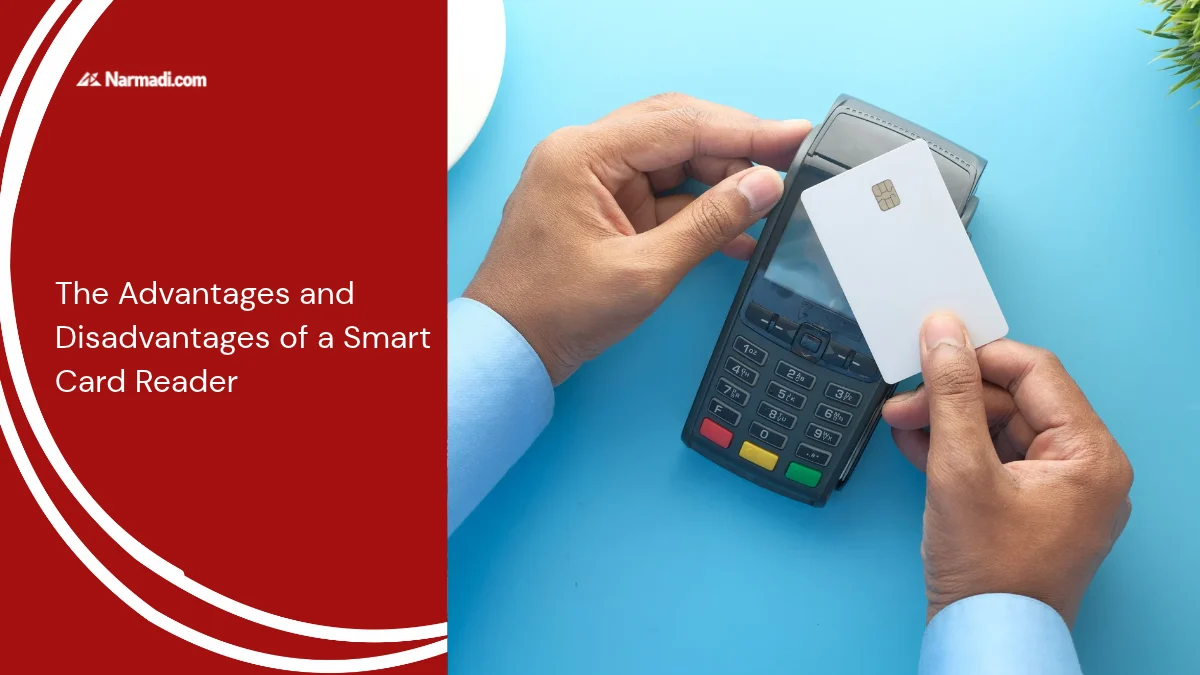

The smart card reader provides many benefits, especially the ability to be a reader for smart cards that are usually used for digital identity, payment, and access control. However, the advantages and disadvantages of smart card readers cannot be separated, even though we can feel the benefits.
The advantages and disadvantages of smart card readers include fast and practical access, improved user experience, and more guaranteed security, while the disadvantages include demagnetization risk, dependency on technology, and expensive upfront investment.
This article will inform you about some of the advantages and disadvantages of smart card readers that you can consider.
The Advantages
Here are some of the advantages of a smart card reader:
1. Fast and practical access
One of the advantages of a smart card reader is its fast and practical access. The ability of this tool to verify data takes only seconds. Of course, this capability is very helpful for authentication, payment, and access control systems.
2. Operational efficiency
Operationally, using a smart card reader will add efficiency. The automation system in using it makes the process faster and reduces queues. From an administrative perspective, it also eliminates manual processes, thus reducing errors.
3. Improves user experience
Another advantage of a smart card reader is its ability to improve user experience. Using smart cards provides customers with a seamless process and gives a modern and efficient impression for various authentication, payment, and access control needs.
4. Flexibility of use
Smart card readers are very flexible to use in many sectors and various applications. Some sectors that have used this tool are the health, finance, government, education, and transportation sectors. Also, the application of this tool ranges from identification and payment to access control.
5. More guaranteed security
More guaranteed security is a well-known advantage of smart card readers. Equipped with high encryption and authentication technology, this tool is more secure. So that it will avoid piracy and data falsification.
The Disadvantages
Here are some of the disadvantages of a smart card reader:
1. Demagnetization risk
One of the drawbacks of a smart card reader is its risk of demagnetization. Demagnetization is the process of reducing the magnetic properties of a material. RFID contained in smart cards is prone to demagnetization if not stored properly. If that happens, it will certainly cause obstacles to your future processes.
2. Dependency on technology
Dependency on technology is another drawback of smart card readers. The system contained in the reader is highly dependent on technology and infrastructure, so if a problem occurs, it will certainly disrupt use.
3. Hacking potential
Even though the encryption and authentication system in the smart card reader is secure, the risk of hacking remains. Especially if the smart card reader security system does not have end-to-end encryption. The possibility of hacking also occurs when there is a power outage.
4. Expensive upfront investment
Another drawback of smart card readers is their expensive upfront investment. This technology does tend to be expensive when compared to other authentication, payment, and access control technologies.
Future Trends and Technological Evolution
By examining the strengths and weaknesses of smart card readers, we can see that there is still room for innovation to surpass their current capabilities. To reduce the risk of hacking, modern ecosystems are beginning to combine multi-factor authentication with conventional card swiping methods.
Devices are integrated with biometric verification, such as fingerprint sensors built directly into advanced readers. In addition, the rise of cloud-based access control systems and mobile credential integration allows physical card readers to communicate seamlessly with smartphones and digital wallets.
These innovations make it safer for organizations looking to invest in this technology. Smart card readers are ready to face the future by adapting to next-generation digital security standards.