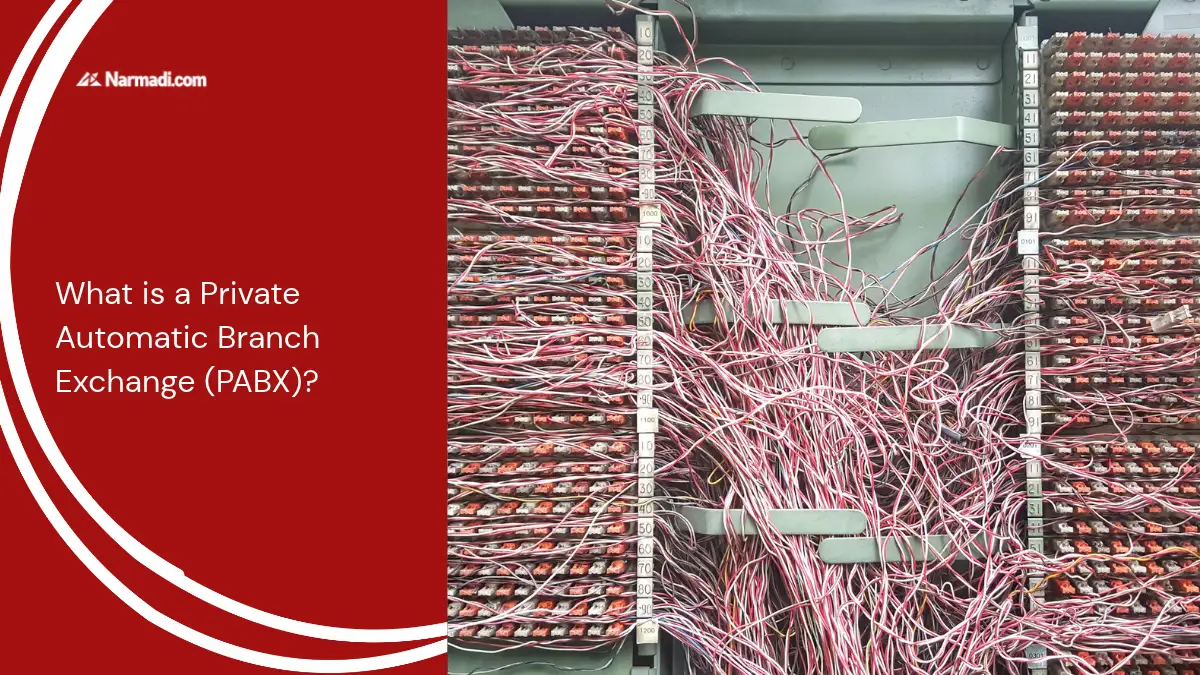

In companies, to help smooth business operations, both internal and external communication is needed. Private Automatic Branch Exchange (PABX) is a system that is often found in many companies that are used to support communication.
With a Private Automatic Branch Exchange, companies can manage phone calls with more structure and cost-effectiveness.
This article will help you to choose the most appropriate solution for your business needs by knowing the definition of Private Automatic Branch Exchange, how it works, its types, and the global standards that govern their deployment.
What is a Private Automatic Branch Exchange?
Private Automatic Branch Exchange (PABX), also known as PBX among Europeans, is a telephone system device used in companies to manage telephone communications.
This system allows organizing internal communication between office sections (extension to extension) and between internal and external parties (outgoing and incoming). PABX is often used for jobs such as offices, hospitals, hotels, campuses, convenience stores, and factories.
How Does it Work?
The Private Automatic Branch Exchange (PABX) system works by managing the routing of both incoming calls and outgoing calls from the company network. Incoming calls from outside can be directly connected to the intended extension. As for internal calls, communication does not need to leave the general operator network, because it can be done directly.
PABX also works with several features that are designed to support its performance and differentiate it from the telephone network in general. Here are some important features that are generally present in the PABX system:
- Voicemail: Stores messages when there is no answer.
- Conference calls: Connects more than two parties in one phone call.
- Call forwarding: Forwarding a call to another extension number within a network.
- Caller ID: Displays caller information.
- Call logging: Records and logs calls.
The Types of PABX
Here are some types of Private Automatic Branch Exchange (PABX) that are often used in the business world:
1. Analog PABX
This type of system is a traditional telecommunications system that uses analog signals for voice transmission. Calls in this system are connected via copper cables. Analog PABX is usually used for small businesses that need a simple and inexpensive system, while still having limited features.
2. Digital PABX
This type of system uses digital technology to transmit voice, resulting in clearer communication. This system usually requires a special telephone set to interact with the system. Digital PABXs are equipped with features such as voicemail, caller ID, and conference calling.
3. Internet Protocol (IP PABX)
This type of system uses the internet to transmit voice. Its use is more flexible because it can be integrated with other business software such as VoIP (Voice over Internet Protocol). IP PABX still supports long-distance calls at a more efficient cost.
4. Hosted PABX (Cloud-based)
This type of system uses a cloud managed by a service provider. This system can be accessed from various locations because it uses a cloud-based system. Hosted PABX offers convenience in system maintenance and management, suitable for companies that want to reduce initial costs and do not want to bother managing hardware.
5. Hybrid PABX
This type of system combines analog, digital, and IP systems in one telephone network system. Hybrid PABX gives companies flexibility in using the telephone network because it can be used in several different types of systems. This type of system also allows you to transition gradually to a system with the latest technology.
Telecommunication Standards and Market Access Compliance
The global and commercial deployment of PABX systems in companies is not without its challenges. The main challenges are international telecommunications standards and strict hardware compliance frameworks.
Modern PABX units are connected to the public switched telephone network (PSTN), VoIP gateways, and active data lines. This requires them to comply with universal technical specifications regarding network signaling protocols, electromagnetic compatibility (EMC), and electrical safety.
Before hardware systems can be widely distributed and used, manufacturers typically must submit their devices for type approval certification. This global compliance validation ensures that PABX equipment can safely interoperate with various telecommunications networks without causing signal interference.
Obtaining certification is a crucial step toward entering international markets and ensuring the smooth operation of a company’s communications.