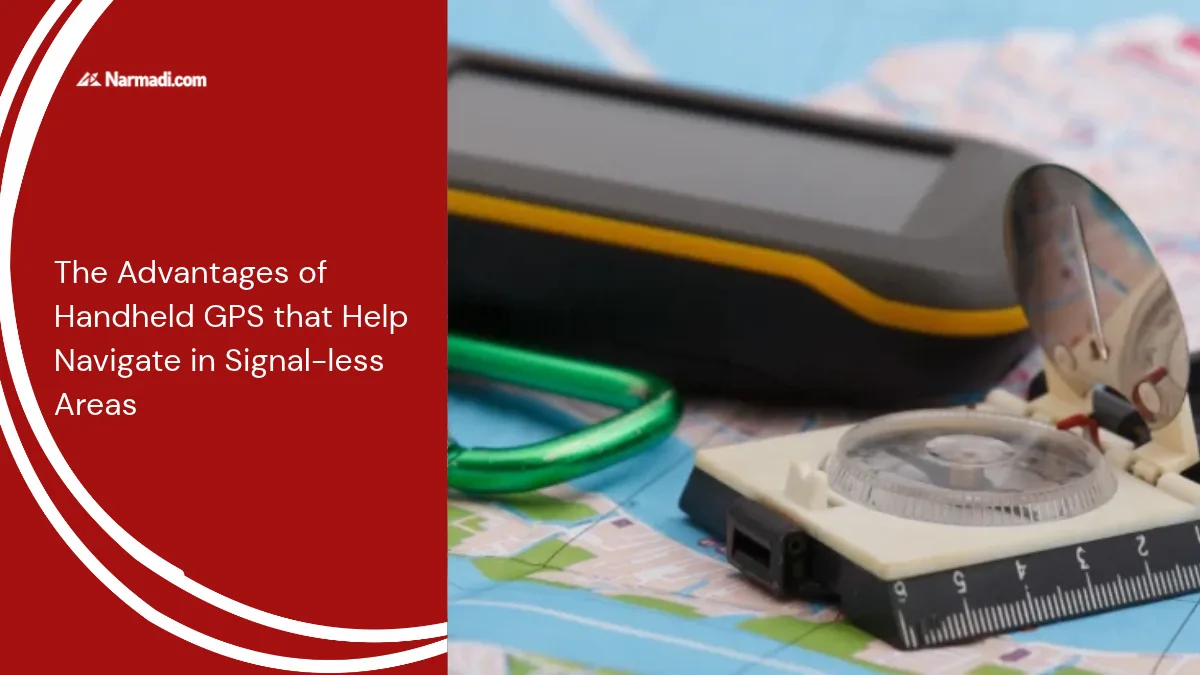

Handheld GPS (Global Positioning System) is a handheld navigation device designed for portable use for outdoor activities such as mountain climbing, forest exploration, and surveying. One of the advantages of handheld GPS is that it helps navigate in signal-less areas.
The other advantages of handheld GPS that they have include accurate location information, advanced features, and good durability.
This article will further inform readers about the advantages of handheld GPS that might help navigate in areas with no signal.
The Advantages of Handheld GPS
Like any other technology, a handheld GPS has several advantages that can be utilized. The advantages of handheld GPS include accurate location information, portability, and being ease of carrying, and good durability. Here are the advantages of a handheld GPS:
1. Accurate navigation in areas with no signal
One of the advantages of handheld GPS is its accurate navigation in areas with no signal. By using signals from satellites, this tool becomes very useful for use in locations without landmarks, such as forests, mountains, or other remote areas.
2. Accurate location information
By using signals from satellites, handheld GPS can provide accurate information. With this tool, you will get location information in real-time, so you can find out the direction of your destination easily.
3. Portable and easy to carry
Portable and easy to carry is another advantage of handheld GPS. Having a small and compact size makes this tool easy to carry when traveling for outdoor activities such as hiking, camping, or exploring the outdoors.
4. Advanced features
Another advantage of handheld GPS is its advanced features. This tool is not only able to navigate well without relying on the internet or cellular signals, but is also equipped with features that support better navigation, such as a digital compass, barometric altimeter, topographic map, track log, waypoints, and interactive SOS.
5. Good durability
The handheld GPS has good durability in terms of battery life, waterproof design, and ruggedness. This tool is designed with a long battery life so that during outdoor activities do not have to worry about weakening battery power. In addition, it is ready to face extreme weather conditions and environments because it has a waterproof and rugged design.
Optimizing Device Performance Outdoors
By understanding the key advantages of GPS, we know that this device is extremely useful in remote areas. However, to maximize its operational capabilities, proper handling and thorough route planning are required.
A basic understanding of the device and its practical application in the field can begin by learning how to use a handheld GPS effectively to mark waypoints and record tracks.
Users must master device configuration, interpret topographic maps, and understand the satellite signal acquisition process. This way, the risks of navigating in unfamiliar terrain can be minimized.
To achieve maximum effectiveness, a combination of advanced hardware and solid operational knowledge is required. This ensures that users have the confidence needed when using the device in the great outdoors.
Real-World Applications Across Industries
Handheld GPS devices are not only used for individual outdoor recreational activities such as mountain climbing and camping. These devices also play a crucial role in various professional sectors that require reliable positioning outside the range of cellular networks.
- Forestry and Agriculture: Used to map forest boundaries, monitor conservation areas, and track ecological changes in the forest canopy.
- Search and Rescue (SAR): Used to coordinate grid-based searches, mark hazard zones, and locate missing persons in disaster areas.
- Geology and Land Surveying: Used to record precise coordinate data for mapping, construction planning, and verifying property boundaries in undeveloped areas.