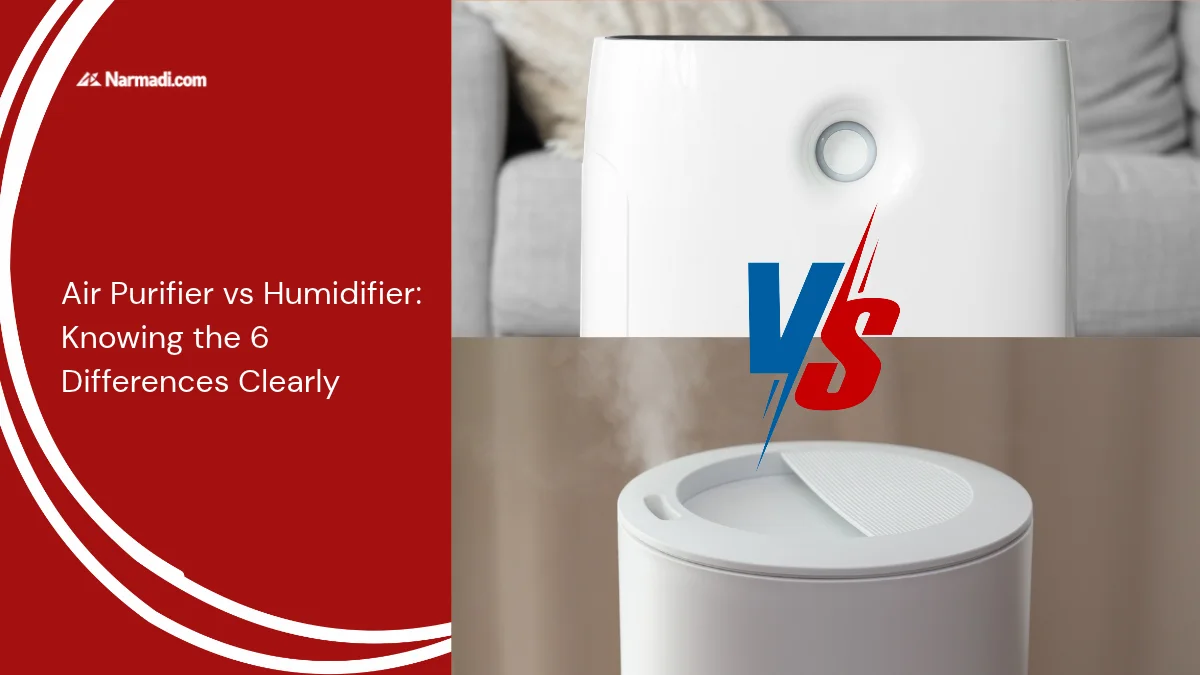
ir purifiers and humidifiers are key to supporting better air in the room. Although both improve air, air purifier vs humidifier has some significant differences.
The differences between air purifiers and humidifiers cover several aspects such as main function, how they work, purpose of use, location of placement, water requirements, and benefits.
This article will delve into the important differences between air purifiers and humidifiers to provide clear air in the room.
What is an Air Purifier?
An air purifier is an electronic device designed to filter and purify air that has been contaminated with harmful particles and pollutants.
The device works by drawing in the air in the room, then filtering it with multiple filters and expelling it back into the room in the form of clean air, resulting in better air quality.
The main focus of the air purifier’s work is on providing a gradually better quality of clean air to be breathed indoors.
What is a Humidifier?
A humidifier is a device that works to add moisture to the air in a room by spraying water vapor into the air. This tool is often referred to as a humidifier and is useful for overcoming dry air that can irritate the skin, lips, and throat, and even worsen the symptoms of respiratory diseases.
The Differences between Air Purifier vs Humidifier
True air purifiers and humidifiers are both used to create good air quality in the room, but they have some differences. Here are five fundamental differences between an air purifier and a humidifier:
1. Main function
- Air purifier: Designed to filter the air from harmful particles such as fine dust, cigarette smoke, pet dander, mold spores, and allergens.
- Humidifier: Designed to increase the humidity of indoor air so that it feels moist and comfortable, especially during the dry season.
2. How they work
- Air purifier: Works by sucking in the surrounding air, filtering it with several layers of filters, then blowing back clean air.
- Humidifier: Works by evaporating water from the tank into the air to moisturize the air in the room.
3. Purpose of use
- Air purifier: Aims to treat indoor air pollution.
- Humidifier: Aims to moisturize air that is too dry.
4. Location of placement
- Air purifier: Can be placed anywhere as long as the room is not open.
- Humidifier: Suitable for dry and less humid rooms.
5. Water requirements
- Air purifier: Does not require water as it filters dirty air.
- Humidifier: Requires large amounts of water, up to 3 liters.
6. Benefits
- Air purifier: Helps prevent and reduce allergies, asthma, and respiratory problems while weighing the advantages and disadvantages of an air purifier for long-term indoor wellness.
- Humidifier: Helps moisturize dry skin, chapped lips, sore throat, and flu symptoms due to dry air.
Matching Appliances to Your Environment
Choosing between an air purifier and a humidifier can’t be based solely on general preference. You need to know whether the problem in your room is related to smoke or excessively dry air.
If your issue is urban smog, airborne allergens, or smoke from household activities, an air purifier will protect your respiratory health. Conversely, if the air in your living space is too dry, a humidifier will prevent skin irritation and discomfort in your mucous membranes.
What you need to assess first is whether your home suffers from excessive pollution or a lack of humidity. That way, you can invest in the right technology to create a comfortable and healthy indoor environment.