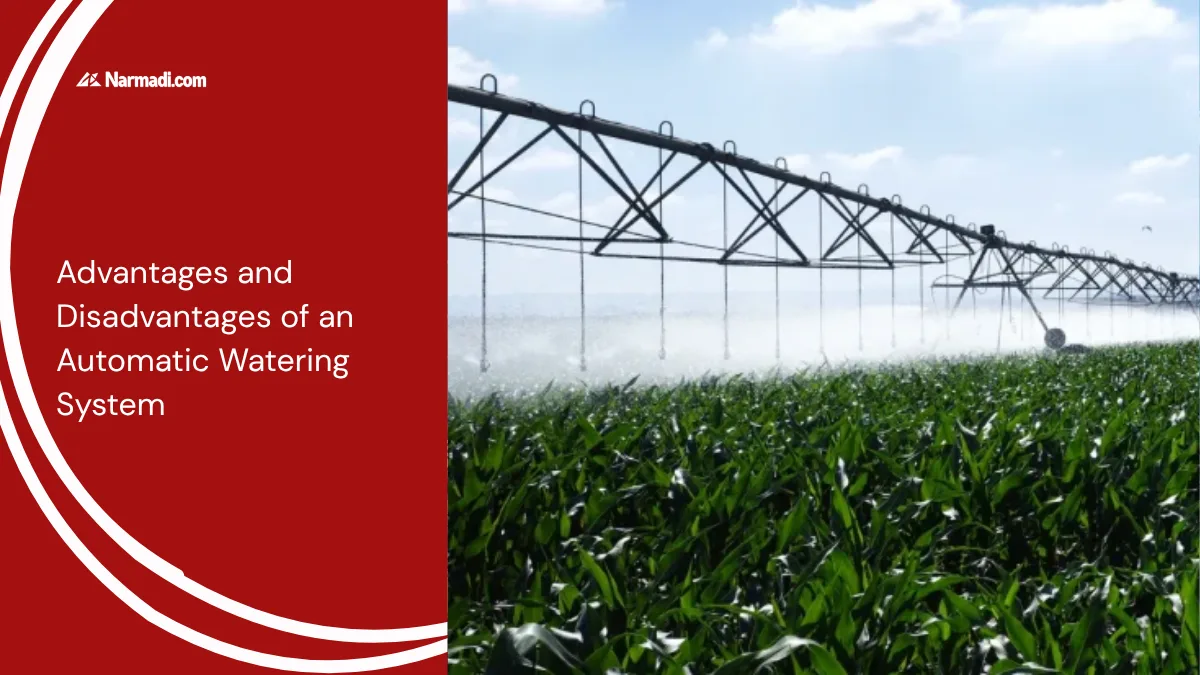
The automatic watering system provides many benefits, especially the ability to meet the need for efficient water management for healthy plant growth and sustainable practices in agriculture and horticulture. However, the advantages and disadvantages of automatic watering systems cannot be separated, even though we can feel the benefits.
The advantages and disadvantages of automatic watering systems include water use efficiency and increased productivity, while the disadvantages include systems that are not compatible with all plants, and installation and maintenance costs are not cheap.
This article will detail the key advantages and disadvantages of automatic watering systems to help agricultural managers and growers evaluate their operational viability.
The Advantages of an Automatic Watering System
Here are some of the advantages of an automatic watering system:
1. Water use efficiency
One of the advantages of an automatic watering system is water use efficiency. With this system, plant irrigation can be adjusted to the needs of plants, such as being channeled directly to strategic places, for example, directly to the roots of plants. This, of course, reduces wastage and increases the efficiency of water usage.
2. Ease and time saving
Ease and time saving is another advantage of the automatic watering system. With this system, the need for watering plants can be scheduled at a certain time or at a certain soil moisture level, making watering easier. With this system, watering will also automatically stop when the soil condition has reached a certain humidity, thus saving watering time.
3. Increased productivity
Another thing that is inevitable from the impact of the advantages of an automatic watering system is the increased productivity of plants. With proper and efficient watering, of course, it will increase plant productivity and crop yields.
The Disadvantages
Here are some of the disadvantages of using an automatic watering system:
1. Systems that are not compatible with all plants
One of the drawbacks of automatic watering systems is that they are not compatible with all plants. The automatic watering system may not be suitable for some plants. Especially plants that require very moist or dry soil conditions.
2. Complicated system
A complicated system is another drawback of an automatic watering system. For those who do not have technical skills, this system will be very complicated. Furthermore, it requires additional maintenance such as filter cleaning and device maintenance. The system also has the potential to experience technical problems such as pump, sensor, or hose failure, requiring repairs.
3. Installation and maintenance costs are not cheap
Another disadvantage of an automatic watering system is that the installation and maintenance costs are not cheap. This watering system requires an initial investment that is not cheap for installation and maintenance. This cost includes the device, installation, and ongoing maintenance.
Transition to Smart Irrigation Networks
By understanding the advantages and disadvantages of automatic watering systems, we can appreciate their role in modern agronomy. These systems replace manual labor with sensor-based scheduling.
This capability drastically reduces water waste, optimizes soil moisture in the root zone, and increases overall crop yields. The integration of a smart controller equipped with the Short Range Device (SRD) communication protocol allows operators to monitor the system remotely in real time and automatically detect malfunctions.
Implementing this system is not an overnight process. It requires careful planning, taking into account the high initial investment, routine maintenance of valves and pumps, and system compatibility across different plant species.