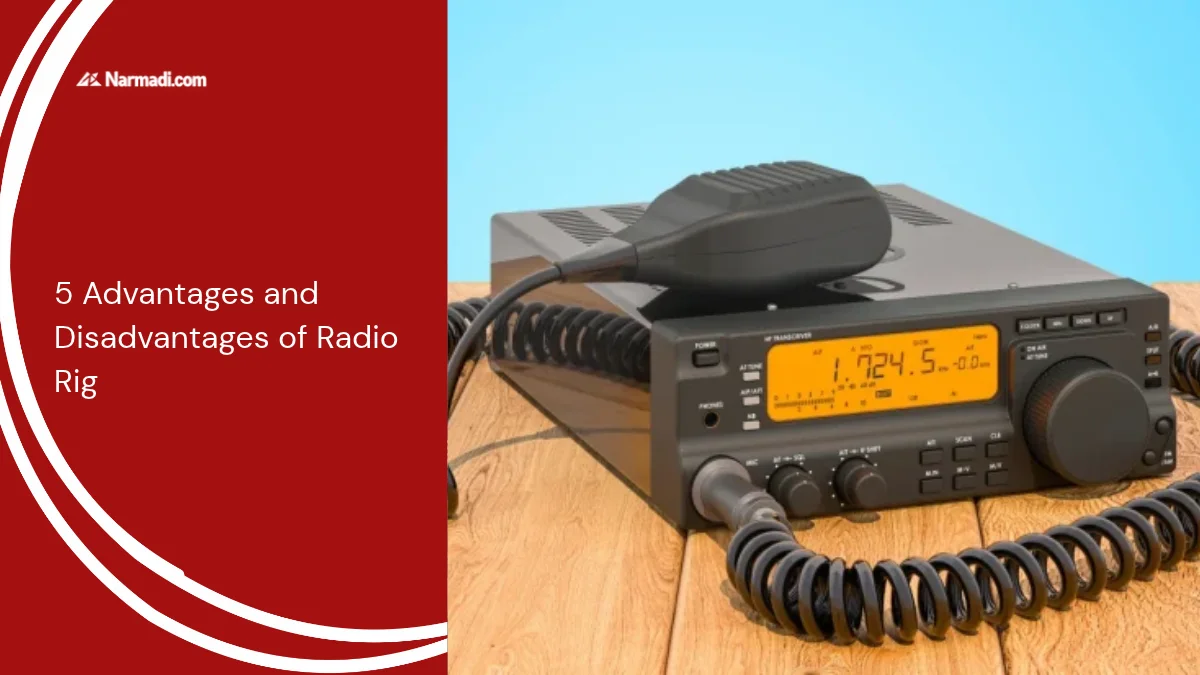
A radio rig provides many benefits, especially the ability for emergency communications. However, the advantages and disadvantages of radio rigs cannot be easily separated, even though the benefits are evident.
The advantages and disadvantages of radio rigs include reliable communication tools, not depending on cellular networks, and being easy to use, while the disadvantages include the risk of signal interference, intermittent communication, and even requiring a specialized technician for installation.
This article will inform you about some of the advantages and disadvantages of radio rigs that you can consider.
The Advantages of Radio Rig
Here are some advantages of a radio rig:
1. Reliable communication tool
One of the advantages of a radio rig is that it is a reliable communication tool. It becomes a reliable communication tool when cellular networks may be disrupted, such as in emergencies and natural disasters.
2. Extensive range
An extensive range is another one of the advantages of radio rigs. With the use of appropriate antennas, the range of these devices can be quite extensive, making it ideal when long-distance communication is required.
3. Does not depend on cellular networks
As we know, radio rigs do not use cellular networks while using radio frequencies. Hence, this device can still be used in areas where there is no cellular network.
4. Clear sound quality
Despite using radio frequencies, rig radios already have clear sound quality, especially digital ones. This one advantage makes this device reliable even in noisy environments.
5. Easy to use
Another advantage of this tool is its ease of use. Even if you are not familiar with this device or are a beginner, there is no need to worry, because radio rigs are generally very easy to use.
The Disadvantages
Here are some disadvantages of a radio rig:
1. Risk of signal interference
One of the drawbacks of radio rigs is the possible risk of signal interference. It uses radio frequencies that may be at risk of interference from factors such as electromagnetic interference, too long a distance, or bad weather.
2. Range limitation
Range limitation is still a drawback of radio rigs. Although capable of reaching a considerable distance, the range of these devices is highly dependent on the type used, geographical conditions, and the surrounding environment.
3. Alternating communication
Although it is a two-way communication tool, in communicating using a radio rig, users have to talk alternately. This means there is no way to repeat important information if it is missed, unlike other media that allow for repetition.
4. Limited communication features
Radio rigs have limited features, namely voice communication only. The basic feature of this device is alternating two-way communication, unlike other communication devices that may have additional features such as SMS or data.
5. Requires a specialized technician for installation
Although using this tool is fairly easy, installing a radio rig requires a technician with knowledge of frequencies, squelch, antennas, and output power. Communication can be disrupted or even malfunction if there is a setting error.
Balancing in Real-World Use
Weighing the advantages and disadvantages of a radio rig will help you determine whether it meets your specific needs. This device does come equipped with features such as a wide range, independence from cellular networks, and high reliability. This is why it is often used in emergencies.
Things to keep in mind with this device include potential challenges such as signal interference, half-duplex communication limitations, and the need for professional installation. You can ensure proper antenna calibration and comply with general frequency regulations to achieve stable, long-lasting, and effective two-way communication in any environment.
Understanding both sides of the equation allows you to maximize the benefits of radio devices. At the same time, you can proactively minimize their drawbacks.