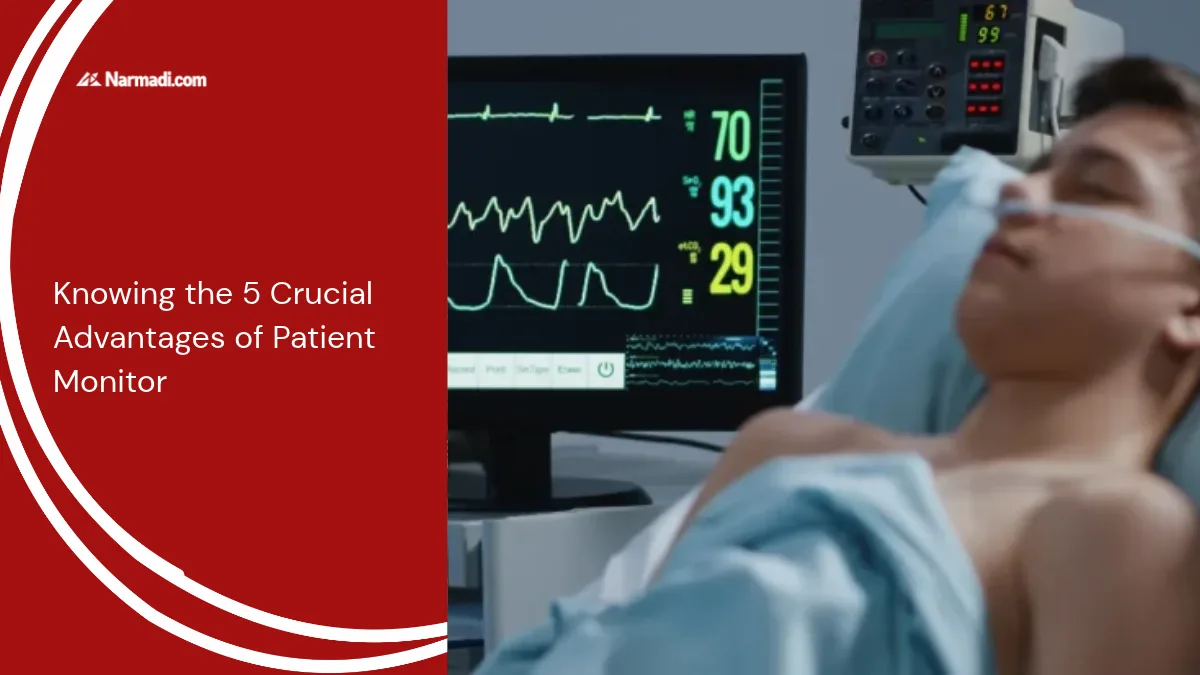
A patient monitor is an indispensable tool that greatly assists medical staff. One of the advantages of a patient monitor is that it helps monitor a patient’s condition in real-time.
The advantages of patient monitors include continuous vital sign tracking, early detection of changes in condition, and increased patient safety.
This article will further inform readers about the advantages of patient monitoring that might help monitor a patient’s condition in real-time.
The Advantages of Patient Monitoring
Like any other enterprise technology, patient monitoring systems offer several crucial advantages that can be fully utilized in clinical workflows. Here are the main advantages of patient monitoring in detail:
1. Monitoring real-time vital signs
One of the advantages of a patient monitor is its ability to monitor vital signs in real-time. As long as the device is attached to the patient’s body, it will be able to continuously detect the specified vital parameters, ranging from heart rate, blood pressure, and oxygen saturation to respiratory rate.
2. Improving medical work efficiency
Improving medical work efficiency is another advantage that patient monitors provide. With this device, medical personnel can monitor multiple patients simultaneously. Advanced units are also connected to hospital enterprise networks, allowing medical staff to monitor conditions thoroughly across hospital wards without needing to stay constantly inside the patient’s room.
3. Early detection of changes in condition
With its ability to monitor vital signs in real-time and continuously as long as the device is installed on the patient’s body, any changes in the patient’s condition will be read by the monitor. So that if there is something that is not appropriate, medical staff can decide on actions quickly and precisely according to the results of monitoring.
4. High data accuracy
Patient monitors are designed to provide accurate data. It aims to assist medical staff in providing the right medical decisions, thus avoiding the risk of errors in diagnosis and treatment.
5. Increased patient safety
The highly vaunted advantage of this tool is that it results in increased patient safety. With intensive monitoring from medical staff, real-time data generated, and the accuracy of the data provided, medical staff can act faster and more precisely to provide care to patients, so that patients receive maximum care with a reduced risk of unexpected complications.
Bridging Technology and Clinical Expertise
Understanding the five core advantages of modern patient monitors helps us realize that they are much more than just ordinary display devices. These monitors serve as vital clinical partners.
They empower healthcare institutions to raise standards of care, reduce operational barriers, and maintain continuous monitoring of vulnerable patients, thereby supporting expertise in hospital care.
Maximizing Clinical Outcomes Through Advanced Monitoring
The implementation of patient monitoring technology is a critical investment in modern clinical excellence. These devices fundamentally transform how medical teams respond to critical situations in real time.
This success is driven by their unique capability to combine continuous vital sign monitoring, automatic anomaly detection, and high data precision. Looking at the five crucial advantages outlined above, the direct positive impact on healthcare delivery becomes clear.
With these devices, medical staff are able to accelerate clinical decision-making, optimize resources, and improve long-term patient recovery. By fully utilizing the capabilities of these advanced patient monitors, medical staff are always prepared to provide the highest standard of care.