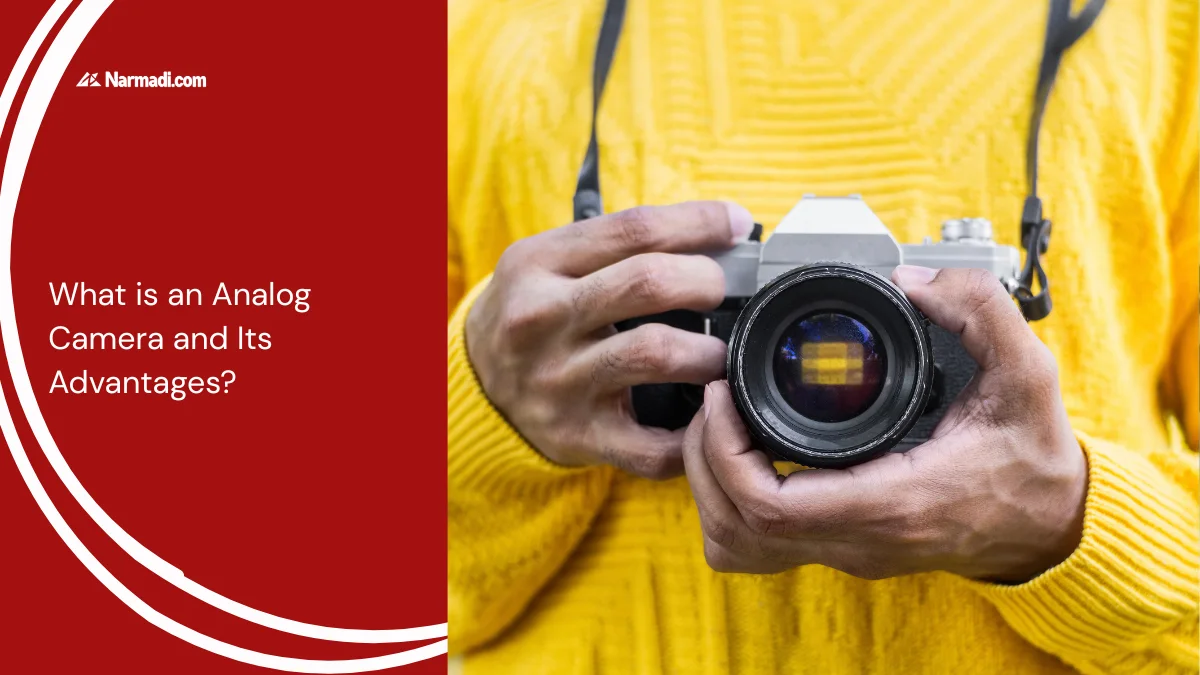
Analog cameras have long held a special place in the hearts of photography lovers. Nowadays, many photographers are turning back to analog cameras to capture special moments with a classic touch.
If you are interested in knowing more about analog cameras, starting from their definition, uses, and advantages, let’s discuss them together below.
What is an Analog Camera?
Since their inception in the 19th century, analog cameras have been the backbone of photography, using film to capture and store images.
The system works very differently from modern digital cameras that use electronic sensors; these cameras rely on chemical reactions on light-sensitive film.
Exposure to light through a lens would record an image on the film, which then required a chemical development process to produce a physical photograph.
The Usability
The most important use of analog cameras in photography is their unique photo quality and creativity.
- Unique Photo Quality: These cameras produce photos of a different quality than digital cameras, with distinctive film textures, colors, and details.
- Creativity: These cameras allow users to explore different types of film with different light sensitivities, as well as use various analog photography techniques to create unique visual effects.
The use of these cameras provides a more manual photography experience and requires more planning, making the resulting photos more appreciated.
The Advantages
Analog cameras have several advantages, from unique image quality to the absence of noise. Here are the advantages of these cameras that you can take advantage of:
1. Unique image quality
One of the advantages of these cameras is their ability to produce unique image quality. Because it is still conventional and does not have complicated settings or features, the results of these camera photos have more unique color and texture characteristics, and tend to be clearer without noise.
2. Battery saving
Another benefit of these cameras is their battery saving. These cameras do not require batteries to take photos, but only to activate the meter and exposure control.
3. Authentic photography experience
Using this camera allows you to have a more immersive and satisfying experience. You will go through the photography process of setting the focus, exposure, and waiting for the print on this camera.
4. Good light capture ability
With these cameras, you can produce sharp and detailed images. This is because they have good light-capturing capabilities.
5. No noise
Another advantage of these cameras is the absence of noise. Unlike digital cameras, these cameras have no noise, especially in low-light conditions.
Limitations to Keep in Mind
Whilst analogue cameras have their advantages, it is inevitable that they also have drawbacks that need to be taken into account. These are part of the trade-offs you must accept if you choose to use them.
- Ongoing Operational Costs: The cost of using analogue cameras is not limited to the initial purchase; it also involves ongoing expenditure on film rolls, chemicals for processing, and scanning services.
- Lack of Instant Feedback: The absence of a digital display means you can’t see focusing or exposure errors right away, so you can’t correct them immediately.
- Limited Storage Capacity: Unlike digital cameras, which come with microSD cards for ample storage, the storage capacity of analog cameras depends on each roll of film, so you need to manage your usage carefully during a photo session.
Those are the pros and cons of analog cameras that you should consider. Taking them into account will help you choose the right imaging equipment for your needs.