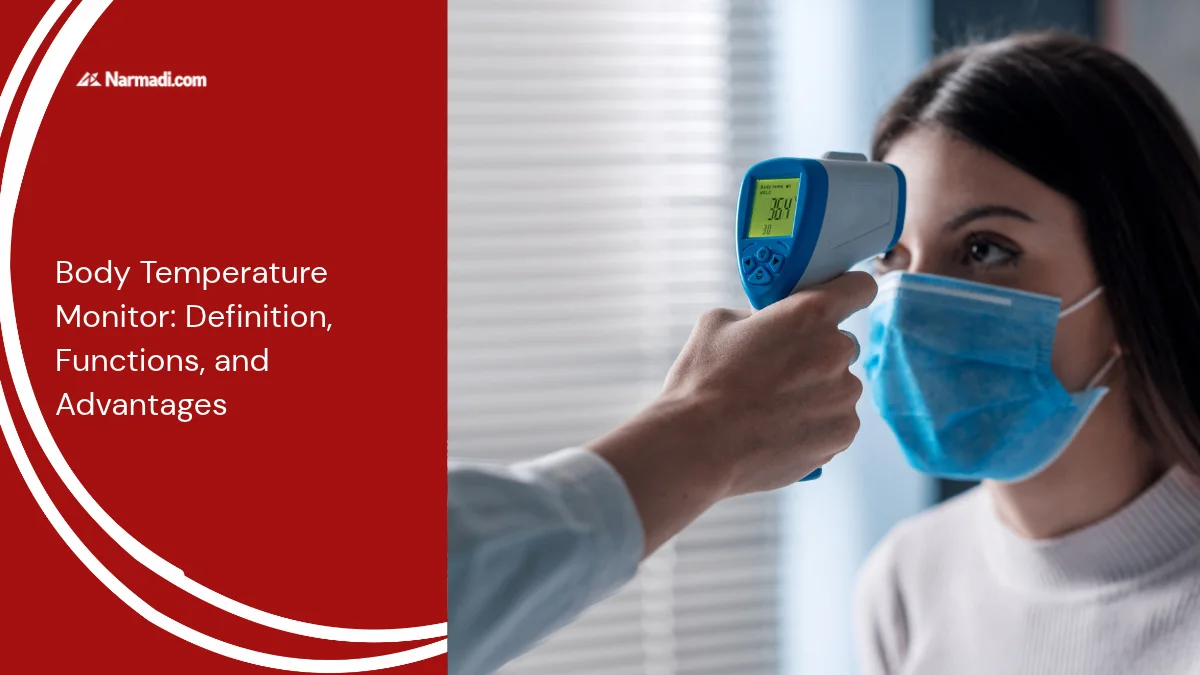
The presence of a patient monitor facilitates medical operations by continuously monitoring vital signs, including heart rate, blood pressure, oxygen saturation, and respiratory rate, in real time. One type of patient monitor is a body temperature monitor, which has some functions and advantages.
The functions of a body temperature monitor include applications in medical environments and non-medical settings. Moreover, the advantages include detecting temperature changes early, monitoring treatment effectiveness, and versatility of use.
This article will provide you with information on body temperature monitors, including their definition, functions, and advantages.
What is a Body Temperature Monitor?
A body temperature monitor is a type of patient monitor specifically designed to monitor body temperature in real-time and continuously. This tool is commonly used in infants, children, patients with infections, high fever patients, and for postoperative monitoring. These patient monitors work using sensors that are usually installed in the mouth, throat, or attached to the patient’s skin.
The Functions
The body temperature monitor has several functions, from application in medical environments to non-medical applications. Here are some of its functions:
- Core body temperature monitoring: Allows real-time monitoring of body temperature with high accuracy, thus detecting high-temperature changes.
- Application in medical environments: Able to detect a patient’s fever and monitor the patient’s condition during treatment to adjust actions accordingly.
- Non-medical applications: Able to monitor temperature in industries for production processes or temperature monitoring on machines and for research purposes to monitor changes in body temperature under various conditions.
The Advantages
The body temperature monitor has several advantages, from detecting temperature changes early and monitoring treatment effectiveness to versatility of use. Here are some of its main advantages in detail:
1. Detect temperature changes early
One of the advantages of a body temperature monitor is that it can detect temperature changes early. This device is able to detect the slightest temperature change, so it helps medical staff see the progress of patients who are being treated and monitored.
2. High data accuracy
These patient monitors have accurate data from infrared emitted to the patient’s body. It aims to assist medical staff in making the right medical decisions, thus avoiding the risk of errors in diagnosis and treatment.
3. Monitoring treatment effectiveness
Monitoring treatment effectiveness is another advantage of body temperature monitors. By tracking temperature changes, medical staff are able to monitor and evaluate the effectiveness of treatment so as to make necessary adjustments in the continuation of therapy during treatment.
4. Continuous monitoring
With this patient monitor, medical staff can perform continuous monitoring of the patient’s condition. This device can provide valuable data for healthcare providers and research if needed.
5. Versatility of use
Another advantage of body temperature monitors is the versatility of use. While body temperature measurement is often used for medical purposes, the device can also be used for sports or industrial applications.
Advanced Thermal Tracking in Healthcare
In addition to basic readings, advanced body temperature monitoring plays a crucial role in early intervention protocols. For vulnerable groups such as neonatal patients, individuals with severe infections, and those recovering from major surgery, these devices are highly relied upon.
Continuous temperature monitoring provides an objective benchmark that helps medical staff detect issues before physical symptoms become apparent. This allows them to anticipate and prevent unwanted events.
Furthermore, when considered alongside the broader advantages of patient monitor systems, temperature sensors make a significant contribution. Temperature data can be synchronized with heart rate and hemodynamic metrics. This provides healthcare professionals with a holistic view of a patient’s metabolic and physiological stability.