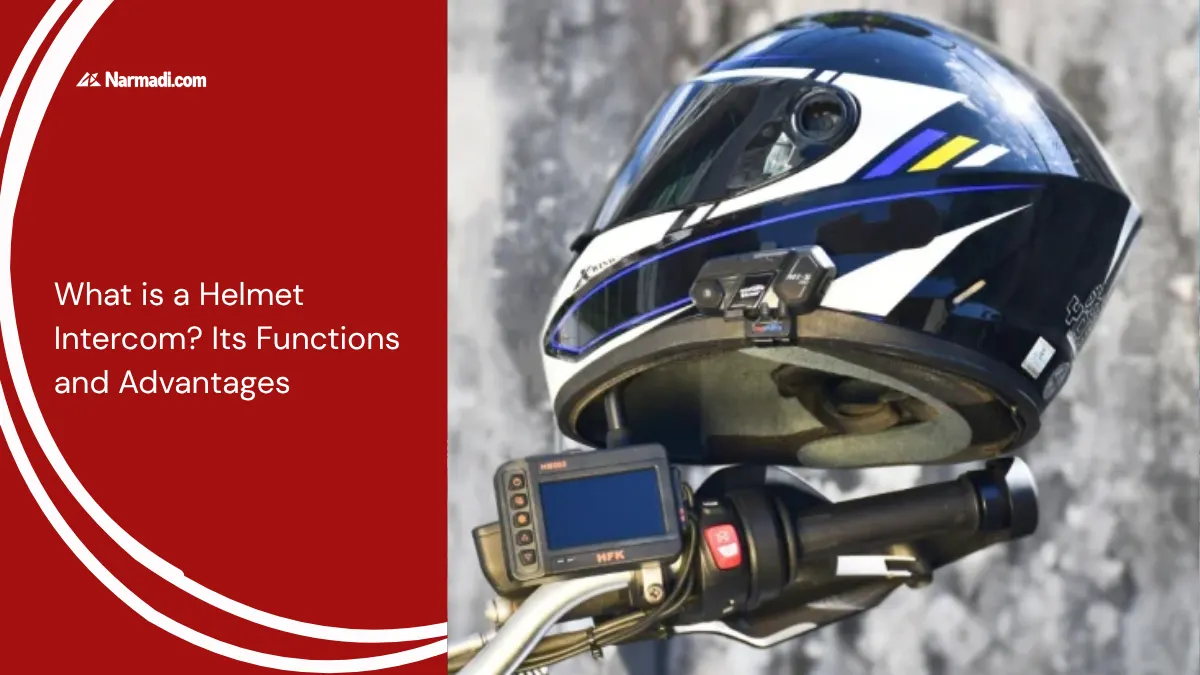
Unobstructed two-way communication while riding is a problem for motorcyclists. With a helmet intercom, two-way communication between riders or passengers can be maintained properly.
Helmet intercoms provide communication comfort and can help you access navigation and entertainment while traveling, increasing your driving safety.
In this article, you will find out what a helmet intercom is, its definition and function, its key advantages, and the technical compliance standards required for modern wireless helmet intercoms.
What is a Helmet Intercom?
A helmet intercom is a helmet-mounted device that enables two-way communication. With this device, riders and passengers can communicate properly without being disturbed by noise from other vehicles.
Furthermore, the helmet intercom can also be used to communicate between riders, listen to GPS navigation, pick up the phone, or listen to music. This device is very useful for those of you who like touring, motorcycle clubs for convoy purposes, or just personal use to improve your driving safety and comfort.
The Functions
The helmet intercom functions in many ways to improve your riding comfort and safety. Many functions of the intercom on the helmet will help you with communication comfort, help with navigation, and entertainment services to increase driving safety. Here are some of the functions of the helmet intercom:
- Communication comfort: This tool is very helpful in providing good communication between bikers or passengers, as well as providing information, instructions, or directions.
- Navigation aids: By being able to connect with Google Maps or other GPS apps through your smartphone, the intercom can provide information directly through voice.
- Entertainment services: With the intercom connected to your smartphone, you can access all entertainment services, from listening to music, radio, or podcasts to accompany your ride.
- Increased security: With its various features, the intercom automatically provides you with safety while driving, especially by avoiding wrong turns with GPS and communicating with other drivers, and avoiding drowsiness with entertainment services that can be enjoyed.
The Advantages
With the various features and functions possessed by the intercom, it is not inferior to the many advantages that this device also provides. Here are some of the advantages of a helmet intercom:
1. Driving comfort
With the helmet intercom, you can feel the comfort of driving with a variety of features that you can enjoy, ranging from communicating clearly with other drivers or passengers to getting voice navigation and entertainment services listening to music, radio, or podcasts to accompany you driving.
2. Ease of setup
When the helmet intercom is connected to your smartphone, you don’t need to touch your smartphone while riding, because you can adjust the volume, change music options, and even pick up the phone through the intercom. Some of the latest intercoms are also equipped with voice control, so you can still focus on riding without being bothered by various device settings.
3. Water resistance
Bad weather is not an obstacle to keeping you riding safely, because the helmet intercom can be resistant to water. So even in the rain, you can still ride without having to worry about damage to the intercom. But even though you can still ride in the rain, you must pay attention to the volume setting of your intercom to stay focused and hear the sound from outside if there is a horn from another vehicle.
4. Reliable connectivity
The helmet intercom can connect with your smartphone with reliable connectivity to maintain a stable connection with minimal distractions. So you don’t have to worry about intermittent sound from your intercom while communicating or while enjoying entertainment services.
Technical Compliance and Modern Mesh Connectivity
By understanding helmet intercom systems, we can see how wireless communication enhances rider comfort and group coordination on the road. The technology most commonly used in intercom devices is Bluetooth.
This technology is capable of connecting standard point-to-point connections into a self-healing Dynamic Mesh Communication (DMC) network. Interestingly, this technology is also used to support full-duplex audio architectures, IP networks, and short-range wireless protocols that support both vehicles and building access systems.
Point to note: Wireless devices worn and operated in proximity to the user’s head certainly require appropriate technical and safety compliance standards. Therefore, every country has type approval certification requirements for every helmet intercom device that is marketed and used.
This certification includes testing for Radio Frequency (RF), Electromagnetic Compatibility (EMC), and Specific Absorption Rate (SAR). Obtaining compliance certification verifies that the helmet intercom is RF-compliant, safe for head-worn operation, and fully authorized for commercial distribution.