
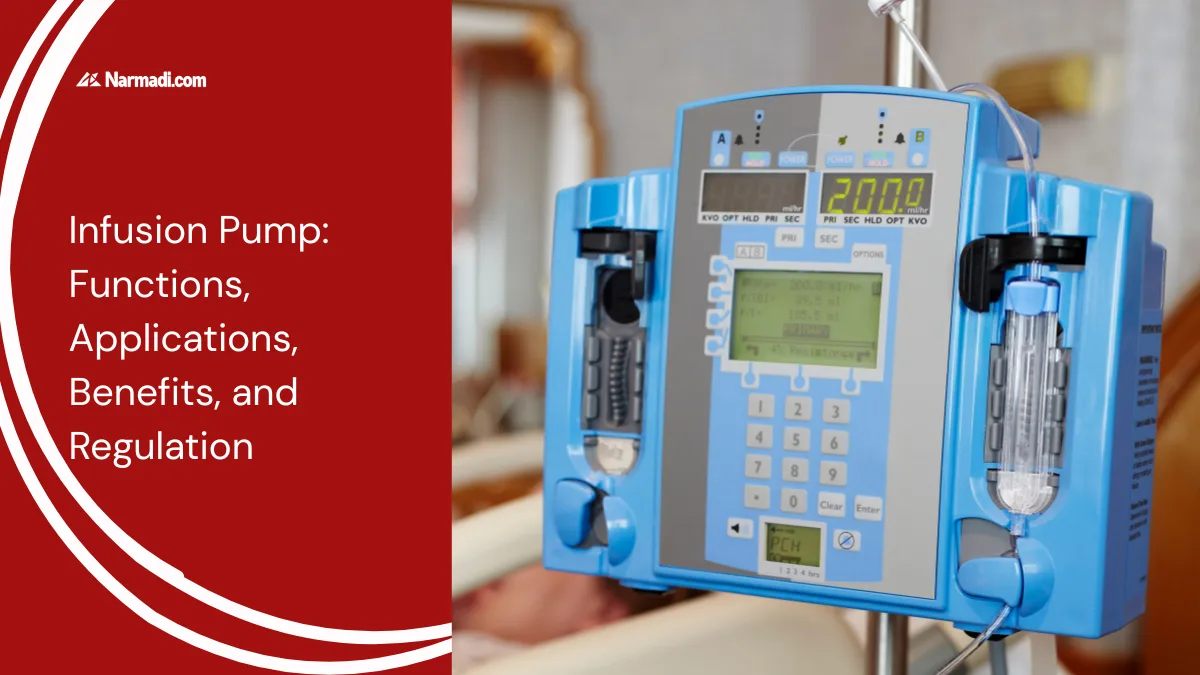

We know that in hospitals, there is a device that is needed by medical staff in delivering fluids, medications, or nutrients into a patient’s body, namely the infusion pump.
Infusion pumps are very useful because they can provide intravenous nutrition, administer pain medication, and assist diabetic patients.
This article will inform you more about infusion pumps, including their definition, functions, applications, benefits, and usage regulations.
What is an Infusion Pump?
An infusion pump is a medical device used to deliver fluids, medications, or nutrients into a patient’s body in a controlled manner.
This device allows for the delivery of very small or large amounts of fluid, as well as precise and automatic control of the flow rate.
How does it work?
In general, infusion pumps operate on mechanical principles. Fluid is delivered to the patient’s body using pressure and propulsion. To function properly, this device relies on supporting elements.
These elements include the pump motor, speed control, sensors, and alarms. It’s even equipped with a display and navigation system.
The pump motor regulates the fluid flow. The speed control regulates the number of drops per minute depending on the doctor’s needs. Sensors and alarms detect disturbances such as air in the infusion needle, excessive pressure, or fluid depletion.
The display and navigation system display all information, from infusion status to required parameters. Smart devices can even connect to the hospital network to update patient data in real time.
The Functions
The multifunction infusion pump has several functions, including controlling fluid administration for all types of fluids. Here are some of its functions:
- Controlling fluid administration: Administer fluids or medications in the correct dosage and at controlled intervals.
- For all types of fluids: Can be used for all types of fluids, including enteral nutrition, medications, insulin, antibiotics, chemotherapy drugs, and pain relievers.
- In various environments: Can be used in both hospital and home environments.
The Applications
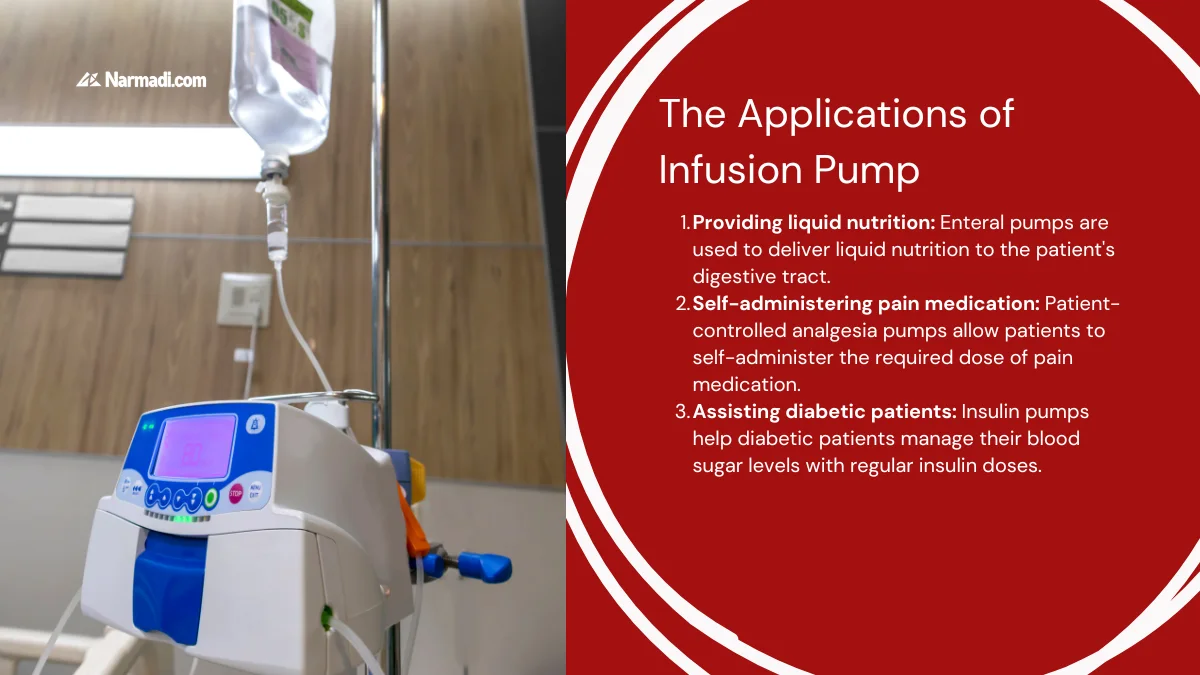
With many functions provided by infusion pumps, this tool is applied in providing liquid nutrition, self-administering pain medication, and assisting diabetic patients. The following are examples of the application:
- Providing liquid nutrition: Enteral pumps are used to deliver liquid nutrition to the patient’s digestive tract.
- Self-administering pain medication: Patient-controlled analgesia pumps allow patients to self-administer the required dose of pain medication.
- Assisting diabetic patients: Insulin pumps help diabetic patients manage their blood sugar levels with regular insulin doses.
The Benefits
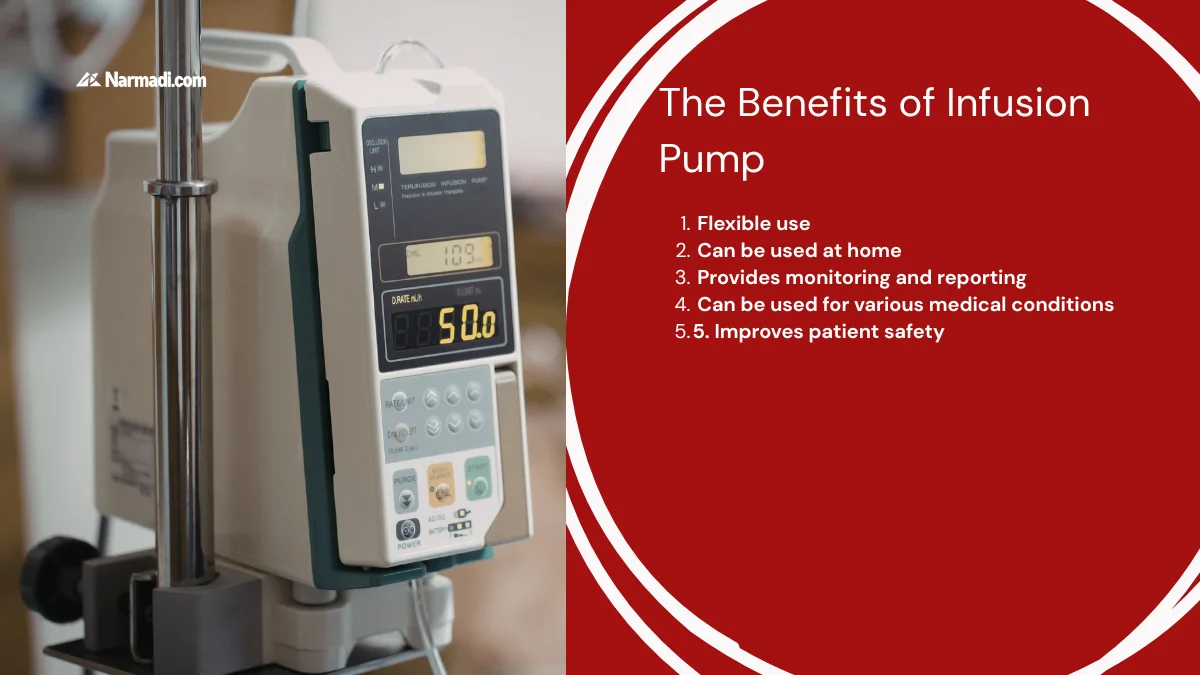
The use of an infusion pump offers many benefits, particularly its flexibility, monitoring and reporting capabilities, and improved patient safety. Here are some of the key benefits:
1. Flexible use
One of the advantages of this pump is its flexibility. This device can be used for various types of fluids, including nutrients, antibiotics, painkillers, and insulin.
This device does not rely on a plugged-in power cord for battery power. This means that when the patient needs to go to the bathroom or move rooms, the cord can be unplugged without interrupting the ongoing infusion.
2. Can be used at home
Another benefit of using this device is its flexibility. This allows for portable infusion pumps, making it more convenient for patients to receive infusion therapy at home. This eliminates the need for treatment that is typically performed in a hospital.
3. Provides monitoring and reporting
Some modern devices are equipped with monitoring and reporting features. These features can help provide information about medication administration.
This is certainly very helpful in patient care management. Patient data can be accurately recorded, allowing for optimal care.
4. Can be used for various medical conditions
Another benefit of this pump is its versatility. It’s not limited to specific medical conditions; almost any condition can benefit from this device.
This device can be used for diabetes, cancer treatment, or simply for patients requiring fluid administration. Essentially, any fluid administration need can be addressed with this device.
5. Improves patient safety
Improving patient safety is another benefit of this pump. We know that the most important thing in treatment is meeting fluid needs.
With this device, the patient’s fluid needs will be met effectively. In fact, the precise dosage will be determined and carefully monitored, contributing to improved patient safety.
Usage Regulations
The infusion pump operates within a specific frequency spectrum. In each country, all Short Range Device (SRD)-based wireless devices must have a Type Approval Certificate.
Wireless regulations require all radio frequency-based devices to meet specific technical standards before they can be sold in that country. This certification ensures that the product meets safety standards and does not interfere with other communication devices.
The certification process involves technical testing, including frequency tuning, safety checks, and verification of environmental compatibility. Ultimately, this results in a Test Report confirming that the product meets technical standards and is safe for use.
For companies wishing to sell infusion pump products, Dimulti, as a Type Approval Service, can assist with this process. Our services include preparing technical and legal documents, conducting necessary testing, ensuring compliance with national regulations, and helping companies streamline the certification process. [UN]