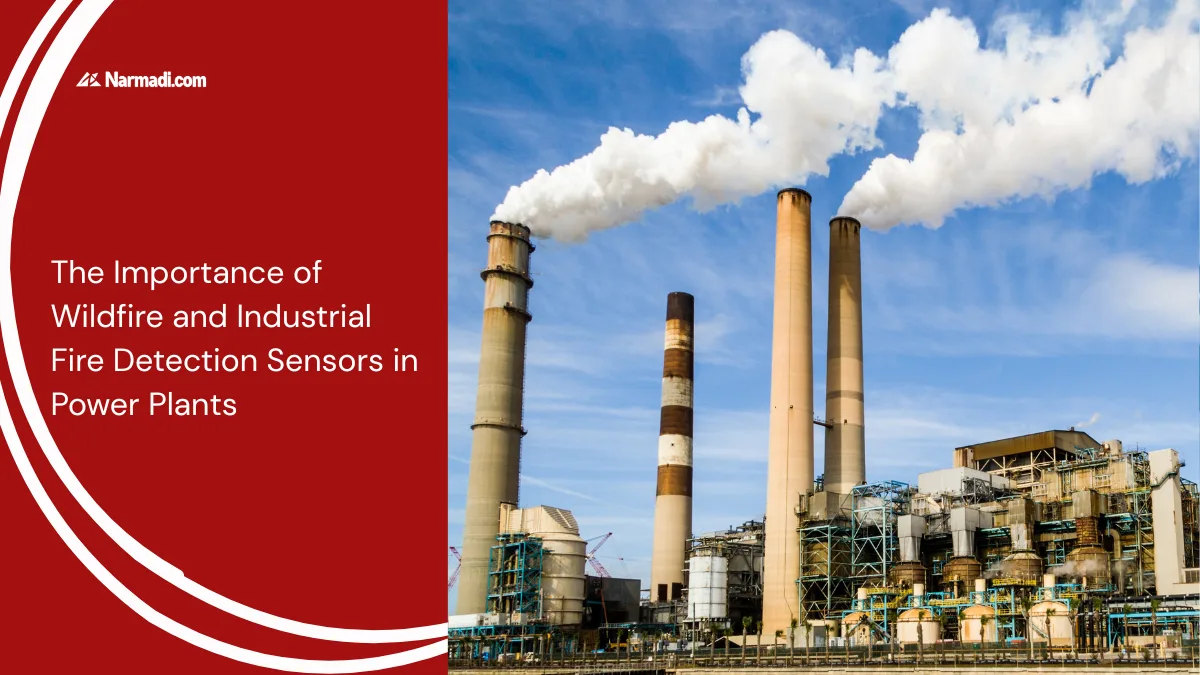
The use of wildfire sensors and industrial fire detection sensors in power plants is needed to detect fires so that quick action can be taken to extinguish them.
Not only that, the importance of using fire detection sensors in power plants includes several other things, such as early detection, monitoring, analysis, and personnel safety.
This article will inform you about the importance and the implementation of fire detection sensors in power plants.
Fire Detection Sensor in Power Plants
Forest fire sensors installed in power plants serve as specialized detectors for fires, especially fires occurring in open areas (forest fires) that could pose a threat to plant operations.
It is designed to recognize the presence of flames or smoke from a significant distance and automatically activate alarms or preventive measures if a fire is detected.
The Importance
With the benefits that fire detection sensors provide, they must be installed in power plants. Here are some of the things that make fire detection sensors in power plants important:
1. Early detection
One of the reasons for the importance of fire detection sensors in power plants is their ability to detect fires early. Fire detection sensors can detect fires at an early stage, much faster than traditional smoke or heat detectors, thus providing valuable time to take preventive and extinguishing measures.
2. Monitoring and analysis
Another important aspect of installing fire detection sensors in power plants is their ability to monitor and analyze. The data collected by the fire sensors can be used to monitor the condition of the power plant and analyze potential fire risks, allowing for more effective preventative measures.
3. Asset security
With fire sensors, valuable power plant assets that have a high risk of fire, such as generators, turbines, and electrical systems, can of course be helped to be protected.
4. Loss prevention
Fires in power plants can lead to disruption of electricity supply, equipment damage, and even potential explosions. Fire sensors help minimize such impacts.
5. Personnel safety
Another important use of fire detection sensors in power plants is to help protect personnel. Fires in power plants can also put the lives of personnel working there at risk. Fire sensors help provide early warning and trigger timely evacuation measures.
The Implementation
Here are some examples of fire detection sensor implementations in power plants that are usually used:
- Environmental Monitoring: Forest fire sensors are placed around the power plant to detect potential hazards from forest fires or dry grass.
- Equipment Monitoring: Similar sensors are also installed inside the plant, such as turbines, generators, or transformers, to detect fires due to equipment malfunction.
- Control Room Monitoring: Sensors are installed in the control room of the plant to detect possible fires in the area.
Type Approval Standards for Critical Infrastructure Monitoring Hardware
Forest fire sensors and telemetry devices installed at various power stations often utilise long-range wireless communication technologies, such as LoRaWAN or cellular IoT modules. These technologies are used to transmit telemetry data in real time to a central control system.
All devices that emit radio frequencies (RF) must comply with strict telecommunications and technical standards. This is particularly true of power stations, which are critical infrastructure facilities.
Consequently, manufacturers, importers and engineering contractors are required to obtain type-approval certification before marketing or using such devices. This certification involves testing for Radio Frequency (RF), Electromagnetic Compatibility (EMC) and electrical safety.
The aim is to ensure that fire sensor hardware complies with the applicable technical standards. Obtaining a type-approval certificate indicates that the device is safe to use and does not interfere with the operation of other electronic devices in its vicinity.