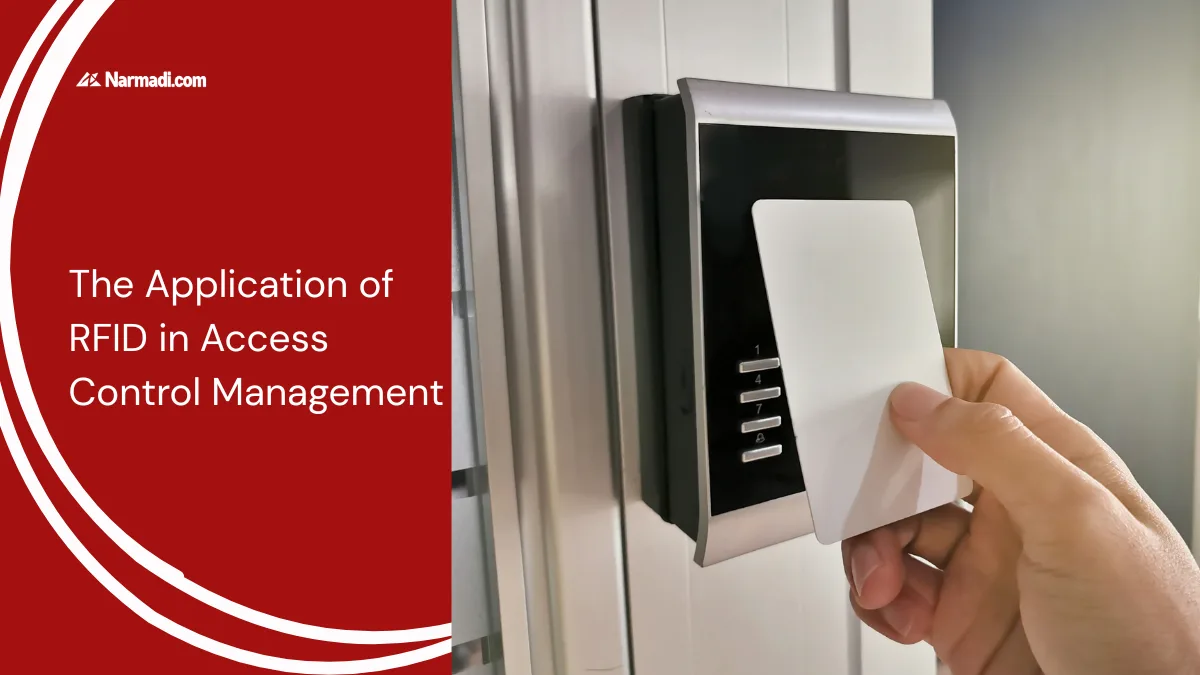

In the last decade, the Internet of Things (IoT) industry has been booming. One of the good manifestations of the practicality of the Internet of Things is the use of Radio Frequency Identification (RFID) in access control management.
RFID technology is developing rapidly, so it is used for access control management. RFID in access control management is not uncommon in our daily lives because it has many functions than traditional access control systems.
One of the functions of RFID in access control management is to quickly record the personal information of everyone who enters and leaves at the same time.
When a person with an RFID card passes through the gate, the information in the card is automatically collected by the system without manual intervention, which makes access control management more convenient.
In this article, we will provide further information regarding the application of RFID in access control management, which is useful in various sectors.
How Does an RFID Access Control System Work?
Before discussing how RFID is applied in various sectors, it’s helpful to understand how it works. This is the big difference between RFID and NFC. Here are the basic components that make this system function:
- RFID tag or card: This is a small chip embedded in a device to store a unique identification number.
- RFID reader: A device used to detect and communicate with RFID tags, typically installed at doors, gates, or entry points.
- Access control panel: Data from the ID tag captured by the RFID reader is sent to the controller to verify the ID.
- ID verification: A verified ID triggers a signal to unlock the door, gate, or turnstile.
The entire RFID process takes less than one second. Every entry and exit is automatically recorded. This process eliminates the need for manual checks while providing a comprehensive record of who accessed which areas and when.
Application of RFID in Access Control Management
RFID access control systems cover the safety requirements of modern working environments, departmental administration, daily attendance management, and staff cafeteria or dining access.
RFID access control systems are widely used in apartments, residential areas, factory patrols, corporate research and development departments, and medical, financial, and other applications.
The following are some applications of RFID in access control management:
1. Residence / Apartment / Hotel
RFID access control systems for residential and apartment sites can effectively prevent unauthorized personnel from entering and protect the security of these sites to the greatest extent.
If an accident occurs during a certain period, information such as recorded video footage can be consulted later.
2. Office
Each employee has an RFID work card as a data carrier for attendance to realize employee attendance checking, data collection and recording, information inquiry, and attendance statistics.
Additionally, companies can use cards held by employees to manage their access to workplace information, systems, materials, and devices.
3. Parking space
In controlling vehicle entry and exit, the access control system can realize non-stop identification, save time, and improve intersection traffic efficiency.
More importantly, it can carry out real-time monitoring of parking lot vehicle access, accurately verify the identity of people, vehicles, and car owners, maintain regional public order, and make parking lot management more convenient, intelligent, and efficient. Also, it is part of the smart parking management system.
4. Hospital
Medical institutions assume the important task of providing medical care to the public. There is a large flow of people in hospitals every day, including patients, family members, and medical staff, which brings great difficulties to hospital safety management.
RFID systems can provide better and safer access control management by controlling people entering and leaving critical areas of the hospital through hierarchical authority.
That is how RFID is applied in access control management, the benefits we are now all enjoying together. Looking ahead, RFID technology in access control is expected to continue evolving, with tighter integration into IoT systems and broader adoption in smart buildings.
It is predicted to enable more advanced identity verification and increasingly seamless real-time monitoring across various sectors that rely on it.
For your information, it is very important to ensure that the RFID technology you use has been tested and holds a type approval certificate. This is because this technology operates on specific radio frequencies.
Certification ensures that the products used are safe and do not interfere with other devices when in use.