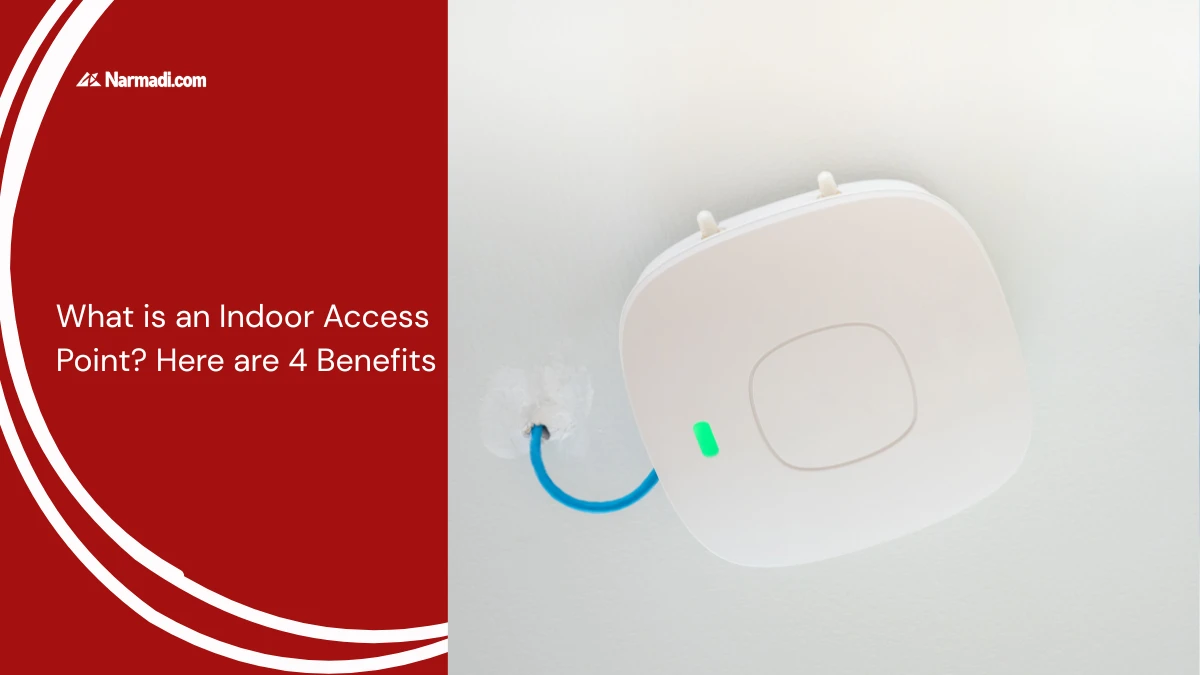

In building a reliable wireless network, understanding the different types of access points is essential. The indoor access point is one of the types of access points required for indoor connection.
Indoor access points are usually placed in offices, meeting rooms, and lobbies. This access point extends the range of WiFi signals in the room.
This article will give you information on indoor access points, including a definition, how they work, and their advantages.
What is an Indoor Access Point?
Indoor access points are network devices intended for indoor use. This type of access point is used to extend the range of WiFi signals in the room.
This access point is usually placed in the corner or at the top of the room and is not blocked by a partition, with the aim of spreading the signal coverage evenly throughout the room. Indoor access points are commonly used in offices, meeting rooms, and lobbies.
How it Works
Access points work by converting wired signals into wireless signals, then distributing them to connected devices, with the following details:
- Connect to LAN: The technology is connected to a wired LAN network via an Ethernet port.
- Transmits signals: The technology emits a strong and stable Wi-Fi signal, converting wired signals into wireless signals.
- Receives device data: The technology receives and sends data between wireless devices (such as computers and printers) and the wired LAN network.
The Advantages
Indoor access points have several advantages, including the following:
1. Energy efficiency and cost savings
Indoor access points not only prioritize energy efficiency but can also help reduce costs. The technology is designed to maximize performance while minimizing power consumption.
This makes it an excellent choice for various types of use, whether in homes, offices, or public places, as it not only supports the growing needs of technology but is also more environmentally friendly.
2. Adequate Wi-Fi coverage
Indoor access points are specially designed to provide ample Wi-Fi coverage indoors, which ensures that the internet signal remains strong and stable even in some corners of the room.
With a design that is more focused on indoor areas, this device can help create a better internet experience by optimizing Wi-Fi coverage in various places, without experiencing significant interference or signal quality degradation.
3. Suitable for various indoor areas
Indoor access points are ideal for use in various indoor areas, such as workspaces, meeting rooms, and lobby areas.
These devices are designed to meet connectivity needs in spaces that typically have a larger number of users and more intensive activities.
With its ability to optimize Wi-Fi networks in such spaces, it provides a highly efficient solution for supporting user productivity and convenience.
4. Provides fast and stable speeds
The main advantage of an indoor access point is its ability to provide a high-speed and stable internet connection. With this feature, daily use such as browsing, video streaming, and other online activities can be done without interruption.
Stable internet speeds are especially important in workspaces or meeting rooms, where fast and smooth connectivity is essential for smooth communication and collaboration.
That’s the definition, how it works, and the advantages of indoor access points, which can be the perfect choice to enhance user experience in various indoor areas, both for personal and professional needs.
If your network configuration includes outdoor areas, you may also wish to read our guide on outdoor access points. That way, you’ll also learn how weather-resistant devices handle signal coverage in open areas.