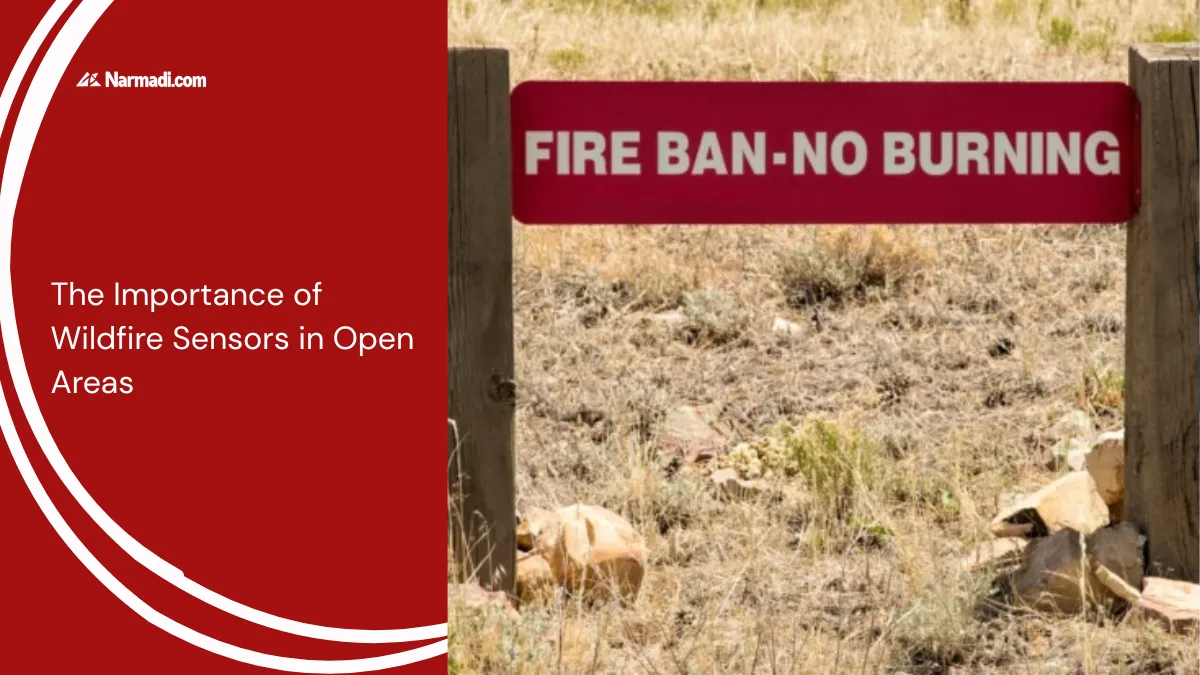

The use of wildfire sensors in open areas is needed to detect fires so that quick action can be taken to extinguish them.
Not only that, the importance of using wildfire sensors in open areas includes several other things, such as area monitoring, early detection, quick information, risk mitigation, and damage prevention.
This article will inform you about the importance, applications, and wireless spectrum compliance for wildfire sensors in open areas.
Wildfire Sensor in Open Areas
Outdoor forest fire sensors serve the dual purpose of early detection of forest or land fires, monitoring relevant environmental conditions, and ultimately improving the efficiency of natural resource management.
These sensors are designed to recognize various fire indicators such as flame, temperature changes, smoke presence, and air humidity levels while helping to pinpoint the location of fires with precision.
The Importance
With the benefits that wildfire sensors provide, they must be installed in open areas. Here are some of the things that make wildfire sensors in open areas important:
1. Area monitoring
One of the important applications of wildfire sensors in open areas is their ability to monitor areas. They can be installed at various locations in open areas to monitor potential fires and provide real-time information.
2. Early detection
Another importance of wildfire sensors in open areas is their early detection capabilities. Early signs of fire, such as an increase in temperature or smoke, can be detected early, even before a fire becomes visually apparent, helping to prevent larger blazes.
3. Quick information
With the ability of sensors to detect early, information can be sent quickly to firefighters. So that the firefighting team to respond quickly and move to extinguish the fire before it spreads.
4. Risk mitigation
With continuous monitoring and rapid suppression response, it will certainly help minimize the impact of fire, including environmental damage and risks to human safety.
5. Damage prevention
Another important aspect of implementing wildfire sensors in open areas is damage prevention. Early detection allows for preventative measures so that fire damage may not occur because the cause of the fire has already been addressed.
Examples of Application
Here are some examples of sensors in open areas that are usually used:
- IR Fire Detectors: Use infrared technology to detect the presence of fire.
- Temperature and Humidity Sensor (DHT22): Monitors air temperature and humidity, which are important factors in the spread of fire.
- Gas Sensor (MQ2): Detects the presence of smoke and gas produced by fires.
- Soil Moisture Sensor: Monitors soil moisture, which can also provide information on potential fires.
- GPS Module (Neo 6m): Helps determine the location of the fire.
- Argon Particles (Photon): Enables WiFi connection and data transmission to the cloud for real-time monitoring.
Wireless Spectrum Compliance for Environmental Wildfire IoT Sensors
Forest fire sensors installed in open areas and remote forests often utilise radio frequency (RF) signal transmission technology. It is this technology that enables the transmission of telemetry data over long distances.
Examples of such devices include LoRaWAN, sub-GHz radio waves, or cellular IoT modules that form part of Low-Power Wide-Area Networks (LPWANs). These devices must comply with applicable telecommunications regulations.
Therefore, manufacturers, importers and distributors are required to obtain type approval certification before marketing their products. Testing and certification will confirm that forest fire sensor hardware meets the technical standards for Radio Frequency (RF), Electromagnetic Compatibility (EMC) and Safety.
A certified device is one that is legally authorised for sale and use. Aside from administrative matters, certification ensures that the device is safe to use and does not interfere with other wireless devices in its vicinity.