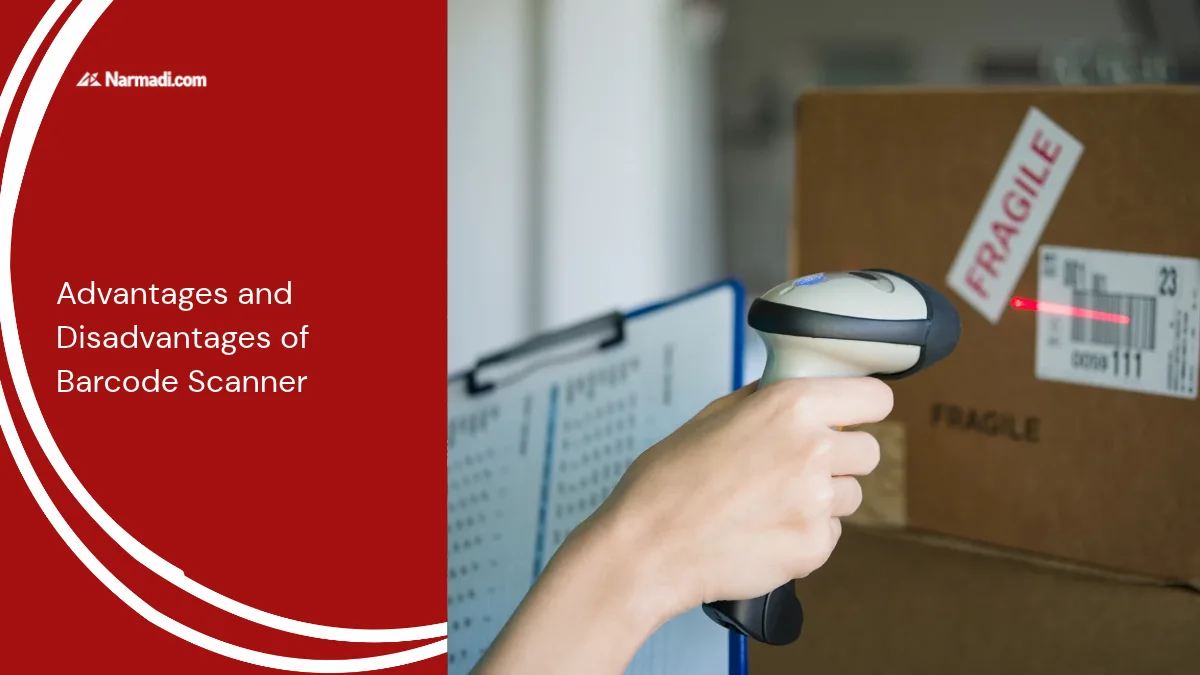

Barcode scanners provide many benefits, especially the ability to scan and read the information contained in barcodes that are generally located on products, shipping labels, identity cards, or other documents. However, the advantages and disadvantages of barcode scanners cannot be separated, even though we can feel the benefits.
The advantages and disadvantages of barcode scanners include internal facilitation of various processes, high accuracy, and real-time tracking, while the disadvantages include inability to be used in certain environments, range limitations, and high initial costs.
This article will inform you about some of the advantages and disadvantages of barcode scanners that you can consider.
The Advantages
Here are some advantages of a barcode scanner:
1. Facilitating various processes
One of the advantages of a barcode scanner is that it facilitates various processes. With a barcode scanner, the need for paper usage is reduced, so that all processes for inventory management and payment become easier.
2. Fast and efficient process
With a barcode scanner, the data transfer process becomes fast and efficient. You no longer need to do manual input for your checkout, data entry, and inventory processes. The absence of manual processes certainly makes the data input process faster and more efficient.
3. High accuracy
High accuracy is another advantage of barcode scanners. Because the data from the barcode is read automatically by the scanner, there is no error-prone data input process. So your inventory and reporting process becomes more accurate and less error-prone.
4. Real-time Tracking
The use of barcode scanners is very useful in supply chain management and auditing. With this tool, you can easily track products in real time. This convenience allows you to quickly determine the number of stock products for effective stock planning.
The Disadvantages
Here are some disadvantages of a barcode scanner:
1. Cannot be used in certain environments
Barcode scanners cannot be used in extreme temperatures or high humidity because they will reduce the functionality of the system and cause damage to the device. Barcode scanners also do not function properly in environments with high noise or strong electromagnetic radiation.
2. Application limitations
Application limitations are another drawback of barcode scanners. They cannot be used for applications that require complex information processing or bulk scanning.
3. Range limitation
Barcode scanners have a limited range. To be read, the barcode must be within line of sight and close to the scanner. The inaccuracy of the scanner light emitted to the barcode will make the data unreadable.
4. High initial cost
One other drawback of barcode scanners is their high initial cost. To use a barcode scanner system, you must invest in hardware, software, and staff training.
Balancing Operational Benefits and Implementation Challenges
While barcode scanners do provide exceptional speed, accuracy, and real-time tracking for workflows, there are unavoidable limitations. Challenges such as environmental constraints or line-of-sight requirements must be addressed.
Companies can effectively address these challenges by selecting rugged scanner models designed for harsh conditions and by providing comprehensive training to staff.
The upfront costs of hardware and training to reduce errors may be a necessary investment. However, implementing these solutions in accordance with specific industry needs can yield benefits from automated data collection that far outweigh the obstacles.
Ultimately, understanding both sides of this technology enables companies to maximize the full potential of their barcode systems. In this way, they can ensure sustained operational accuracy and guarantee stable productivity.