Author: Muhammad Rifqi Rihza Rahman

  • 5 Benefits of Products with DJID Type Approval

    5 Benefits of Products with DJID Type Approval

    This article will explain the benefits of products with DJID type approval and the risks of ignoring them.

    Communications devices circulating in Indonesia must be certified by the Directorate General of Digital Infrastructure (DJID).

    The requirements for DJID certification are stipulated in Article 3 of the Minister of Communication and Informatics Regulation (Permenkominfo) No. 3 of 2024 concerning “Certification of Telecommunications Equipment and/or Telecommunications Devices.”

    One of the benefits of the DJID type approval is to ensure that telecommunications products meet legal and regulatory compliance. Failure to obtain this certification also carries risks and sanctions.

    5 Benefits of Products with DJID Type Approval
    DJID Type Approval Benefits of Certified Products and the Risks of Ignoring It 2

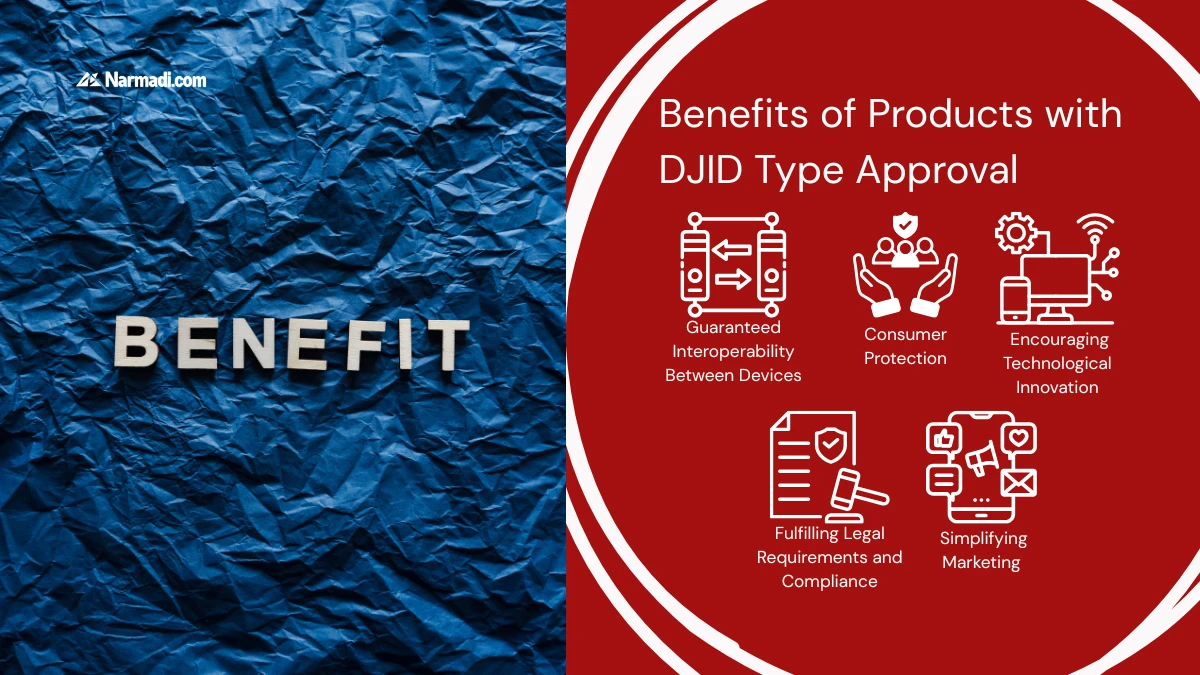
    The DJID approval certification has many other benefits. Here are 5 benefits of products with DJID type approval, particularly for telecommunications products, including RF/wireless.

    1. Guaranteed interoperability between devices

    Devices certified with the DJID type approval can connect with other devices without interfering with each other.

    This is because the devices have undergone a series of RF tests. A device that passes the tests means it meets the standard testing parameters.

    The device is guaranteed to operate at the specified frequency, so it will not interfere with other devices’ frequencies.

    2. Consumer protection

    Devices certified with the DJID type approval are guaranteed safe for users. This is inseparable from a series of Electromagnetic Compatibility (EMC) tests, safety tests, and Specific Absorption Rate (SAR) tests.

    These tests measure the impact on users to ensure they do not endanger human safety and health. Devices that do not pass these tests may be at risk of unsafe use, potentially endangering users.

    3. Encouraging Technological Innovation

    Telecommunications technology is undergoing extensive development and innovation. DJID type approval certification is a key factor.

    All innovation and development must be accompanied by applicable regulations in a country. This way, communications technology can continue to develop rapidly while ensuring its safe use.

    4. Fulfilling Legal Requirements and Compliance

    To market telecom and wireless devices in Indonesia, a series of legal requirements must be met.

    In this case, DJID type approval is required. All certified devices meet the legal requirements and comply with applicable laws.

    5. Simplifying Marketing

    DJID type approval certification is one of the requirements for marketing telecom and wireless devices in Indonesia.

    Obtaining this certification will simplify the marketing of your telecommunications products. Certified devices are legal for distribution and use.

    The market will naturally have more trust in products bearing the DJID certification label. This is because consumers want to use devices that are guaranteed to be legal and safe to use.

    Risks of Uncertified Products

    DJID Type Approval Benefits of Certified Products and the Risks of Ignoring It 3

    As a legal and compliance requirement, DJID type approval carries risks if not met. These risks will directly impact your business.

    This is explained in Ministerial Regulation of the Ministry of Communication and Information Technology No. 3 of 2024 concerning administrative sanctions. The sanctions are as follows:

    • Administrative fines
    • Imposition of police coercion in the form of device confiscation
    • Certificate revocation
    • Recall of all devices traded and/or used by the public
    • Certificate service suspension for one year

    These are the benefits of the DJID type approval certification issued by the Ministry of Digital Communication (Komdigi) of the Republic of Indonesia.

    Certified products guarantee interoperability between devices, ensure consumer protection, meet legal requirements, and meet compliance requirements. DJID indirectly supports technological innovation and simplifies marketing.

    Products without a DJID certification may be detained by the Directorate General of Customs and Excise, Ministry of Finance (Kemenkeu), and prevented from entering Indonesia.

    If you are a distributor or manufacturer, ensuring your products meet official regulations is crucial. Don’t let the certification process become a hurdle!

    Use professional DJID certification services like us to streamline the certification process for your product. With the support of our team, you can ensure a safe, legal, and market-ready product without any issues. [UN]
  • History of changes in the SDPPI to DJID (Ditjen Infrastruktur Digital)

    History of changes in the SDPPI to DJID (Ditjen Infrastruktur Digital)

    Recently, the Ministry of Communication and Digital (Komdigi) made changes to its organizational structure by merging the Directorate General of Post and Information Resources and Equipment (SDPPI) and the Directorate General of Post and Information Technology (PPI) to become the Directorate General of Digital Infrastructure (Ditjen Infrastruktur Digital).

    The organizational changes to the Directorate General of Digital Infrastructure (Ditjen Infrastruktur Digital) structure are contained in Presidential Regulation Number 174 of 2024 concerning the Ministry of Communication and Digital, which was signed by President Prabowo on November 5, 2024.

    The Directorate General of Digital Infrastructure (Ditjen Infrastruktur Digital) is not the first change. Before it was called the Directorate General of Post and Information Resources and Equipment (SDPPI), this institution was called the Directorate General of Posts and Telecommunications.

    The following is the history of changes to the Directorate General of Posts and Telecommunications, SDPPI, and Digital Infrastructure, from its earliest form to today.

    Directorate General of Posts and Telecommunications (1945–2010)

    The Directorate General of Posts and Telecommunications traces its roots back to 1945, under the Department of Information. The Department of Information is the name of the institution that we currently know as the Ministry of Communication and Digital (Komdigi).

    In 1945, the Department of Information became the first institution whose main task was to provide information through information media, including radio, film, television, photographs, printing, vehicles, stencil machines, and typewriters.

    In 1966, its task shifted toward directing public opinion to build support and positive social participation in the implementation of government policies.

    Then in 1971, the Department began increasing the efficiency and effectiveness of mass media facilities and developed an integrated communication system through coordination, integration, and synergy between government information elements.

    In the Reform Era, the Department of Information temporarily changed its form to become the National Information and Communication Agency (Badan Informasi dan Komunikasi Nasional / BIKN) in 1999.

    In 2000, the National Information Institute (Lembaga Informasi Nasional / LIN) was also formed, which was responsible to the Minister of Communication and Information.

    The Ministry of State Communications and Information, the National Information Institute, and the Directorate General of Posts and Telecommunications were then integrated into the Department of Communications and Information Technology in 2005.

    Since 2005, the Ministry of Communication and Information has had the function of building and developing telecommunications infrastructure/systems for the benefit of all citizens.

    At the end of 2010, the Ministry of Communication and Information institutions adopted a new communication policy paradigm, establishing information as part of society’s needs. The information function was developed further to support strategic communications and build stronger national integration.

    This refinement of organizational arrangements in 2010 led to changes in the organizational structure, duties, and functions of the department and its directorates. As a result, what was originally the Directorate General of Posts and Telecommunications expanded into two separate bodies: the Directorate General of Post and Telecommunications Resources and Equipment (Ditjen SDPPI) and the Directorate General of Post and Informatics Operations (Ditjen PPI).

    Directorate General of SDPPI – Postal and Information Resources and Equipment (2010–2024)

    SDPPI is an abbreviation for Postal and Informatics Resources and Equipment.

    The term SDPPI came into effect with the formation of this new structure within the Ministry of Communication and Information, which included the Directorate General of Post and Information Resources and Equipment (Ditjen SDPPI).

    This structure was established based on the Minister of Communication and Information Technology Regulation (Permenkominfo) Number 17/PER/M.KOMINFO/10/2010, concerning the Organization and Work Procedures of the Ministry of Communication and Information Technology, which replaced the earlier Permenkominfo Number 25/PER/M.KOMINFO/07/2008.

    From that point, the Directorate General was split into two: the Directorate General of SDPPI and the Directorate General of PPI (Postal and Information Administration).

    Both directorates were the result of the expansion of the original Directorate General of Posts and Telecommunications.

    The terms SDPPI and SDPPI Certification became well known to those looking to certify telecommunications tools or equipment, because these certification services were carried out under the Directorate of Standardization of Postal and Information Technology Equipment, within Ditjen SDPPI.

    The Directorate of Standardization of Postal and Information Technology Equipment was the directorate that officially processed applications for the certification of telecommunications equipment.

    Directorate General of Digital Infrastructure (2024–Present)

    Following the renaming of the Ministry of Communication and Information Technology to the Ministry of Communication and Digital, the Directorate General of Digital Infrastructure was formed as its own body.

    The Directorate General of Digital Infrastructure is a merger of the Directorate General of Post and Information Resources and Equipment (SDPPI) and the Directorate General of Post and Information Technology (PPI).

    The Directorate General of Digital Infrastructure is tasked with formulating and implementing policy in the field of digital infrastructure, continuing the responsibilities previously held separately by SDPPI — including managing the radio frequency spectrum and satellite orbits, as well as standardizing postal and informatics equipment — and by PPI.

    Does This Change Affect My Existing SDPPI Certificate?

    This change naturally raises the question of whether it affects previously issued SDPPI certificates. Here are some important points to note:

    • Existing certificates generally remain valid: Changes to the name and structure of the directorate are administrative in nature and do not automatically render existing certificates invalid.
    • No requirements have changed: The transition from SDPPI to DJID does not automatically alter the technical standards.
    • New applications are now processed under DJID: Going forward, the process for submitting new Type Approval applications will be handled under the DJID.

    In short: a name change at the ministry level doesn’t mean your certificate is invalid, but it’s always worth verifying directly during this transition period.

    That is the history of changes to the Directorate General of Posts and Telecommunications, SDPPI, and Digital Infrastructure. As this transition continues to settle, it’s worth keeping an eye on any further implementing regulations from DJID that may affect certification procedures going forward.

    Make sure the products you distribute have been tested and certified by the relevant authority. We are ready to assist you in navigating this transition and obtaining Type Approval Certification under the current DJID structure.