East Asia · MIC

Japan

Certificate
MIC Certification
Certification
Mandatory
Local representative
Required
In-country testing
Yes
Validity
Unlimited
Lead time
3–4 weeks
Paperwork only
No
Submission
Online
Product label
Required
Approval mark
Required
E-labeling
Allowed
Official website
https://www.soumu.go.jp/english/Last accessed 6 October 2026

Japan Type Approval Summary

The Japanese telecommunications market is a strong global market. It is highly mature, competitive, and has high mobile penetration. This is due to strong growth driven by the adoption of 5G, IoT, digital transformation, and demand for high-speed internet.

To access the Japanese market, especially for Information and Communication Technology (ICT) products, companies must comply with a type of compliance instrument called “MIC certification.” MIC stands for the Ministry for Internal Affairs and Communication. Since 2024, MIC has been a new entity that replaces the role of the Ministry of Public Management, Home Affairs, Post, and Telecommunication (MPHPT).

MPHPT is a merger of the “Ministry of Post and Telecommunications,” the “Ministry of Home Affairs,” and the “Management and Coordination Agency.” One of MIC's focuses is on the telecommunications sector. Its role is to establish certification rules, collaborate with the Registered Certification Body (RCB), conduct Mutual Recognition Agreements (MRA), and supervise Japan type approval certificates.

Obtaining MIC type approval certification can be challenging. Narmadi Company is ready to help you navigate the complexities of the certification process, remove obstacles, and ensure you receive your certificate by your desired target date. This is possible thanks to our extensive experience, expertise, and global connections in the field of certification.

Certification Authority

Authority
Ministry for Internal Affairs and Communication (MIC)
Certificate
MIC Certification
Certification
Mandatory
Official website
https://www.soumu.go.jp/english/Last accessed 6 October 2026

Who Can Be an Applicant?

Local representative
Required

Applicants for type approval certification in Japan must be Japanese companies that are legally registered entities. They may be importers or distributors of products that will be imported and distributed in Japan.

Application Method

In-country testing
Yes
Paperwork only
No

Japan MIC certification requires local testing. This means that every telecommunications and wireless product that is to be marketed and used in this country must be tested in a local Japanese laboratory.

In conducting local testing, test samples are required. The number of samples depends on the type of testing required. However, Japanese type approval certification usually requires one normal sample with the appropriate accessories. In some cases, additional samples with special settings may be required.

MIC does not conduct local testing itself. They work with RCBs to conduct Japanese type approval certification testing.

MIC classifies the mandatory products into five classifications. These classifications are Specified Radio Equipment (SRE), Special Specified Radio Equipment (SSRE), Telecom Terminals, High-Frequency Devices (HFD), and Extremely Low-Power (ELP).

Paperwork Only

There is no way to apply type approval with paperwork.

Sample Requirements

Japan type approval certification generally requires one normal sample with the appropriate accessories. However, in some cases, additional samples with special settings may be required.

Document Requirements

To obtain MIC certification, several document requirements must be met, including:

  1. Test report
  2. User manual (Japanese version)
  3. Antenna specifications
  4. Component layout diagram
  5. Parts list and circuit diagram (RF section)
  6. Block diagram
  7. External and internal photographs

Submission process

Submission
Online

Once the local testing process is complete, all documents are submitted to the designated Certification Body (CB). The evaluation process involves verifying that all documents are complete and correct.

The certificate will be issued immediately after the documents pass the evaluation. If they fail the evaluation, any deficiencies or errors must be corrected and the documents resubmitted to the relevant CB.

Lead Time of Certification

Lead time
3–4 weeks

The entire MIC certification process, including product testing and evaluation of all documentation, can be completed in three to four weeks. This short turnaround time is due in part to the well-established testing system in place there.

Validity Period

Validity
Unlimited

A MIC certificate remains valid as long as no modifications are made to the RF features. If the RF features are modified, the device must undergo retesting. This is because such modifications may affect compliance with the technical standards in effect in Japan.

Label Requirements

Product label
Required
Approval mark
Required
E-labeling
Allowed

ICT products that have been certified by MIC must affix labels to the products and their packaging. Labeling requirements will differ for each product classification. As is well known, there are five product categories for MIC certification.

Giteki Label

The Giteki label is intended for three categories, namely Specific Radio Equipment (SRE), Special Specific Radio Equipment (SSRE), and Telecommunications Terminals. There are two types of Giteki labels, namely “R” and “T”.

R Symbol: Applied to SRE and SSRE products, or products that intentionally emit RF signals. Examples include communication devices such as WiFi routers, Bluetooth devices, short-range devices, RFID, etc.

T Symbol: Applied to devices that connect directly to public telecommunications networks. Examples include telephones and LTE gateways.

The following is an example of the format:
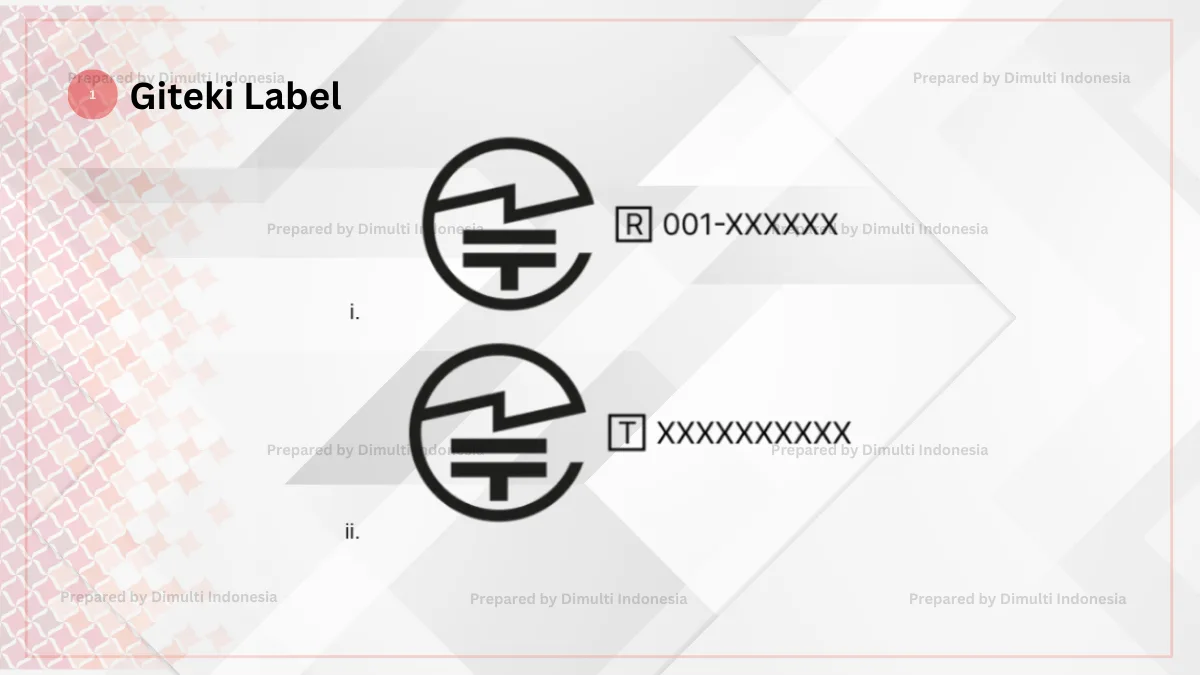
CRT Certification Label (Giteki)

HFD Label

The HFD label is intended for non-communication devices that emit RF energy for scientific, industrial, or medical use. Examples include RF welding machines, induction cookers, microwave ovens, industrial heating systems, etc.

Here is an example of the format:
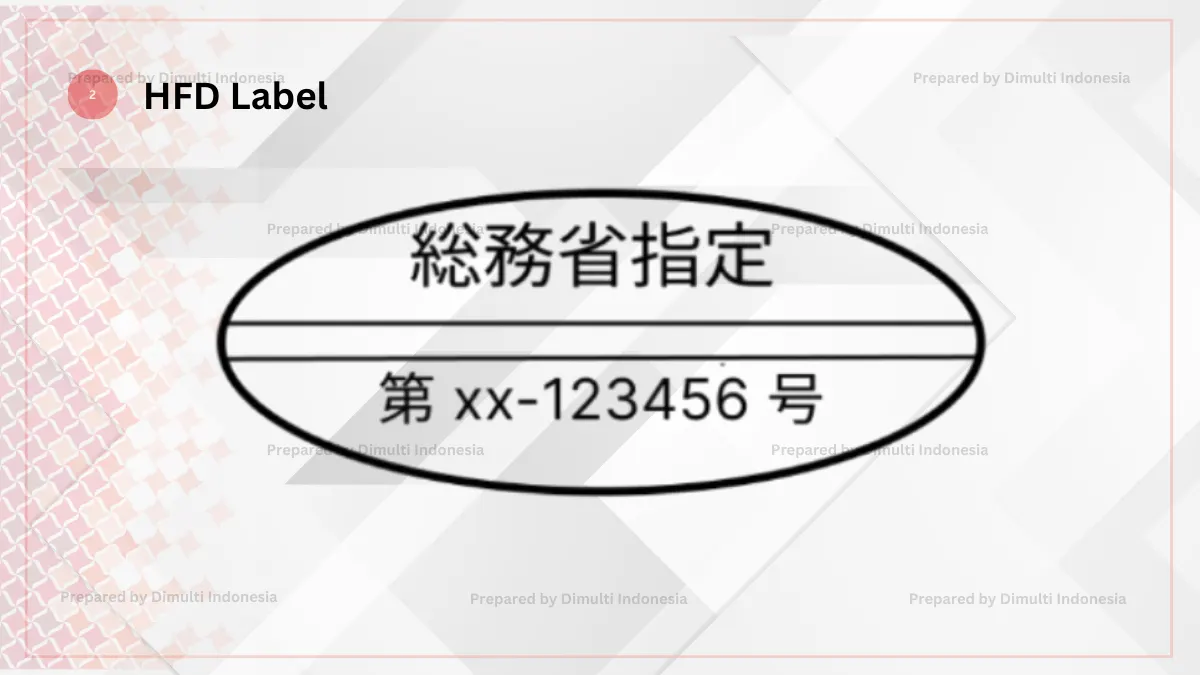
CRT Certification Label (HFD)

ELP Label

The ELP label is intended for devices that emit RF signals that can be categorized below the field strength threshold specified by the Radio Law. Examples include key fobs, RFID tags, toys, etc.

Here is an example of the format:
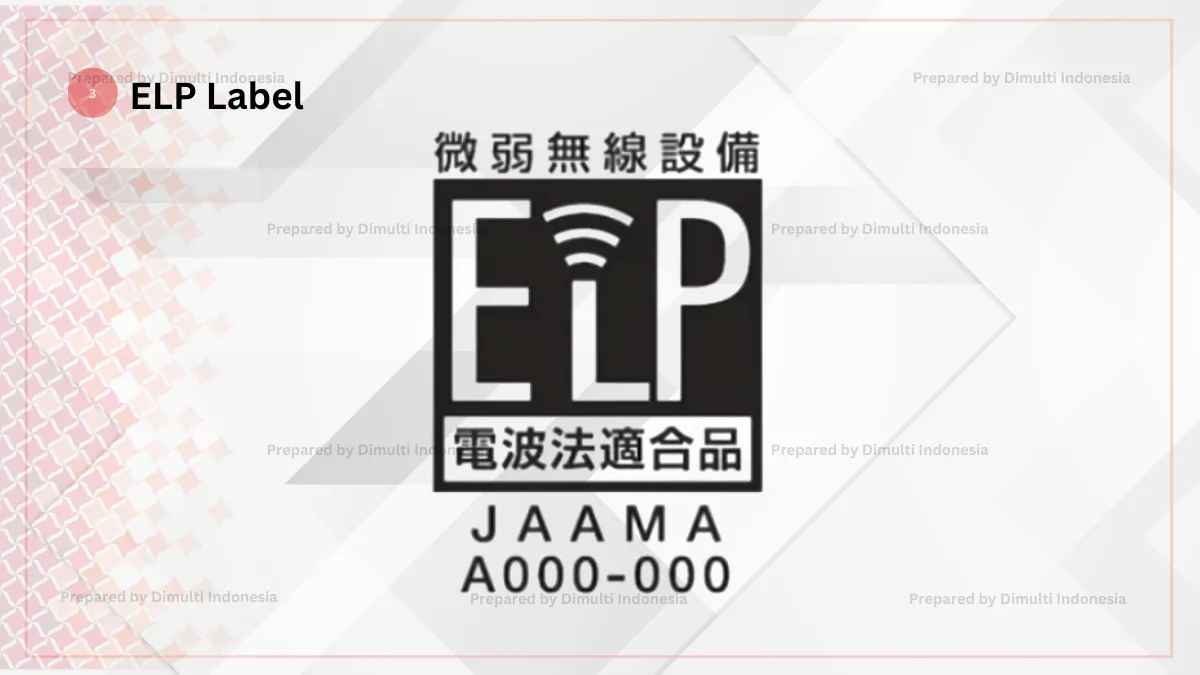
CRT Certification Label (ELP)

Labels must be permanently affixed to the product in a clear manner so that they are easily found by buyers. If the device is too small, the label may be affixed to the user manual or as an electronic label.

More on Labeling

The MIC permits labels in user manuals or electronic labels. However, electronic labels must remain easily accessible to users. In addition, their installation requires official authorization from the MIC.

Certificate Example
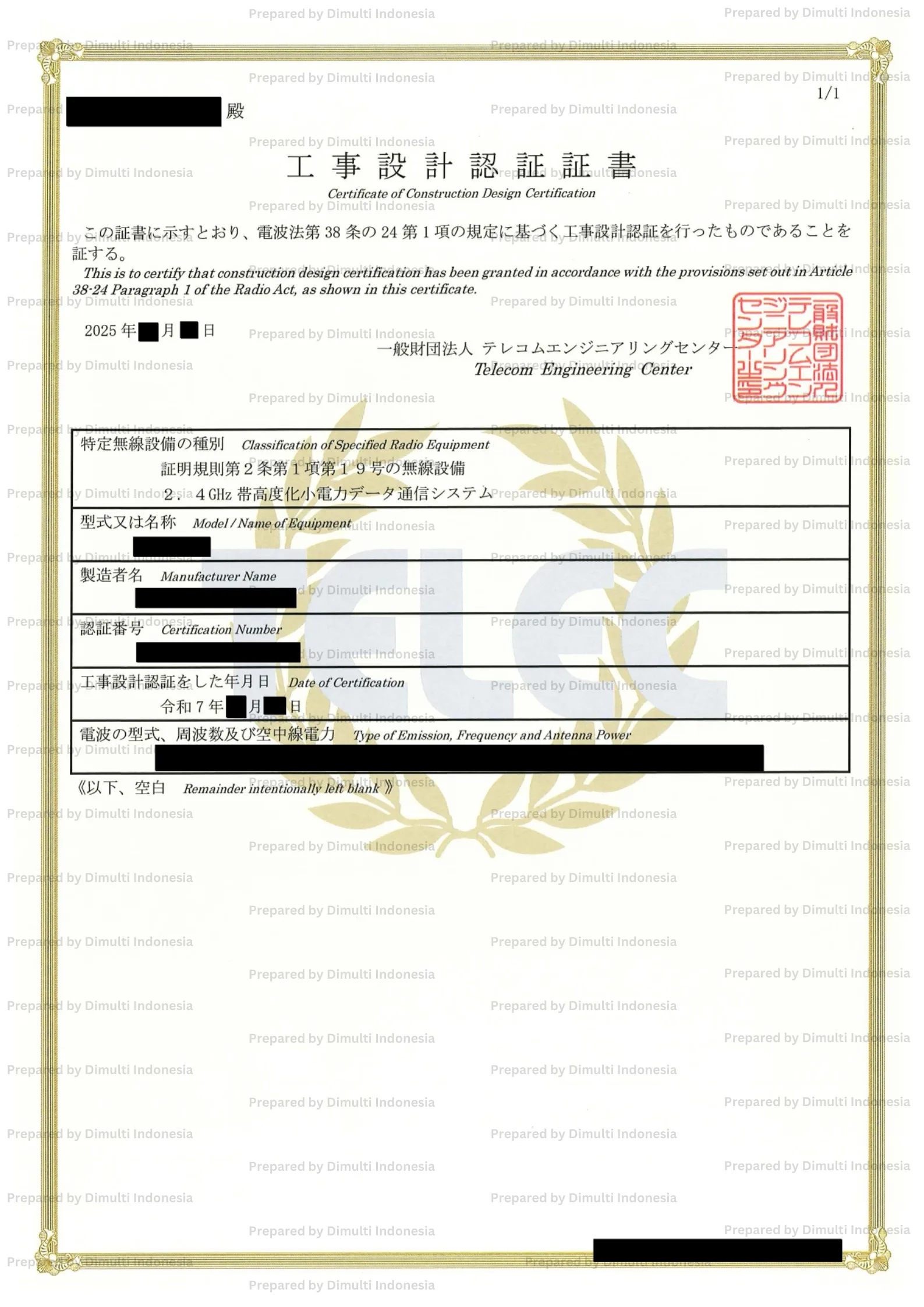
Example of MIC Type Approval Certificate

MIC does not issue its own certifications. They work with RCB to issue Japanese type approval certificates.

Here is the MIC Certificate Example from TELEC (Telecom Engineering Center):

Issued under
Ministry for Internal Affairs and Communication (MIC)
Certificate
MIC Certification
Validity
Unlimited
Lead time
3–4 weeks

Alternative Country Names

Nippon, Nihon, Japon, Giappone, Japón, Япония, 日本, 일본, JP

Product Scope

MIC certification is not limited to telecommunication products only. However, this certification is also mandatory for all products that have telecommunication features or radio frequency.

Some examples of products that are mandatory to apply for MIC certification are:

See every product and the countries that require it →

Rules by Technology

See every technology and the countries that allow it →

Talk to our project handler

Send your product details and we reply with the MIC requirements, lead time and cost.

Request a quote

News and updates

More in East Asia