In an increasingly competitive business world, protection and security issues are very crucial. So it is not surprising that many people use technology of Radio Frequency Identification (RFID) in the security sector.
RFID technology is present as a modern solution for security in business. RFID in the security sector helps in alarm systems and security reports.
RFID in the security sector enables real-time monitoring of assets and better protection through automated systems.
This article will provide information about the use of technology in the security sector and its applications.
Application of RFID in the Security Sector
RFID is widely used in various industrial fields, one of which is to maintain security.
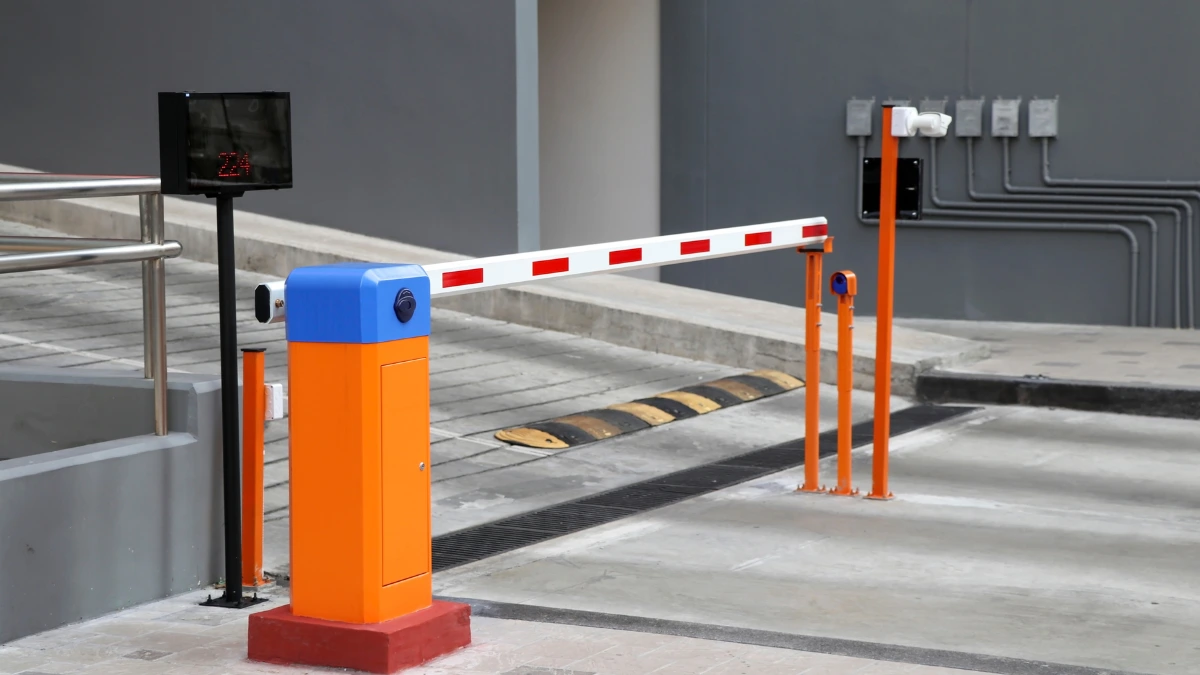
RFID in the security sector has been used, among others, for parking security management, transportation systems, and asset security.
1. Parking security management
With the development of smart cities, parking difficulties have become an urgent problem to be solved, and the importance of smart parking has become more prominent.
Simply put, the so-called intelligent parking is to help car drivers quickly find available parking spaces through automatic technology and provide drivers with accurate navigation routes.
In this process, a large amount of real-time data from sensors will be transmitted to a special APP installed on the driver’s handheld device.
It can be said that the establishment of an intelligent parking system brings a lot of convenience, not only reducing the time for drivers to find a parking space but also maximizing the utilization rate of parking spaces.
2. Transportation system
An important transport of RFID technology in the field of intelligent transportation is automobile electronic identification, also known as electronic license plate, which is an electronic ID card formed by combining ultra-high frequency RFID technology and other related technologies.
The car electronic identification urban transportation system based on RFID technology can improve the real-time and accuracy of urban traffic management, and make urban transportation more scientific and intelligent.
The popularization and application of car electronic identification systems can monitor urban traffic data in real-time and accurately. Traffic data processed by big data can be used as data support for urban traffic congestion prediction and traffic planning.
3. Asset Security
Loss of assets, theft, and mismanagement are often major challenges that have a direct impact on a company’s operations and profits.
RFID technology emerges as a modern solution for business security, enabling real-time monitoring of assets and better protection through automated systems.
Benefits of RFID in Particular of Asset Security
1. Anti-theft alarm system
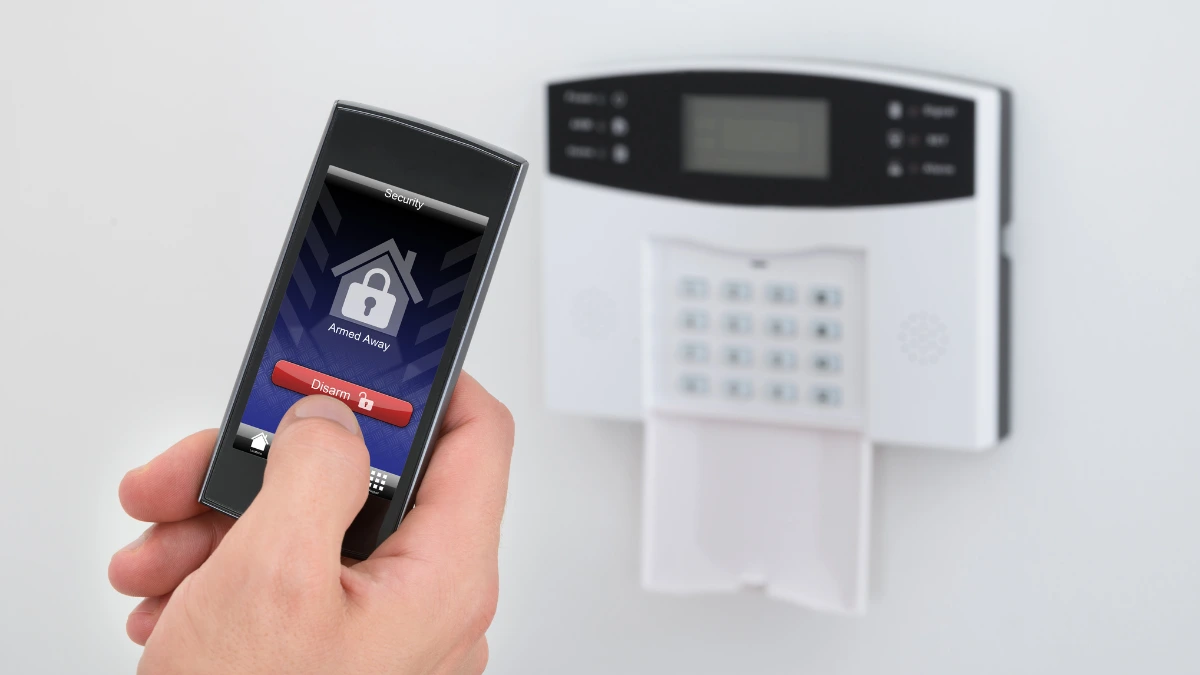
RFID can be used with sensor-equipped gates. If an unregistered item attempts to pass through the gate, the system will trigger an alarm, providing additional protection against theft.
2. Real-time asset detection
Every asset equipped with an RFID tag can be monitored directly. This allows companies to know the location of assets at any time, reducing the risk of loss or misplacement.
Controlled access to designated areas
RFID is used to manage access to specific areas in a business, such as a warehouse or server room. Only employees who have registered RFID cards can enter the area, ensuring greater security.
3. Automate security reports
Data from RFID can be integrated into security management systems, providing real-time reports on asset movements, suspicious activity, or other potential threats.
Those are the many benefits of RFID technology in the security sector, especially for asset security. Hopefully in the future RFID technology can innovate more in the field of security for all existing fields of work.
For your additional information, it is very important to make sure the RFID that you use has been tested and has a certificate from the authority. We are ready to assist you for obtaining Type Approval for your products before being distributed to the global market. [UN]
Radio Frequency Identification (RFID) and Near Field Communication (NFC) are two technologies that are important in business today. Many people think that these two technologies are the same, but it turns out there are differences between RFID and NFC.
Both RFID and NFC enable data exchange between devices. The difference between RFID and NFC lies in the communication infrastructure and range.
The most obvious difference between RFID and NFC is that RFID functions by having an RFID tag and an RFID reader that can communicate at a certain distance. Meanwhile, NFC only allows for very short distances, typically just a few centimeters.
This article will provide further information on the difference between RFID and NFC, which look the same but have quite significant differences.
The Similarities
Before we get into the differences between RFID and NFC, it’s worth understanding why so many people see these two technologies as the same.
The most noticeable similarity between the two lies in their shared use of radio frequencies for wireless communication. Specifically, NFC and High-Frequency (HF) RFID both operate at 13.56 MHz.
Here are some similarities between RFID and NFC:
Wireless identification: Both technologies are used for wireless identification and communication between a device or tag and a reader.
Using tags: Both RFID and NFC use tags or labels to store data that can be read by readers. This RFID tag or NFC device can be attached to different objects such as products, cards, or other devices.
Contactless technology: Both of these technologies are “contactless” technologies, meaning communication can occur without the need for direct physical contact between the tag and the reader. This provides convenience in many applications such as payments, transportation ticketing, and access control.
International standards base: Both have standards set by international organizations, such as ISO (International Organization for Standardization) for RFID and the NFC Forum for NFC. This helps ensure interoperability and consistency in the use of these technologies.
The Difference between RFID and NFC
As mentioned above, RFID and NFC can share the same underlying frequency concept of 13.56 MHz, but this overlap only applies to HF RFID specifically. RFID as a whole actually spans a much wider range of frequencies: Low-Frequency (LF) RFID operates around 125–134 kHz, HF RFID operates at 13.56 MHz (the range NFC is built on), and Ultra-High-Frequency (UHF) RFID operates in the 860–960 MHz range, offering a much longer read distance than NFC. In short, NFC can be thought of as a close relative of HF RFID, rather than RFID as a whole.
The following are the significant differences between RFID and NFC:
Differences in usage
The main uses of RFID are asset tracking, inventory management, access control, attendee tracking, and tool tracking.
In contrast, NFC technology is centered on secure data transfer. This technology is applied in contactless payments, data sharing, and smart posters.
Infrastructure differences
When using RFID, you need a separate RFID tag and reader. In contrast, NFC devices are capable of acting as both readers and tags. This unique feature enables peer-to-peer (P2P) communication between two NFC-enabled devices.
Variations in application complexity
RFID uses a fairly straightforward concept, where a reader captures information from a tag. The reader detects radio waves emitted by the tag to retrieve its data.
NFC is a more advanced technology that allows for both read and write operations. This is the feature that lets your phone act as a digital wallet, while also enabling seamless peer-to-peer communication.
Comparing RFID and NFC can be tricky, especially given how closely related the two technologies are.
Which One Should You Use: RFID or NFC?
Whether you choose RFID or NFC depends on your specific goals. Choose RFID if you need to track multiple items at once over longer distances. If, on the other hand, you need secure, close-range interaction between two devices, choose NFC.
RFID is ideal for inventory management, warehouse tracking, or access control in large areas. NFC, on the other hand, is ideal for mobile payments, public transit tap-and-go systems, or product labels scanned by smartphones.
You should consider your infrastructure and range requirements before choosing which technology to use.
RFID requires specialized readers and tags, whereas NFC is already built into most smartphones. If you need to detect items from a distance of several meters, RFID (especially UHF) is the only option, whereas NFC only works within a range of a few centimeters.
In practice, the two often complement each other rather than compete. A business might use RFID for warehouse tracking and NFC for customer-facing payments or product authentication.
In principle, the use of both these technologies must take into account type approval certification requirements. This is because both RFID and NFC utilize radio frequencies.
Certification is required to ensure interoperability, comply with applicable standards and legal requirements, and guarantee consumer protection.
Most people still think that RFID and barcodes are like two brothers. It turns out that there are quite significant differences between RFID and barcodes.
Even though there are differences between RFID and Barcode, both technologies have the same goal, namely, to achieve identification and tracking quickly and accurately.
The difference between RFID and Barcode is in their application. Both have advantages and disadvantages depending on how they are used.
In this article, we will explain the differences between RFID and barcodes to give you a better idea of these two advanced technologies.
Difference between RFID and Barcode
RFID is a wireless communications technology that can identify specific targets and read and write relevant data via radio signals without the need to establish mechanical or optical contact between the identification system and the specific target.
Radio signals transmit information from names joined to objects through electromagnetic areas tuned to radio frequencies to naturally recognize and track objects.
A fundamental RFID framework comprises an RFID Tag, a peruser, and an RFID radio wire. RFID can studied and type in data inside the scope of the reader.
Meanwhile, a standardized tag is a realistic identifier that speaks to a set of data by organizing dark bars and white spaces with distinctive widths concurring with certain coding rules.
And you can get this data with a laser scanner. Right now, the common ones are one-dimensional barcodes and two-dimensional barcodes.
Barcode is a programmed acknowledgment innovation that coordinates the capacities of image coding, information collection, programmed recognizable proof, data section, and data capacity into one.
Can viably illuminate the issue of expansive sums of information collection and programmed input in coordination forms.
Advantages and Disadvantages of Barcodes
Barcode is an automatic identification technology that is considered more economical and practical and is widely used globally.
This device can show various data, such as country of production, manufacturer, product name, production date, book classification number, start and end location of the letter, category, date, and more.
Advantages of Barcode Devices
Fast speed of information acquisition and input via barcode
High data reading accuracy
Barcode tags that can contain large amounts of information
Practical application and operational process of the device
The process of printing Barcode Tags can be done easily
Disadvantages of Barcode Devices
Barcodes can only identify limited information such as producers and commodities.
Data cannot be read if the barcode tag is damaged.
The information on the barcode is easy to copy
Barcodes based on optical technology can only be recognized in the short-range straight beam range received by the scanner.
Advantages and Disadvantages of RFID
RFID is a new technology, capable of long-distance reading and high storage capacity.
It is widely used in many industries such as logistics, transportation, identification, anti-counterfeiting, asset management, food management, security control, etc.
Advantages of RFID
Strong Anti-fouling Ability
High security by using electronic chips to store information
The capacity of RFID tags is capable of storing much larger amounts of information
Identify Multiple Tags Simultaneously
The device is reusable and durable
Able to read tags at long distances and free from obstacles
Disadvantages of RFID Devices
Implementing RFID devices requires higher costs than Barcodes
There is no security when the tag is read via other RFID devices which results in privacy issues
Inconsistent Radio Wave Frequency
Insufficient Technology Maturity
The biggest difference between RFID and barcodes is that RFID has a chip. RFID tags can be made into a variety of different shapes and sizes and can be attached to different carriers.
Through RFID chips, we can not only write information and update memory information but also encrypt information with high security.
Barcodes cannot be written on and changed again, once they are scratched, stained, or peeled off, the scanner will not be able to identify the information, and their security is relatively low.
Make sure the RFID product that you use has been tested and has a certificate from the authority. we are ready to assist you for obtaining Type Approval for your products before being distributed to the market. [UN]
Radio Frequency Identification (RFID) technology offers a variety of benefits, one of which is its application in animal tracking. RFID for pets is a device that aids in the identification and monitoring process.
RFID for pets is not limited to identification and tracking; it also provides various benefits for pet owners. For example, health management, health monitoring, disease control, and livestock management.
In pets, RFID technology is generally implemented in the form of a microchip. A small RFID tag is implanted just under the skin. Throughout this article, the terms “RFID tag,” “RFID device,” and “microchip” refer to the same underlying technology.
This article will provide information on the benefits of RFID for pets that are very useful for their owners. This way, you can easily care for your pets.
Benefits of RFID in Pet
RFID in pets not only provides identification and tracking of animals, but it also offers many other benefits. Here are some of the benefits of them in detail:
Health management
RFID in pets has benefits in health management. Animals equipped with this device can have their medical history recorded, including their birth history, breeding history, and treatment records. That way, veterinarians can easily access all data and provide appropriate treatment.
Health monitoring
This technology is also used for monitoring and tracking. RFID helps you monitor your pet’s health indicators, such as movement patterns, provides early warnings of health issues, and sends vaccination reminders. As a result, pet owners become more aware of their pets’ health.
Disease control
RFID in pets can also control disease. Animals with this device can be easily identified for disease. This way, animals can be isolated to prevent the spread of disease to other animals.
A Streamlined Process
Managing pets can often be challenging. RFID tags can streamline the process and make it more efficient by enabling automatic data collection. This eliminates the complexity associated with conventional methods of collecting pet data.
RFID Beyond Pets: Applications in Livestock Farming
The benefits above focus on companion animals, but RFID technology built on the same principle is also widely used at a larger scale in livestock farming. If you’re a pet owner, this section is optional reading — but it’s worth knowing how far the same technology extends.
Livestock management
The benefit of RFID in livestock industry is that it helps improve management efficiency. Animals with these devices can be easily identified and tracked. Modern farms can monitor each animal from birth to processing.
Supply chain transparency
Another benefit of RFID in livestock farming is supply chain transparency. The devices enable tracking of animal movements throughout the supply chain. This ensures that product safety and quality are maintained at the highest level.
Why is Microchipping Pets Important?
With all the benefits of RFID in pets, it is clear that microchipping pets is a crucial step. Pets that have this device can be easily identified.
If a pet goes missing, it can be reunited with its owner more easily. Microchipping also provides peace of mind and can prevent theft. This certainly helps resolve legal issues if the animal causes damage.
RFID Microchip vs GPS Pet Tracker: What’s the Difference?
Pet owners are often unaware that there is a difference between microchips and GPS trackers. Find out the differences with the following comparison:
Aspects
RFID microchip
GPS tracker
How They Work
Simply transmits a stored identification number when scanned at close range by a compatible reader.
Continuously calculates and transmits the pet’s location in real time.
Real-time tracking
Cannot provide the pet’s location in real time.
Allows you to see your pet’s location immediately.
Reading range
Can only be read at very close range using a scanner.
Can operate over long distances using mobile or satellite coverage.
Battery and maintenance
More durable as it has no battery, so it lasts for the pet’s entire lifetime once implanted.
Less durable as it requires regular battery recharging and a continuous data plan or subscription.
Physical form
Implanted under the skin and invisible from the outside.
Attached to a collar and can be removed at any time.
Although they have differences, in practice they complement each other. In fact, you can use both simultaneously for the best possible protection.
Risks of Microchipping Pets
Risks that may occur when implanting RFID chips in pets:
Infection: If the procedure is not performed under sterile conditions, there is a risk of infection.
Chip migration: The chip may shift from its original insertion site, making scanning and subsequent operations difficult.
Swelling or pain: Pets may experience slight swelling or pain at the injection site, which typically resolves within a few days.
Allergic reaction: Allergic reactions to the chip coating are a rare complication.
Tumor: In sporadic cases, a tumor may develop at the implant site, but the chances are minimal.
Those are the benefits of RFID in pets that you can experience when using them. Not only do they help with identification and tracking, but they can also easily maintain your pet.
In terms of livestock farming, this device can aid in livestock management, streamline processes, and enhance supply chain transparency. With this device, there is no longer any worry about losing your pet or its health history.
Radio Frequency Identification (RFID) is a technology known to be useful for identifying objects using electromagnetic waves. The tags are the main component of this technology, which works by using radio waves.
Radio frequency identification technology enables the identification and tracking of goods, assets, or people. The advantages offered by this technology are efficiency and ease of access without direct contact.
Are you familiar with RFID technology? Read this article to the end to learn about its definition, history, how it works, and regulations governing its use.
What is RFID?
Radio Frequency Identification (RFID) is a wireless technology device that uses radio signals to identify specific targets or objects, as well as read and enter data. This device consists of two parts to operate, namely RFID tags and RFID readers.
RFID tag
A device attached to an object to be identified by the reader. Tags can be passive or active.
Active tag: Has its own battery and can read and write data over long distances.
Passive tag: Does not have a battery and obtains power from the radio signal emitted by the reader.
RFID reader
A device used to scan codes on tag devices. Like tags, readers also come in passive and active types.
Active reader: Emits signals to activate tags and receives responses.
Passive reader: Only receives signals from active tags.
History
The history of RFID can be divided into three parts: its origins and initial concepts, development and patents, and standardization and adoption.
The technology emerged during World War II from the development of radar to identify allied fighter planes. In 1948, Harry Stockman published a theory about the possibility of sending data wirelessly, which became the basis for Radio frequency identification. The development of passive began in the 1960s, leading to the emergence of various technological variations.
The first development of RFID resulted in an electronic toll system in 1973 by Mario Cardullo, who patented the first passive radio transponder with memory. In 1983, modern technology was patented by Charles Walton for its application in door lock systems.
The use of this technology expanded into various fields in the 1970s and 1980s. Its development included industrial asset tracking, nuclear fuel, and security systems.
In the 1990s, ISO and ANSI played an important role in focusing on Radio frequency identification standardization to ensure interoperability. By 1999, efforts to standardize the system began at MIT.
RFID technology was increasingly adopted in the 2000s by large companies such as Walmart. Today, this technology has become an integral part of many aspects of daily life, from toll cards and attendance systems to contactless payment systems such as debit and credit cards.
How it Works?
RFID devices can function if there are two components, namely tags and scanners. Tags containing chips are attached to objects that will be identified or read. Then the information stored in the tag will be transmitted via radio waves to the scanner. Here’s how it works in detail:
The scanner sends an electromagnetic signal to the tag.
This signal activates the chip in the tag.
The activated tag chip sends the unique information stored in it to the scanner.
The information in the tag is read or modified by the scanner.
The information from the tag received by the scanner is sent to the system being used, such as WMS.
The system becomes the processing and storage center for all information received from the tag.
This identification process can be done remotely, depending on the signal quality of the scanner and the type of tag used.
Parts of an RFID Tag
To help you understand the RFID systems and the differences between tags, inlays, and labels, you need to know the parts of an RFID tag. The following are the parts that make up an RFID tag:
Integrated circuit: This part is also known as an RFID chip. It is the part of the tag that is responsible for storing, managing, and processing data.
Antenna: This part receives radio waves from the interrogator and sends data back to the reader. This part takes up the most space.
Substrate: The substrate is the material that holds the IC and antenna of the tag together.
Surface: The surface is a thin layer made of clear/white plastic or paper. It is used to cover the antenna and chip.
Casing: This refers to the cover that surrounds the IC, antenna, and substrate. It is made of PET, plastic, or paper.
Understanding Each RFID System
1. RFID Inlay
The first RFID system is the inlay, which is a basic component consisting of an integrated circuit, antenna, and substrate. The antenna is made of aluminum, silver, and copper, and is attached to polyethylene terephthalate (PET). This component functions to identify and track objects wirelessly using radio waves.
There are two types of RFID inlays: wet and dry. Wet RFID inlays have a surface that contains adhesive between the antenna and the cover paper. This type is relatively easy to apply directly to surfaces such as packaging or products and can be removed and reattached.
Meanwhile, dry inlays do not have adhesive, so the antenna and chip placed on the PET substrate are not yet in the form of a label. This type requires the use of external adhesive or other materials to help attach it to assets.
Inlays are relatively affordable and easy to use. This RFID systems is also very flexible because it can be integrated into various products, such as cards, key chains, or ready-made hard labels. In addition, its application can be implemented in various industries, such as logistics, retail, and access control.
2. RFID Label
An RFID label is a system component that has the same contents as an RFID inlay, namely an antenna, chip, and substrate. This component functions to automatically identify and track objects without the need for direct contact.
An RFID label is an RFID inlay embedded in paper. This system is also known as a smart label. It is applied in several sectors, such as logistics, healthcare, and sporting events.
This system is used to track shipments and manage the movement of goods in the supply chain in the logistics sector. In the healthcare sector, it is used to track medical equipment and manage drug inventories. Meanwhile, in sporting events, it is used to track the time and route of runners in a race.
3. RFID tags
RFID tags are components of the system that have encapsulated chips and antennas. Their purpose is to protect the tag components and ensure ease of implementation.
RFID tags can be active or passive. Active tags are equipped with batteries, which ensure a relatively wider reading range. Passive tags, on the other hand, rely on signals from the reader to be activated. This system is used for automatic tracking of various objects in the retail, logistics, healthcare, and other industries.
The Difference Between RFID Inlays, Labels, and Tags
Although inlays, labels, and tags share the same basic purpose in building RFID systems, they differ in construction, readiness for use, surface, and purpose.
Construction
RFID Inlay: Has an unwrapped chip and antenna construction.
RFID Label: Has the same construction as an inlay embedded under an outer layer (paper/polyester) with adhesive.
RFID Tags: The construction is in the form of a standalone device, which can be in the form of a label, card, or other hard form.
Usability
RFID Inlay: Not ready for use as it needs to be converted into a finished product.
RFID Label: Ready for use and can be applied immediately as it has adhesive.
RFID Tags: Ready for use as they are already in device form.
Surface
RFID Inlay: Has a clear and transparent surface, with no special printed surface.
RFID Label: Has a printed surface for text, barcodes, etc.
RFID Tags: Have a printed surface or not, depending on the form.
Purpose
RFID Inlay: Intended to be the basis for making labels or other RFID products.
RFID Label: Designed for easy-to-apply product labeling and tracking.
RFID Tags: Designed for general asset tracking, either in the form of labels or hardware devices.
Types of RFID
adio frequency identification (RFID) has various types, each designed to meet specific needs in various applications. Based on various sources, here are some commonly used types:
Based on the power source
Passive
Passive RFID tags do not have batteries and rely on energy from the RFID reader signal. Therefore, this type only has a short reading range. It is often used for animal identification and basic access control.
Active
Active RFID tags are equipped with their own batteries and are capable of transmitting stronger signals. This type has a wide reading range of up to hundreds of meters. It is often used for long-distance asset tracking.
Semi-passive
Semi-passive RFID tags have an internal battery but still rely on signals from the reader to communicate. This type has a better reading range than passive tags and is more efficient than active tags. They are often used for monitoring the temperature of goods, tracking environmental conditions, and monitoring the storage temperature of medicines.
Based on memory
Read-only
Read-only RFID tags have static characteristics. They can only read information. The stored data is also permanent and cannot be changed after the tag is produced.
Read and write
Read and write RFID tags have dynamic characteristics. They can read and rewrite information. Data stored in the tag can be updated or added to the initial data that has been written.
Based on radio frequency
Low Frequency (LF)
This type operates at low frequencies (LF), usually between 125-134 kHz. The reading range of LF types tends to be short. Examples of applications include access control and pet identification.
High Frequency (HF)
This type operates at high frequencies (HF), typically at 13.56 MHz. The reading range for HF types is around 1 meter. Examples of applications include smart cards, electronic payments (NFC), and access control.
Ultra-High Frequency (UHF)
This type operates at ultra-high frequencies (UHF), typically between 860-960 MHz. The reading range for UHF types is up to several meters. Examples of its application include logistics, supply chains, and inventory management.
The selection of RFID type depends on specific application requirements, including read range, environmental resistance, and implementation costs. This diversity allows the technology to be widely applied across various industries and scenarios.
RFID Functions in Everyday Life
The main function of RFID is to identify and track objects wirelessly, thereby improving efficiency, accuracy, and security. Here are some of its functions:
Payment systems: Facilitate cashless transactions, such as on transportation cards.
Access control: Secures access to certain areas or systems, so that only authorized persons can enter.
Attendance management: Automatically records the attendance of employees or visitors when they tap their RFID cards.
Inventory tracking: Automatically identifies and counts the number of products without manual intervention in large warehouses or distribution centers.
Asset management: Automatically tracks the usage history, location of goods, and assets.
RFID Radio Frequency Type
RFID radio frequency types are divided into three categories: low, high, and very high. The following is an explanation of each type of frequency.
Low Frequency (LF) RFID
Low-frequency (LF) RFID is a system that operates within the 30 kHz to 300 kHz frequency range. Low frequencies have a reading range of up to 10 cm.
This type of frequency is resistant to interference from metals and liquids. However, it has a slower speed compared to other types of frequencies.
Common standards for LF RFID include ISO 14223 and ISO/IEC 18000-2. LF tags are used in access control, livestock tracking, and other applications where a short reading range is acceptable.
High Frequency (HF) RFID
High-frequency (HF) RFID is a system that operates in the 3 MHz to 30 MHz frequency range. High frequencies provide a reading range of 10 cm to 1 m.
This type of frequency has better and faster data transfer speeds than low frequencies. Additionally, it operates effectively in humid environments and on objects that contain water. However, it is quite sensitive to radio wave interference.
Common applications include e-ticket payments and data transfer. Near Field Communication (NFC) technology is based on HF RFID and has been used for payment cards and hotel key cards. Other types of smart card and proximity card payment and security systems also use HF technology.
Applicable standards for HF RFIS include ISO 15693, ECMA-340, ISO/IEC 18092 (for NFC), ISO/IEC 14443A, and ISO/IEC 14443 (for MIFARE and other smart card solutions).
Ultra High Frequency (UHF) RFID
Ultra-high frequency (UHF) RFID is a system that operates in the frequency range between 300 MHz and 3 GHz. This frequency offers a reading range of over 12 meters.
This type of frequency has the fastest data transfer speed. However, it is more sensitive to interference from metals, liquids, and electromagnetic signals. Some of these issues are being addressed in the development of new design innovations.
UHF tags are often used in retail inventory tracking, drug counterfeiting prevention, and other applications that require a large number of tags. The common standard for UHF RFID is the global EPC Gen 2/ISO 18000-6C, which is widely recognized for its use in tracking applications.
LF vs HF vs UHF RFID Tags Differences
RFID radio frequency types differ from one another. The differences include frequency, read range, data transfer speed, interference resistance, and general use. In short, LF RFID has the shortest read range but performs well in metal and liquid environments.
Additionally, HF RFID has a medium read range and is used for applications such as contactless payments. Meanwhile, UHF RFID has the longest read range and fastest speed, making it ideal for large-scale logistics and inventory tracking.
Here are the differences in more detail:
Aspects
LF RFID
HF RFID
UHF RFID
Frequency
304–300 kHz
3–30 MHz
300 MHz – 3 GHz
Reading Range
Up to 10 cm
10 cm to 1 meter
Up to 12 meters
Data Transfer Speed
Slowest
Medium
Fastest
Interference Resistance
Excellent near metal and liquids
Medium interference
Sensitive to interference, especially from metal
General Use
Animal identification, access control, and vehicle immobilizers
Contactless payment, tickets, smart cards, and library systems
Supply chain management, inventory level, logistics, and large-scale asset tracking
RFID Power Supply Types
RFID based on power source refers to the power source used by the tag to operate. Based on this power source, RFID is categorized into three classifications: active, passive, and semi-passive.
The following outlines the three types of RFID power sources, their advantages, disadvantages, and their applications in everyday life.
Active RFID Tags
Active RFID tags are powered by internal batteries, allowing them to transmit radio signals independently. Each type of active tag has a different number and shape of batteries. The batteries are used to transmit signals continuously or at specific intervals.
Advantages: Long read range of up to hundreds of meters, real-time tracking, and high accuracy.
Disadvantages: Large size, high cost, limited lifespan due to battery life, and difficulty in producing thin cards.
Passive RFID tags do not have batteries. Their operating power is obtained from the RFID reader. When in proximity to the RFID reader, the antenna converts the received electromagnetic wave energy into electrical energy. This activates the chip inside the RFID tag and transmits the data stored within it.
Advantages: Small size, lightweight, low cost, service life of more than 10 years, maintenance-free, various shapes, and many available applications.
Disadvantages: Due to the lack of an internal power source, the reading distance is limited. Generally, a high-power RFID reader is required.
Applications: Security tracking, retail inventory management, access control (key cards), library document tracking, file management, animal tracking, etc.
Semi-passive tag
Semi-passive RFID tags combine the advantages of active and passive tags. Semi-passive tags use an internal battery to power their circuits, but still rely on signals from the reader to reflect data.
Under normal conditions, these tags do not operate in an inactive state and do not transmit RFID signals to the outside environment. They only start operating when they enter the range of a low-frequency activator signal, and the label is activated.
Advantages: Compared to passive tags, semi-passive tags have faster response speeds and better efficiency. Compared to active tags, semi-passive tags consume less power. They have a wider range, lower cost, and are equipped with features such as environmental sensors, making them suitable for applications like cold chain tracking.
Disadvantages: Limited range and battery life.
Applications: Access control management, accurate personnel and object positioning, area monitoring, parking management, automatic toll systems, and monitoring of sensitive environmental conditions, among others.
How to Choose RFID Tag Power Supply
Choosing an RFID power supply type depends on several key factors, including read range, cost, and the specific application. Here’s how to choose the right one:
Determine the read range requirements: For short-range applications, passive tags are more suitable. For long-range applications, active or semi-active tags are more necessary.
Consider the cost: You can adjust the cost when using these tags. Passive tags are the cheapest, followed by semi-active tags, and active tags are the most expensive.
Know the usage requirements: For heavy-duty tasks such as monitoring high-value assets, it is best to use active tags. Passive tags are suitable for simple identification.
Understand the environmental conditions: For use in harsh environments with metal or liquid interference, active tags are better. Passive tags are generally used in controlled, non-metallic environments.
The Type of Memory on Gen 2 RFID Tags
1. EPC Memory
EPC (Electronic Product Code) memory is designed to store unique codes used to identify individual products in supply chains and applications. This memory can also be programmed with custom codes, such as service numbers, inventory numbers, or serial numbers.
This memory bank of Gen 2 RFID Tags has a minimum storage capacity of 96 bits, which is sufficient for many applications. Some RFID tags also allow additional space from user memory to be allocated to EPC memory.
The main function of EPC memory is to efficiently track and manage products. Examples of its use are typically in supply chains, asset management, and industry.
2. TID Memory
TID (Tag Identifier) memory is designed to store the unique identification number of an RFID tag. This identifier is read-only and is set by the manufacturer when the chip is created.
The memory bank of this Gen 2 RFID tag has a length of between 32 and 80 bits and cannot be changed or deleted after production. The beginning of the TID indicates the manufacturer, with each company having a unique set of codes.
The main function of TID memory is to assign a globally unique identification number to each tag. Examples of the use of this memory are typically for inventory asset management, animal tracking, and automatic authorization.
3. User Memory
User memory is designed to store additional data outside of the EPC, such as temperature or maintenance log data, expiration dates, additional serial numbers, or to group tags for specific functions. This memory can be configured with access restrictions for security, such as locking certain blocks so that only authorized users can read or write the data.
Some RFID chips of this type are equipped with user memory of varying sizes, depending on the tag, ranging from a few hundred to thousands of bits, for example, 512 bits, 4k, or 8k. A well-known example is the Monza 4QT chip, which provides 512 bits of user memory. However, other RFID tags offer much larger storage capacities, reaching up to 4 or even 8 kbit.
The main function of user memory is to store additional data. Examples of its use include inventory management, product identification, asset tracking, and attendance systems.
4. Reserved Memory
Reserved memory is designed for security-related data, specifically blocking passwords and access passwords. This memory cannot be used to store user data, but only for applications that require sensitive data security.
This type of RFID is equipped with a special memory bank (bank 00) that stores two 32-bit passwords: an access password and a delete password. The access password is used to lock and unlock the write function on the tag, while the delete password is used to permanently deactivate the tag, although this feature is rarely used.
The main function of user memory is to store passwords that control access to other memory banks. An example of its use in retail is to allow the cashier system to deactivate RFID tags, thereby preventing security alarms from sounding when customers leave the store.
How to Choose Memory Type Gen2
When choosing Gen 2 RFID Tags, you need to consider several factors, ranging from identification purposes to additional data requirements and industry standard compliance. You also need to look at the cost of each memory type in order to choose the best one.
For standard asset or inventory identification, EPC memory is sufficient, whereas for additional security and remote deactivation, you will need to choose reserved memory. Additionally, for additional data requirements, user memory can be an option as it offers a sufficiently large capacity.
As a standard, most industrial applications use EPC memory. For global supply chain applications, compliance with the GS1 EPC standard is required. In terms of cost, EPC memory is also more affordable compared to the more expensive user memory.
As we know, Near Field Communication (NFC) technology has become part of modern life. The development of this technology has resulted in NFC tags.
NFC tags have a wide range of uses, from contactless payments and access to data verification. They can even be used to automate various daily activities by working with the smart home ecosystem.
This article will help you understand how to use NFC tags and provide practical ideas that you can apply.
What are NFC Tags?
An NFC tag is a sticker or electronic label that can store data and transfer it wirelessly to other NFC-enabled devices, such as smartphones. These devices can send data simply by being touched or brought close together.
This technology is used for various functions, including contactless payments, information sharing, access control, and task automation. NFC tags can be installed in various locations, and with simple settings through an app, they can perform automatic tasks when your phone touches them.
NFC tags work by sending commands to your phone to perform specific tasks, such as changing phone settings, opening apps, or even starting navigation. This technology is highly flexible and easy to use, making it suitable for a wide range of everyday needs.
5 Types of NFC Tags
1. NFC Tags Type 1
Type 1 NFC tags are common tags with read/write capabilities and are often configured as read-only.
Type 1 NFC tags are often used to store small amounts of data, such as URLs, phone numbers, or email addresses.
Type 1 NFC tags use the ISO 14443A standard, ensuring compatibility with all NFC-enabled devices that comply with this specific regulation.
With 96-byte memory and a transmission rate of 106kbits/s, Type 1 NFC tags are only capable of storing simple information.
Type 1 NFC tags are often used in retail stores for customer loyalty programs or to track inventory. They are also compatible with Innovision and Topaz systems.
2. NFC Tags Type 2
Just like Type 1 NFC Tags, Type 2 NFC Tags are based on the ISO 14443A standard and have read/write or read-only capabilities depending on how they are configured.
They are also equipped with an elaborate data conflict protection mechanism, which prevents data from being overwritten or corrupted.
Type 2 tags have 48/144-byte memory and a transmission rate of 106kbits/s. TLV lock control makes them ideal for storing more valuable information, such as credit card details.
Additionally, it is based on the NXP MIFARE Ultralight tags, one of the most popular platforms for contactless payments. Its high-security features make it ideal for applications where data security is a priority, such as access control and identity management.
3. NFC Tags Type 3
Type 3 NFC tags are based on the Sony FeliCa platform and use the industry standard (JIS) X 6319-4 to communicate.
Type 3 NFC tags come with read/write capabilities and 1/4/9 kilobytes of storage. The Sony FeliCa platform is used in public transportation systems in Japan, such as the Suica card.
Type 3 NFC tags have several security features that make them ideal for storing sensitive information, such as credit card details or medical records. The data on these tags is encrypted and can only be accessed by authorized devices.
Additionally, these tags boast 212 or 424kbit s/s data transmission speeds. This is fast enough for real-time applications, such as e-ticketing and contactless payments.
Moreover, you can configure it to be read-only or read/write. This flexibility makes it ideal for a wide range of applications.
4. NFC Tags Type 4
Type 4 NFC tags are based on NXP DESFire tags and are 100% compatible with SmartMX-JCOP. They are governed by ISO 14443A and B standards and come with read/write or read-only capabilities.
Type 4 NFC tags can store 4Kb/32Kbs of data with impressive transmission rates of 106kbit/s, 212kbits/s, or 424kbits/s.
Typically, Type 4 NFC tags are used in applications that require high memory and high security. They are often used in electronic ticketing, access control, and identity management.
5. NFC Tags Type 5
Type 5 NFC tags have significant improvements geared towards better data storage and faster transmission speeds. They are based on the ISO 15693 standard and have read/write capabilities.
Type 5 NFC tags come with 256 bytes/ 896 bytes/ 1280 bytes/ 2528 bytes high data storage capacities, which are ideal for storing loyalty points, medical records, and other valuable information. The tags also have a data transmission speed of 53kbits/s.
Additionally, Type 5 NFC tags are compatible with ICODE SLI-Xseries/TI 2K/ST LRI2K. They have read-only or read/write capabilities and are used in a variety of applications, including telemarketing.
How to Use Them in Daily Life
Using NFC tags in your daily activities will make you more practical and efficient. There are many creative ways to optimize this technology as an automation tool. Here are some interesting ways to use it:
1. Set your phone to automatic mode
One way to use NFC tags is to set your phone to the mode you need automatically. You can program the tag to automatically change your phone settings to silent, vibrate, or night mode every time your phone touches it.
You can attach NFC tags in strategic places, such as on your desk or near your bed. Then download supporting applications such as NFC Tools or NFC TagWriter from the Google Play Store or App Store to read the tag.
That way, you can easily set your phone mode with just one touch. You no longer need to open the settings manually, making it more practical and efficient.
2. Perform automatic navigation
If you often travel to the same place, such as the office or home, NFC tags can help save time by setting up automatic navigation. Simply attach the tag to your car or motorcycle, and the program will open a navigation app, such as Google Maps, with a predetermined destination.
That way, every time you touch the NFC tag with your phone, the navigation app will automatically open and display the route to your desired destination, without having to manually type in the address. This will certainly make your trips to frequently visited routes more practical and efficient.
3. Instantly connect audio or Bluetooth devices
For music or podcast enthusiasts, NFC tags can speed up and simplify the process of connecting audio devices. Simply program the tag to automatically connect to your audio device. Place the tag near your favorite Bluetooth speaker or headphones.
That way, every time you touch the NFC tag with your phone, the device will instantly connect to your speaker or headphones. You no longer need to search for and connect devices manually in the Bluetooth menu. This certainly makes listening to music or podcasts quick and easy.
4. Automatic reminders at work
Are you forgetful? Try creating reminders at work using NFC tags. Program the tag to open your to-do list app or display important notes, then place it on your desk. When you want to open your task list or work notes, simply tap your phone on the NFC tag on your desk. The app will then open automatically.
This can be an efficient automation solution, as you don’t need to access your task list or important information by manually searching for the app. This small tool can help you increase your productivity at work.
5. Managing WiFi usage for guests
The use of NFC tags can help restaurant or cafe owners manage WiFi usage for guests. Guests often ask for internet access, which can be inconvenient.
Therefore, you need to program NFC tags to store WiFi network information, such as the network name (SSID) and password. Then place the tags in the guest room or common area. That way, guests can easily get internet access just by tapping their phones on the tag.
This method will certainly make it easier for restaurant or cafe employees to provide WiFi information to guests. From the visitor’s side, it will also be easy to automatically connect to the internet network without having to enter a password manually.
6. Smart home automation
For those of you who have smart devices at home, NFC tags support easy control of these devices. You can program the tag to connect directly to a smart home application. Then place it around the house to automatically control smart devices at the same time.
For example, you can tap your phone on the “sleep mode” tag to automatically turn on the air conditioner and turn off the lights. In the morning, when you want to open the windows and turn on the AC, simply tap your phone on the “wake-up mode” tag. This feature makes it easy to control your home with just one touch.
These are some ways you can use NFC tags to simplify your daily activities. Not only do they save time, but tag automation also makes your life more convenient. [UN]
![Benefits of RFID in Pets [Identification and Monitoring]](https://narmadi.com/wp-content/uploads/2025/02/Benefits-of-RFID-in-Pets-Identification-and-Monitoring.webp)