Author: Muhammad Rifqi Rihza Rahman

  • What is Zigbee Technology?  Learn How It Work and Its Advantages

    What is Zigbee Technology? Learn How It Work and Its Advantages

    Zigbee technology has recently become popular because it is one of the key technologies in supporting modern technology ecosystems that require devices to connect.

    The main requirement for connected devices, especially for smart homes and the Internet of Things (IoT), is Zigbee technology. In this article, you will be introduced to information ranging from the definition of what is Zigbee technology, how it works, and the regulations that apply in Indonesia.

    What is Zigbee Technology?

    Zigbee is a wireless communication protocol that operates based on the IEEE 802.15.4 standard. This protocol is designed for applications that require low power and low cost. Zigbee operates at a frequency of 2.4 GHz.

    These wireless devices use a mesh network to enable devices to connect. By using a mesh network, Zigbee devices can communicate with each other and extend their range without requiring a direct signal from a central device. This protocol is widely used in smart home applications, such as smart lights, thermostats, and sensors.

    Zigbee is designed as an energy-efficient solution compared to technologies such as WiFi and Bluetooth. Thanks to its efficiency, Zigbee has become one of the key protocols for Internet of Things (IoT). 

    How it Works?

    Getting to Know Zigbee Technology Understanding, How It Works, and Its Regulation in Indonesia - Update 2

    Zigbee applications works through a mesh network, where each device in the network can act as a Zigbee technology works through a mesh network that allows every device in the network to act as a hub. The goal is, obviously, to ensure a stable connection. 

    • Coordinator: Functions as the network control center, usually in the form of a hub or gateway.
    • Router: Expands the network range by relaying signals between devices.
    • End Device: Devices such as smart lights or sensors that only receive signals without relaying them.

    With a mesh network, signals are automatically forwarded through other devices when one device loses connection. This is what makes the coverage area of a Zigbee network extensive and stable.

    Advantages

    Getting to Know Zigbee Technology Understanding, How It Works, and Its Regulation in Indonesia - Update 3

    Zigbee is a comprehensive IoT solution that offers a complete package, including mesh networking and a universal language for smart objects to collaborate effectively. The main advantages of Zigbee technology are as follows:

    Power efficiency

    The first advantage of Zigbee technology is its power efficiency. Zigbee has low power consumption, making it ideal for use in battery-powered devices such as sensors and thermostats. Zigbee batteries can also be used for long periods of time. 

    Stable mesh network

    Another advantage of Zigbee is its reliable mesh network. The network can find alternatives to continue communicating when one device is down. This minimizes network disruption and makes it more stable.

    Interoperability

    High interoperability is another advantage of Zigbee. Devices from different brands can be seamlessly integrated as long as they comply with Zigbee Alliance standards. Simply connect the device to an application on your smartphone for remote control.

    Ability to support multiple devices

    Zigbee has high scalability, enabling it to support many devices in a single network. More than 65,000 devices can be connected to a Zigbee network. This makes it ideal for supporting large home systems or complex industrial facilities.

    High security

    Another advantage of Zigbee is its high security. Zigbee is equipped with 128-bit AES encryption to provide strong protection for data sent between devices. This allows security threats to be anticipated.

    Zigbee Interoperability

    Zigbee device interoperability means that all devices from different manufacturers can be connected in a single network. Here are some things you need to know to ensure interoperability.

    • The coordinator must be compatible.
    • It must have the “Zigbee Certified” mark.
    • It must comply with the Zigbee 3.0 standard.
    • Must be Zigbee Alliance standard
    • There is a risk of WiFi interference because they both operate on the 2.4 GHz frequency band

    By ensuring these things, you will get Zigbee devices that can be integrated with various other devices. So you will get great automation in supporting your smart home.

    Product compliance and Regulations in Indonesia

    Getting to Know Zigbee Technology Understanding, How It Works, and Its Regulation in Indonesia - Update 4

    Zigbee technology uses Short Range Device (SRD) technology, which operates within a specific frequency spectrum. In every country, all SRD-based wireless devices are required to have Radio Frequency (RF) Certification.

    Zigbee technology regulations in Indonesia require all radio frequency-based devices to meet the Directorate General of Digital Infrastructure (DJID) certification. These are technical standards that must be complied with before devices can be sold in Indonesia. DJID certification ensures that products comply with government safety and quality regulations and do not interfere with other communication devices.

    The certification process involves technical testing, such as frequency adjustment, safety checks, and compatibility with the surrounding environment. Once testing is complete, products that pass will be listed in a Test Report, confirming that they are safe and ready for sale. This report guarantees customers that the product meets technical standards and is safe.

    For companies wishing to sell Zigbee technology, We are ready to assist in this process. This service includes preparing technical and legal documents, conducting the necessary testing, ensuring regulatory compliance, helping companies streamline the certification process, and providing consumers with confidence in certified products. [UN]

  • Tips for Choosing Wireless Microphones: Make Sure You Don’t Choose the Wrong One!

    Tips for Choosing Wireless Microphones: Make Sure You Don’t Choose the Wrong One!

    Knowing tips for choosing wireless microphone is something you need to pay attention to. In this modern era, wireless microphones are widely used because they are a simpler and more practical choice. You don’t need cables when using them, so you won’t be disturbed or limited. 

    Tips for choosing wireless microphone depend on several factors, namely sound quality, type of microphone, range, power consumption, and quality brand.

    In this article, we will provide information about tips for choosing wireless microphone and how it differs from a wired microphone. Hence, you don’t make the wrong choice when you want to buy one.

    Tips for Choosing Wireless Microphone

    Tips for Choosing Wireless Microphones Make Sure You Don’t Choose the Wrong One!

    Buying a wireless microphone can help you increase your experience of having high mobility when using it. Therefore, it is important to know tips for choosing them. Here are the tips for choosing wireless microphone that you can follow:

    1. Ensure clear sound quality

    The most important factor in choosing a microphone is its sound quality, because listeners need to be able to hear the sound clearly. Therefore, it is important to ensure that the microphone you choose has a clear, sharp sound without distortion, noise, or interference from other devices. 

    You can check the microphone specifications in advance, such as the frequency response for natural sound. With clear sound quality, your voice will sound good to the listener’s ears.

    2. Choose the right type of wireless microphone  

    When choosing a wireless microphone, you need to choose the right type to maximize usage and comfort. Many people consider the type of microphone, when in fact some types have different functions

    You can choose a handheld microphone for singing or speeches. For those of you who want to perform without having to hold a microphone, you can choose a lavalier microphone because it can be attached to your clothes. For stage performances, you can choose a headset microphone. Meanwhile, for film production, you can use a shotgun microphone.

    3. Ensure the microphone has sufficient range

    Another tips for choosing wireless microphone is to ensure it has a wide range. You need to test whether the microphone can reach the desired distance. This proves that the signal between the receiver and transmitter can reach long distances.

    You can adjust the range according to your needs. For indoor activities or karaoke at home, 10-30 meters may be sufficient. Meanwhile, for outdoor activities such as concerts, you need a much wider range. Ensuring the microphone’s range is necessary to produce smooth sound due to a strong and stable signal.

    4. Consider power consumption

    In addition, when you want to buy the right wireless microphone, make sure you know its power consumption. Considering power consumption will determine how long the microphone can be used.

    A long-lasting battery indicates the quality of the microphone. You can choose a long-lasting battery, at least 6-8 hours for longer and more stable use. Or you can consider choosing a model with an energy-efficient rechargeable battery.

    5. Choose a quality brand

    The last tips for choosing wireless microphone is to make sure the brand you choose is of high quality. Consider brands that are trusted and known for their high quality.

    Don’t be tempted by cheap prices from unknown brands, because wireless mics are generally more expensive than wired ones. You can still adjust your budget by choosing sufficient specifications from brands that are already known for their good quality.

    Wireless vs Wired Microphone: Which One Should You Choose?

    Tips for Choosing Wireless Microphones Make Sure You Don’t Choose the Wrong One! 3

    Wireless and wired microphones have different characteristics. Wireless mics are designed for those who need mobility without being bothered by cables. This type is suitable for large-scale events that involve a lot of movement, such as karaoke, seminars, and concerts.

    Meanwhile, wired mics are designed for those who won’t compromise on sound quality. Usually, this type does have better sound quality. With this, you also don’t have to worry about battery life. This type is suitable for audio recording, such as podcasts, voice-overs, and vocal takes.

    So which one should you choose? The answer depends on your needs. If your priority is freedom from cables and mobility, then a wireless microphone is the best choice. However, if you prioritize reliability and uncompromising sound quality, then it is important to choose a wired microphone.

    In conclusion, when you want to choose a wireless microphone, you should not do so carelessly. This will affect the quality of the microphone you choose. The five tips for choosing wireless microphone provided above can be taken into consideration before deciding to buy the microphone you want. [UN]

  • Wireless vs Wired Microphones: Find the Better of Them

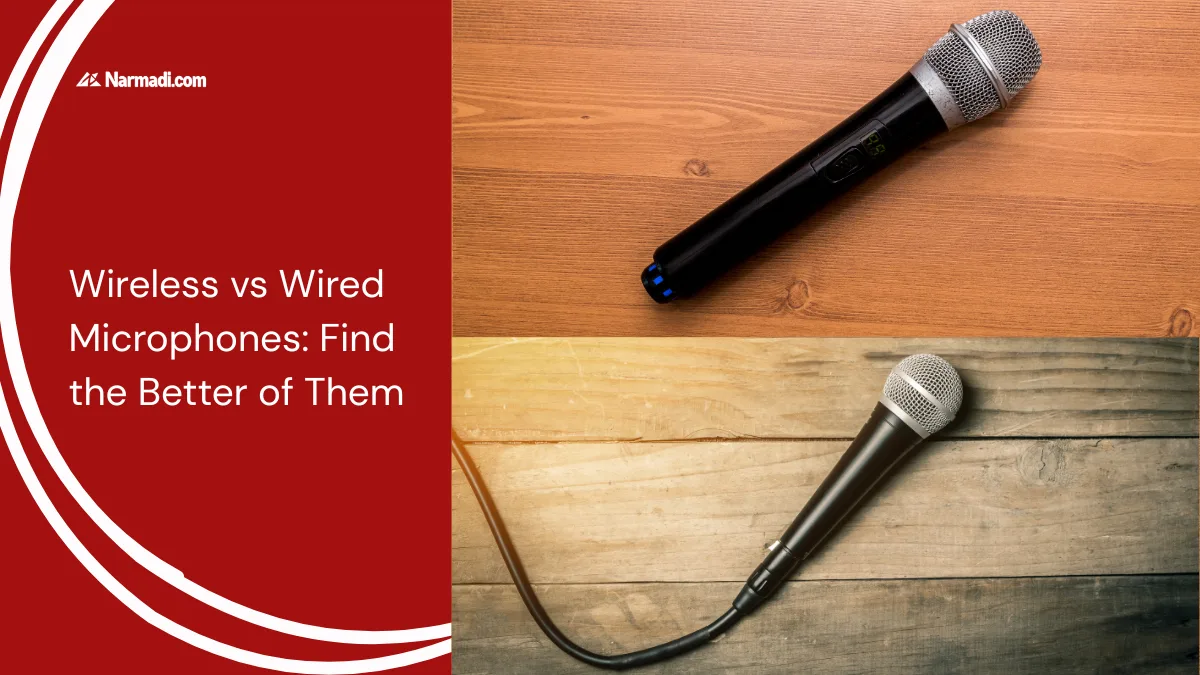
    Wireless vs Wired Microphones: Find the Better of Them

    The choice of microphone depends on the user’s needs. Both wireless and wired microphones can be selected and adapted to the audio environment.

    It’s important to note that both have their own advantages and disadvantages. The comparison covers mobility on stage, price range, audio stability, and regulatory requirements.

    This article will discuss the comparison between wireless and wired microphones, with the hope of helping you determine which one best suits your specific needs.

    Quick Comparison: Wireless vs Wired Microphones

    ParameterWireless MicrophonesWired Microphones
    MobilityTotal freedom of movement without cable restrictionsRestricted by physical cable length
    Sound QualityHigh quality, but subject to RF wave compressionPure, uncompressed signal with zero latency
    Function & PerformanceHighly flexible, but relies on batteries and RF stabilityPlug-and-play, uninterrupted power, 100% signal stability
    DesignClean aesthetics (Handhelds, Lavaliers, Headsets)Traditional, compact, and durable build
    PriceHigher initial cost + ongoing battery expensesAffordable and virtually maintenance-free
    Regulatory ComplianceRequires official Type Approval certification (RF frequencies)No radio frequency certification required

    Full Comparison 

    To explore this comparison further, we will outline the key differences between wireless and wired microphones. This comparison is based on the parameters listed in the table above. 

    1. Mobility

    • Wireless Microphones: This is the main advantage of wireless microphones. You can move freely without being restricted by cables. Ideal for events that require a lot of movement, such as concerts, dynamic presentations, or large conferences.
    • Wired Microphones: The presence of a cable limits your movement, but physical stability is more consistent. Ideal for static setups where a fixed position is a priority.

    2. Sound Quality

    • Wireless Microphones: In general, these devices offer good sound quality. However, some models still experience a decline in quality due to radio signal interference. The good news is that ongoing innovations are helping to narrow the gap with wired audio quality.
    • Wired Microphones: These remain the ideal choice for those who require absolute sound clarity. They are still used for professional studio recordings or live broadcasts. This is because there is no signal latency or compression associated with radio waves.

    3. Function and Performance

    • Wireless Microphones: These devices operate in dynamic environments where there is a risk of radio frequency interference. Their performance also depends on battery life management.
    • Wired Microphones: These devices are suitable for long sessions without having to rely on battery life. Performance is more stable and free from signal issues since transmission occurs directly via a cable. 

    4. Design

    • Wireless Microphones: Designed specifically for mobility and stage aesthetics. These microphones come in several types with different designs to suit various needs, ranging from handheld microphones, lavalier (lapel) microphones, to headset microphones.
    • Wired Microphones: Their design is simpler and more compact. Over time, their design has remained largely unchanged. Although there may be some models with similar designs to wireless microphones, users may find the dangling cables slightly cumbersome. 

    5. Price

    • Wireless Microphones: Given their complex wireless technology and the transmitters and receivers involved, it’s no surprise that these devices come at a higher price. Additionally, there are ongoing maintenance costs, such as periodic battery replacement.
    • Wired Microphones: These are a more economical choice with a more affordable price. You also don’t have to worry about maintenance or battery replacement.

    6. Regulatory Compliance & Certification Requirements

    • Wireless Microphones: Based on our experience, these devices require Type Approval Certification. Any device to be imported and sold in a country will be required to have this certificate as proof of the device’s safety and compliance with technical standards. This is due to the shared use of the radio spectrum, which is subject to different regulations in each country.
    • Wired Microphones: These devices do not require certification, as the audio signal is transmitted via a cable rather than radio waves. The administrative requirements for these devices are simpler.

    Which One Should You Choose?

    If you’re already wondering which option to choose, it all comes down to your decision. What you need to consider are your operational priorities.

    A wireless microphone is the best choice if you need dynamic mobility, performance flexibility, and stage aesthetics. However, you’ll have to accept the consequences of a higher purchase price and regular battery replacements.

    On the other hand, a wired microphone is highly reliable if you need maximum sound quality and zero latency. Plus, you won’t have to spend a lot of money, and you won’t need to replace batteries.

  • Advantages and Disadvantages of Wireless Microphones

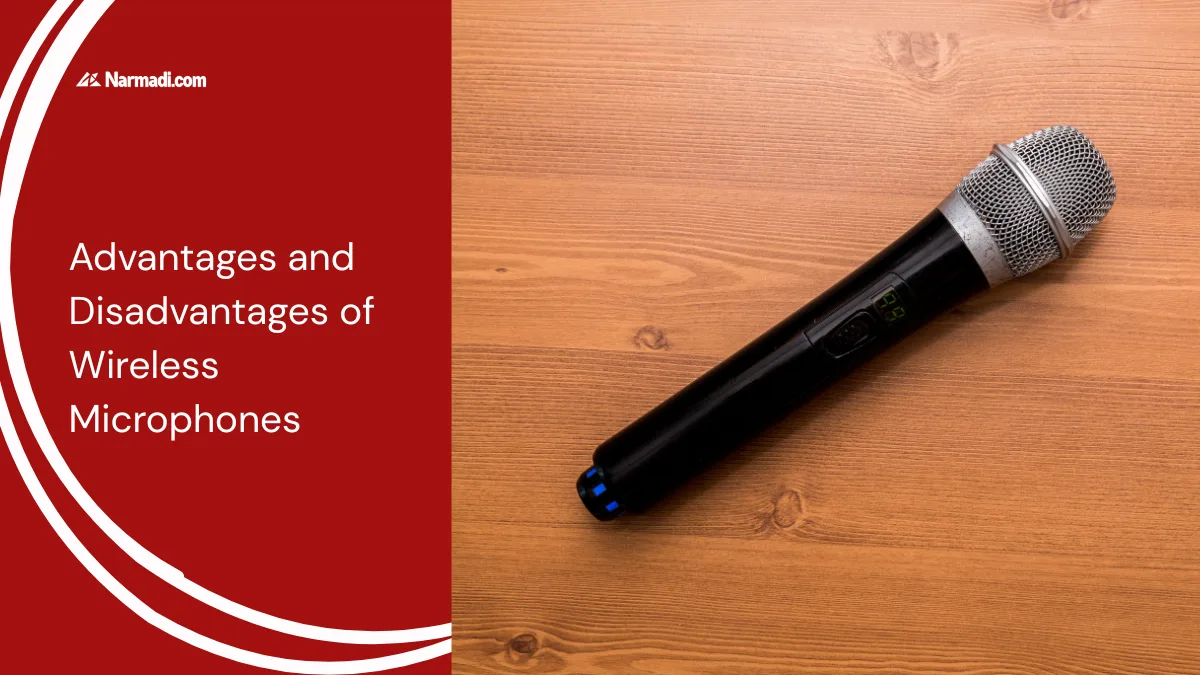
    Advantages and Disadvantages of Wireless Microphones

    Choosing the right microphone is very important. It depends on your needs, such as live performances, broadcasting, or content creation.

    As is commonly known, there are two types of microphones to choose from: wireless and wired. Both, of course, have their own advantages and disadvantages.

    In today’s modern world, wireless microphones are often preferred because they eliminate the hassle of tangled cables. However, that doesn’t mean these devices are without drawbacks.

    To decide whether to choose a wireless microphone, you need to thoroughly weigh all its pros and cons. We’ll help you with that in this article.

    In this article, we’ll explore the main pros and cons of wireless microphones, how they compare to conventional wired systems, and the technical factors you should check before making a purchase.

    Advantages of Wireless Microphones

    1. No Need to Worry About Tangled Cables

    This is the main advantage of wireless microphones. You don’t have to deal with cables that are often a nuisance, both technically and aesthetically. 

    Technically, tangled cables can cause audio interference or connection dropouts. Aesthetically, if not managed properly, cables can look messy and even pose a safety hazard.

    Wireless microphones eliminate all of that. You no longer need to worry about technical issues related to tangled cables. In fact, your appearance will be more pleasing to the eye without the distraction of messy cables.

    2. Greater Freedom of Movement

    Beyond technical and aesthetic considerations, wireless microphones support performers, presenters, or speakers in terms of performance. The absence of cables allows for greater freedom of movement.

    There are no more physical limitations caused by dangling cables. Moreover, potential risks—such as tripping over cables and falling—are eliminated.

    3. Highly Practical Designs

    In terms of design, wireless microphones come in a variety of formats. You can choose the one that best suits your needs.

    Handheld microphones are ideal for vocalists and public speakers. Lavalier microphones are ideal for interviews and recordings without having to hold the microphone.  Meanwhile, headset microphones are the best choice for fitness instructors, active performers, or stage performers.

    4. Greater Range

    Wired systems have range limitations based on the available cable length. This is no longer an issue with wireless microphones.

    There are no cable-length restrictions, allowing them to transmit audio over long distances. Based on our experience handling type approval certifications, we know that high-end wireless systems are capable of operating at distances of up to 100 meters without requiring additional cables.

    Disadvantages of Wireless Microphones

    1. Potential Signal Interference and RF Interference

    While wireless microphones do not experience signal interference caused by tangled cables, the potential for signal interference still exists. This is because wireless microphones rely on the air and the radio frequency (RF) spectrum to transmit audio.

    Interference may occur due to physical obstacles, inclement weather, or a crowded wireless environment. In some outdoor scenarios, the use of a signal booster or a directional antenna may be necessary.

    2. Higher Investment Costs

    This is an undeniable fact. Modern technology is generally more expensive than conventional technology.

    In the case of wireless microphones, the complexity of the transmitter, receiver, and RF technology makes them more expensive than conventional wired microphones. They can be even more expensive for devices that offer lower latency, clearer transmission, and longer battery life.

    3. Battery Management Requirements

    Batteries are key to wireless microphones. This is because they do not receive a continuous power supply from the audio interface. 

    Wireless microphones rely on batteries for power. Therefore, active power monitoring is necessary during use. 

    This is, of course, to ensure the event runs smoothly. You certainly don’t want the event to be disrupted because a microphone shuts off in the middle of the event due to a dead battery.

    Quick Comparison: Wireless vs Wired Microphones

    FeatureWireless MicrophonesWired Microphones
    MobilityHigh (No cable restrictions)Limited by cable length
    Setup & AestheticsClean stage, highly portableRequires cable management
    Signal ReliabilitySubject to RF interference/weather100% stable wired signal
    Power SourceRequires batteries/rechargeablesPowered directly via XLR/Jack
    Price PointHigher initial costMore budget-friendly

    Regulatory Compliance: DJID Certification

    Beyond the pros and cons of wireless microphones, another important factor to consider is device certification. Wireless microphones operate on shared radio frequency bands (such as UHF or 2.4 GHz). 

    Every device that operates on a radio frequency band must undergo standard technical testing and hold official certification. In Indonesia, Type Approval certification is issued by the Directorate General of Digital Infrastructure (DJID).

    This certification ensures that telecommunications devices operate safely and do not cause interference with other devices when in use. Non-certified devices may experience issues during use, such as suboptimal signal strength or frequent disruptions.

  • What is Wireless Microphone? Learn How It Works and Choosing Them

    What is Wireless Microphone? Learn How It Works and Choosing Them

    Wireless microphones are the solution for audio device needs in the modern technological era, which requires high mobility. But do you know how does it work?

    In the demand for practical and flexible audio devices, This device are one of the most sought-after innovations. With this device, you can move anywhere without being limited by cable length.

    Want to know how wireless microphones works? Read this article to the end and get tips on how to choose one.

    What is a Wireless Microphone?

    Get to Know How Wireless Microphones Works and the Tips for Choosing Them - Update 2

    This device is a type of microphone that does not use a cable to connect it to the sound source. Instead, it uses a radio signal to transmit the sound signal from the microphone to the sound source.

    This microphone is typically used for events that require users to move freely, such as concerts, exhibitions, and meetings. This allows you to produce sound without being limited by the length of the cable.

    How it Works?

    How wireless microphones works depend from two main components, namely transmitters and receivers. The transmitter is the part of the microphone that sends sound signals to the receiver. Here’s how it works in more detail:

    • The microphone captures sound waves: When sound occurs, the membrane inside the microphone converts it into an electrical signal.
    • The transmitter converts the electrical signal: The electrical signal from the microphone is converted into a radio frequency (RF) signal, which is then transmitted through an antenna. 
    • The receiver receives the RF signal: The received radio signal is connected to a sound system or recorder. 
    • Sound amplification: The radio signal is converted back into an audio signal and amplified through a speaker or voice recorder.

    Transmitters and receivers typically use radio frequencies to communicate with each other. The radio frequency used must be unique so as not to interfere with other radio devices. Usually, the code used is also unique to prevent eavesdropping on voice signals.

    The Types

    There are several types of microphones to choose from:

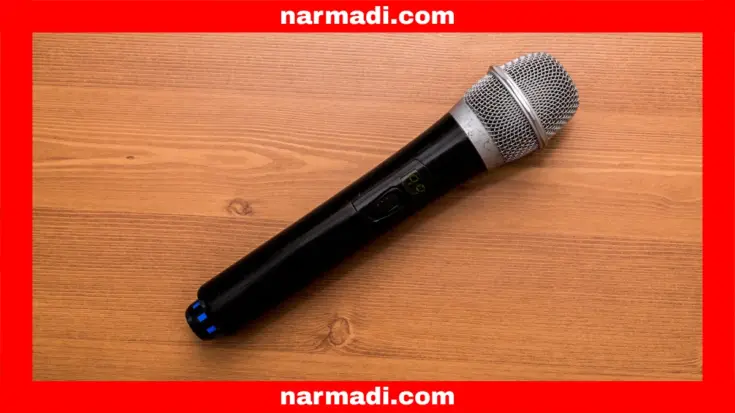
    • Handheld microphones: Microphones that are held in the hand, ideal for singers or speakers.
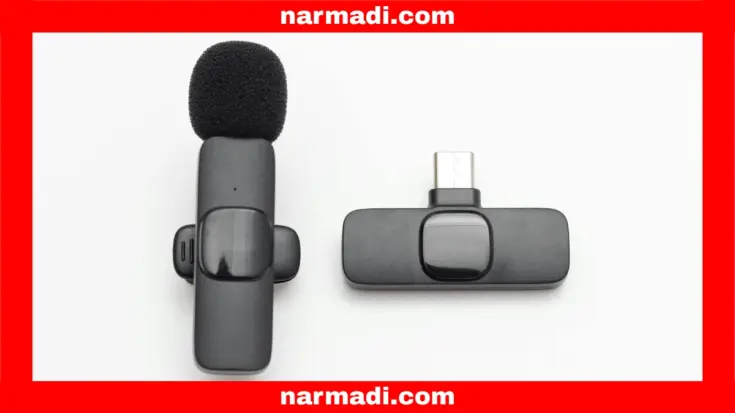
    • Lavalier microphones: Small microphones that can be attached to clothing, suitable for presentations.
    • Headset microphone: Worn on the head, very practical for sports or stage performances.
    • Shotgun microphone: Typically used for film production and creative content.

    Tips for Choosing a Wireless Microphone

    Get to Know How Wireless Microphones Works and the Tips for Choosing Them - Update 3

    Not only knowing how it works, but you also need to know how to get the best microphone. There are several things you need to consider before buying one. Here are some things to consider:

    Sound quality

    Sound quality is the most important thing when using a microphone product. Make sure you choose a microphone that has natural clarity without distortion.

    You can also choose one with frequency response and responsiveness specifications. In addition, to avoid noise, you can choose a mic with low self-noise.

    Range

    Even though it is not tethered by a cable, that does not mean a wireless device has no range limitations. The limitation is the range itself. These microphones have a range starting from 30 meters for entry-level models, 100 meters for standard models, and 1000 meters for professional long-range systems. 

    You can adjust the range for indoor or outdoor use. For indoor use, you may not need too much range. 

    Batteries 

    Since they do not rely on cables, This device requires a battery as a power source. You can check how long the batteries will last before purchasing them. Generally, batteries can last 4 to 12 hours. Also, make sure whether the batteries used are rechargeable or disposable. 

    Choose the type according to your needs 

    As is well known, there are several types of wireless microphones that you can choose from according to your needs. You can choose handheld microphones for singing or public speaking. 

    For those of you who want to look seamless without having to hold a mic, you can choose lavalier microphones because they can be placed on your clothes. For stage performances, you can choose a headset microphone. Meanwhile, for film production, you can use a shotgun microphone.

    Price

    Wireless microphones have a wide range of prices depending on their range and sound quality. You can adjust your microphone to your budget. That way, you will get the best quality within your budget.

    By considering these factors, you can choose a wireless microphone that suits your needs.

    Ultimately, wireless microphones are the best solution for those who need uncompromising sound quality. With this article, we hope that you will not only understand how wireless microphones works but also be able to choose the one that suits your needs.

    For additional information, you should know that every wireless product on the market must meet the regulation and testing standards in every country. Therefore, it is important to ensure you use a certified wireless microphone to ensure safe use. Feel free to contact us to obtain type approval for enter the global market. [UN]

  • Thailand NBTC: New Standards of Wireless Microphones and DECT

    Thailand NBTC: New Standards of Wireless Microphones and DECT

    Thailand’s National Broadcasting and Telecommunications Commission (NBTC) reported an open hearing in arrange to build up the unused specialized standard for Remote Receiver and Digital Enhanced Cordless Telecommunications (DECT).

    On 15 January 2025, NBTC distributed three draft declarations that overhaul specialized guidelines and controls for remote communication devices.

    The three drafts are concerned with specialized benchmarks for remote amplifiers, criteria for utilizing recurrence and radio communication hardware that are authorized to be utilized in common, and specialized measures for DECT technology.

    Key Changes of Thailand NBTC New Standards of Wireless Microphones and DECT

    Thailand NBTC Open Public Hearing New Standards of Wireless Microphones and DECT 2

    1. Specialized Guidelines for Wireless Microphones

    Updates electrical security standards:

    • Clarifies that the prerequisites apply to gadgets not utilizing battery control sources
    • Supplant the IEC 60950-1 standard with the more current, broader IEC 62368-1 standard
    • Overhauls Thai Industrial Standard (TIS) from TIS 1561-2548 to TIS 62368-1-2563

    2. Common Rules for Radio Recurrence and Radio Communication Equipment

    Adds DECT in the 1880-1900 MHz band for common use.

    • Requires a permit to purport, exchange, or make DECT devices.
    • Sets the most extreme EIRP for DECT gadgets on 250 mW.
    • Includes DECT to the list of application sorts and incorporates a reference to the declaration of related specialized standards.

    3. Technical Standards for DECT

    Thailand NBTC Open Public Hearing New Standards of Wireless Microphones and DECT 3

    Sets the most extreme EIRP for DECT gadgets to 250 mW.

    • Indicates the specialized characteristics of DECT transmitters and receivers.
    • Orders compliance with one of the taking-after standards:
      1. ETSI EN 301 406 V2.2.1 or newer
      2. ETSI EN 301 406-1 V3.1.1 or newer
      3. ETSI EN 301 406-2 V3.1.1 or newer
    • Indicates electrical security prerequisites based on either IEC 62368-1 or TIS 62368-1-2563.
    • Requires compliance with the NBTC’s controls for human introduction to radiation from radio communication devices.
    • Classifies DECT gadgets as Sort A for compliance confirmation beneath the NBTC’s declaration on the assessment and certification of media transmission gear and gadget standards.

    The discussion period is characterized from 15th January to 17th March 2025. The thing to note is that this declaration is fair a hearing, the benchmarks have not been reported. It is evaluated that NBTC will make an official declaration around the conclusion of 2025.

    The point that must be mindful of is the unused standard will affect sort endorsement, showcase get to necessities, imports, traditions, exchange, advertise observation, range administration, and specialized standards.

    If you discover a troublesome to lock in New Standards of Wireless Microphones and DECT items in the future, our services are ready to assist your issue. [UN]