Author: Muhammad Rifqi Rihza Rahman

  • The Difference Between Zigbee and LoRaWAN

    The Difference Between Zigbee and LoRaWAN

    Zigbee and LoRaWAN are both technologies that support the IoT (Internet of Things). However, of course, the difference between Zigbee and LoRaWAN is quite noticeable in its application.

    Although they are both wireless technologies, there are differences between Zigbee and LoRaWAN that make the comparison, for example, Zigbee relies on high security while LoRaWAN does not have a high level of security.

    This article will provide more information about the differences between Zigbee and LoRaWAN so that you can help you choose the better protocol for your device.

    Zigbee

    The Difference Between Zigbee and LoRaWAN, Which One is Better 2

    Zigbee is a remotely organized convention for short-distance transmission, which is appropriate for information transmission between an arrangement of electronic components with brief transmission removal, moo transmission rate, and low control utilization.

    It takes its name from the zigzag dance of honeybees because bees always dance with their wings to convey the location of pollen to their companions.

    As a short-range, low-complexity, low-power, low-cost wireless communication technology, Zigbee wireless communication technology is based on the IEEE 802.15.4 wireless standard in networking, security, and application software.

    Zigbee’s wide application in shrewd domestic and Web of Things businesses demonstrates that it is a dependable and productive remote organizing arrangement.

    To offer the assistance you consider, here are Zigbee’s pros and cons:

    Pros

    • Adaptable organized structure: There is more than one Zigbee arranged structure, but due to Zigbee’s brief communication and frail capacity to enter dividers, arranged development is troublesome.
    • High security: Zigbee embraces the AES-128 encryption calculation, which gives three-level security amid information transmission.
    • Brief delay: Brief delay implies Zigbee reacts promptly, more often than not switching from resting mode to working mode inside 15ms. What’s more, one hub can interface to the arrange inside 30ms, more control sparing.
    • Expansive organize capacity: Zigbee organize incorporates up to 255 Zigbee arrange hubs, one is the ace gadget and the other is the slave gadget.

    Cons

    • High cost: Due to the brief communication separate of Zigbee, the taken a toll is tall for applications that require the arrangement of a huge number of hubs. And when something goes off-base, the substitution taken a toll will be high.
    • Limited transmission coverage: The limited coverage means that Zigbee is mainly applied in indoor environments rather than outdoors.
    • Complex deployment: Zigbee wireless networks involve a large number of terminal nodes and gateways, so the network is complex and network expansion is difficult.

    LoRaWAN

    The Difference Between Zigbee and LoRaWAN, Which One is Better 3

    LoRa stands for long-range radio, which is a low-power WAN wireless standard adopted and promoted by the American Semtech Company.

    Based on spread range innovation, it is one of the LPWAN remote communication innovations, performing well in terms of transmission separation and control utilization.

    LoRa has a longer remove than other remote advances for the same control utilization, giving a basic framework with a long range, long battery life, and tall capacity for scaling sensor systems.

    The association scope of LoRa is 3-5 times that of conventional radio recurrence communication. To this day, LoRa has been popularized around the world and steadily connected to the Internet of Things.

    To offer the assistance you consider, here are LoRaWAN’s pros and cons:

    Pros

    • Aces Longer extend: This is one of the fundamental preferences of LoRa innovation. The communication run of LoRa sensors is measured in kilometers.
    • Moo control breaks even with more battery: Moo control utilization implies LoRa gadgets have a longer battery life, which can reach more than 10 a long time of battery life.
    • Extraordinary insusceptibility to impedances: LoRa embraces spread range innovation, which significantly progresses the anti-interference capacity of LoRa remote communication.
    • Simple and quick sending: The LoRa arrange embraces a star topology, handles less transmission capacity, and is simple to extend.

    Cons

    • Not perfect for huge information payloads: LoRa is not perfect for expansive information payloads as it forms less transmission capacity and transmits fewer information payloads.
    • Unlicensed radio systems: LoRaWAN works on unlicensed radio systems, and as LoRa gadgets and organized organizations develop, you may have involvement impedances on that recurrence.
    • Less secure: The LoRa network layer and application layer are generated from the same root key and random numbers and are not isolated from each other.

    So there you have it! The diference between Zigbee and LoRaWAN to be used as a consideration for your smart home devices. In the future, it is hoped that these two technologies can continue to innovate so that each other can complement each other in supporting IoT.

    As additional information, every Zigbee and LoRaWAN product on the market must go through a test and certification process first. If you have difficulty taking care of the test and certification process, our service are ready to help for your products.
  • The Difference Between Zigbee and Z-Wave

    The Difference Between Zigbee and Z-Wave

    A smart home ecosystem is inextricably linked to the wireless communication protocol chosen. Zigbee and Z-Wave are the most prominent and widely used Internet of Things (IoT) standards for smart homes.

    Most people assume that Zigbee and Z-Wave are the same technology. In reality, the two have significant differences, including frequency, range, interoperability, speed, and device availability.

    This article will explain the key differences between Zigbee and Z-Wave. That way, you can determine which protocol is better for smart home automation.

    What is Zigbee?

    Zigbee is a wireless communication protocol that operates based on the IEEE 802.15.4 standard. It is designed for low-power, low-cost applications. 

    Generally, Zigbee operates at a frequency of 2.4 GHz, but Europe and the United States use different frequencies. The 868 MHz frequency is used in Europe, and the 915 MHz frequency is used in the United States.

    Zigbee uses a mesh network to connect devices. This is what allows devices to communicate without needing a direct connection to each other and to extend the signal range without a direct signal from a central device. You might like to read advantages and disadvantages of Zigbee on our previous article.

    What is Z-Wave?

    Z-Wave is a wireless communication protocol based on the ITU G.9959 standard. It is designed to provide greater reliability and security. 

    Compared to Zigbee, Z-Wave operates in a lower frequency band, at 868–908 MHz. However, both use mesh networks to allow devices to connect. 

    The use of a mesh network allows Z-Wave devices to connect and function as repeaters. This is used to extend the signal range. 

    The Difference Between Zigbee and Z-Wave

    Both of these wireless technologies allow you to achieve seamless home automation. At first glance, they appear similar, but Zigbee and Z-Wave have some significant differences. 

    Here are the differences based on key parameters:

    1. Frequency

    • Zigbee: Uses the same frequency band as Wi-Fi, making interference more likely in crowded wireless environments.
    • Z-Wave: Uses a lower frequency band, making it more resistant to Wi-Fi interference.

    2. Range

    • Zigbee: Has a shorter point-to-point range, about 10-20 meters indoors. Coverage can be extended by adding mesh nodes.
    • Z-Wave: Has a much wider range, up to 30-40 meters indoors (up to 100m via mesh). This is achieved through a full mesh network configuration.

    3. Interoperability

    • Zigbee: Interoperability varies, as not all Zigbee devices are directly compatible across brands without a dedicated gateway.
    • Z-Wave: Interoperability is stronger, as all certified Z-Wave devices are fully compatible with one another regardless of the manufacturer.

    4. Speed

    • Zigbee: Offers higher data transmission speeds, up to 250 kbps. It supports more complex communication and faster response times.
    • Z-Wave: Has a slower data transmission speed of 100 kbps. It is ideal for automation tasks that do not require large amounts of data transfer.

    5. Device Availability

    • Zigbee: Has a broader device ecosystem. Supports mesh network capacity of over 65,000 devices.
    • Z-Wave: Has a structured device ecosystem. Supports approximately 232 devices per network hub.

    Quick Comparison: Zigbee vs Z-Wave

    AspectsZigbeeZ-Wave
    FrequencyGenerally uses the 2.4 GHz frequency band868–908 MHz frequency band
    RangeAbout 10-20 meters indoorsUp to 30-40 meters indoors (up to 100m via mesh)
    InteroperabilityVaries by profile (Improving with Zigbee 3.0 / Matter)All certified devices are compatible with each other
    SpeedUp to 250 kbpsOnly 100 kbps
    Device availabilityMore than 65,000 devicesApproximately 232 devices

    Which Protocol is Better for Smart Home Automation?

    Both of these smart home device protocols have their own advantages and disadvantages. Therefore, determining which one is better will depend on your personal operational needs.

    Zigbee is the right choice if you need higher data transmission speeds. With wider device availability and lower costs, it can be used for complex smart lighting setups.

    On the other hand, Z-Wave is a better choice for those who prioritize better interoperability from the start. With better signal penetration and no Wi-Fi interference, it’s ideal for high-security devices such as smart door locks.

    Regulatory Compliance & Regional Frequencies

    Zigbee and Z-Wave are two types of wireless devices that require type approval certification for operation. This certification is required so that the devices can be marketed and used in a country.

    Each country has its own regulations governing the use of these two technologies. They undergo different testing procedures because they operate on different frequencies. 

    With this certification, telecommunications devices are proven to be safe and do not interfere with other devices. Uncertified products are considered illegal and may cause signal interference when used.

  • Understanding the Difference Between Zigbee and Bluetooth for Wireless Networks

    Understanding the Difference Between Zigbee and Bluetooth for Wireless Networks

    Zigbee and Bluetooth are two technologies that support wireless connectivity, but of course the difference between Zigbee and Bluetooth is quite apparent in their applications.

    In a wireless technology that has undergone rapid development, Zigbee and Bluetooth are used for different purposes. The most visible difference between Zigbee and Bluetooth is, of course, the purpose of use.

    The difference between Zigbee and Bluetooth extends to adopting different approaches to network topology.

    This article will provide more information on the differences between Zigbee and Bluetooth so that you can consider using these technologies.

    The Difference Between Zigbee and Bluetooth

    1. Data transfer speed

    Data transfer speed is a key factor that differentiates Zigbee and Bluetooth in the use of applications that require data communication.

    Zigbee has a low to medium data transfer rate, making it suitable for sensor and IoT applications that do not require large data transfers or real-time streaming.

    Bluetooth, on the other hand, has a high data transfer rate, making it ideal for applications that require audio streaming, fast file transfer, and intensive data communication.

    2. Purpose of use

     Although both operate in the realm of wireless technology, ZigBee and Bluetooth have fundamental differences in their intended use:

    ZigBee focuses on wireless sensor networks and IoT. It supports communication between dispersed sensor devices. ZigBee also has the infrastructure for efficient data exchange and the development of complex IoT solutions.

    Meanwhile, Bluetooth is used in personal devices such as headsets, speakers, and smart devices. Although it provides a reliable and easy wireless connection, Bluetooth is ideally used for audio transfer, streaming, and controlling consumer devices.

    3. Range and battery life

    Range and battery life are important aspects of understanding the difference between Zigbee and Bluetooth. Broadly speaking, Zigbee has advantages in network coverage and battery life, whereas Bluetooth has a more limited range and higher power consumption.

    With its wide range, Zigbee is suitable for applications with large area coverage. It also has good power efficiency, making Zigbee ideal for devices with limited battery power.

    While Bluetooth has a more limited range, it is more suitable for applications in close proximity. With higher power consumption, Bluetooth is less efficient for devices with small batteries.

    4. Network topology

    Network topology describes the structure and pattern of relationships between devices in a network. ZigBee and Bluetooth adopt different approaches to network topology.

    ZigBee uses a mesh network topology, which allows each device to communicate directly and act as a router. This also makes the ZigBee network flexible, resilient, and stable.

    Whereas Bluetooth tends to use a piconet topology (master-slave relationship). This network is more suitable for connections between personal devices but is less flexible than a mesh network.

    Here we provide you with a table to give you a better understanding of the difference between Zigbee and Bluetooth:

    ParameterZigbeeBluetooth
    Standard802.15.4802.15.1
    Range10-100 meters10-100 meters
    Operating Frequency868 MHz (Europe), 900-928 MHz (NA), 2.4 GHz(Worldwide)2.4 GHz
    Networking TopologyAd-hoc, peer-to-peer, star, or meshAd-hoc, very small networks
    Complexity (Device and Application Impact)LowHigh
    Power Consumption (Battery Option and Life)Very low (low power is a design goal)Medium
    Security128-bit AES plus application-layer security64- and 128-bit encryption
    Typical Use CasesIndustrial control and monitoring, Smart sensor networks, building automation, Home control and automation, toys, gamesWireless connectivity between BLE devices

    Coexistence and Future Integration in Modern IoT Ecosystems

    A technical challenge posed by the high density of wireless devices in smart homes and industrial environments is managing interference in the 2.4 GHz frequency band. Both Zigbee and Bluetooth aim to reduce signal collisions and maintain the stability of communication links in high-density deployments.

    They attempt to utilize techniques such as Adaptive Frequency Hopping (AFH) and Direct Sequence Spread Spectrum (DSSS). Looking ahead, the line between these two protocols continues to blur as Bluetooth Low Energy (BLE) mesh networks evolve and multiprotocol system-on-chip (SoC) hardware is integrated.

    The specific characteristics of these protocols as applied in real-world applications can be seen in the advantages and disadvantages of Zigbee. This allows you to better highlight its role, alongside Bluetooth, in building an integrated, low-power IoT network.

  • Advantages and Disadvantages of Zigbee on The IoT

    Advantages and Disadvantages of Zigbee on The IoT

    The benefits of Zigbee in supporting IoT (Internet of Things) are undoubted. However, the advantages and disadvantages of Zigbee undeniably still exist in supporting IoT.

    From the continued innovations made by Zigbee, what needs to be considered in using it are the advantages and disadvantages of Zigbee itself in supporting IoT.

    This article will inform you about the advantages and disadvantages of Zigbee in supporting IoT as your consideration in using it.

    The Advantages of Zigbee on the IoT

    The Advantages and Disadvantages of Zigbee on The Internet of Things 2

    Flexible

    The Zigbee technology’s structure is exceptionally versatile. It has a basic establishment preparation and is moreover less costly. This innovation has a brief working period and a long battery life. This moreover comes about in less control consumption.

    Range

    A work organization is what Zigbee is. As a result, Zigbee has an arrange that is expandable. This extension is comparable to work organizing. When compared to a single switch, Wi-Fi, or Bluetooth, it gives more solidness.

    The substance can grow since person hubs act as repeaters or remote switches in this innovation. Also, since the innovation underpins different hubs, it’s simpler to grow the network.

    Monitoring

    The Zigbee innovation is basic to track and control. It is straightforward to keep up with the offer assistance of a inaccessible since it is primarily utilized for domestic apparatuses. There is no central controller input. Loads of this innovation are dispersed equally over the network.

    Suitable For Low-Power Devices

    The Zigbee innovation is perfect for low-power gadgets. It underpins little battery-operated keen gadgets, question labels, sensors, and other comparative gadgets.

    These little gadgets are reasonable for this innovation since it does not require a part of transfer speed. It can moreover supplant Wi-Fi and Bluetooth.

    Support For High-Level Nodes

    Thousands of nodes can be associated utilizing Zigbee innovation. A single arrangement can back up to 65000 nodes.

    This contributes to the transmission range’s proceeded extension. This is conceivable in a huge space, a building with numerous floors. It moreover finds application in a house with different physical divisions.

    The Disadvantages of Zigbee on the IoT

    The Advantages and Disadvantages of Zigbee on The Internet of Things 3

    Compatibility And Security

    The security dangers related with Zigbee innovation are numerous. Deliberateness interferer can result in the misfortune of arrange administrations.

    It may also cause information robbery from a hub or the burglary of a whole hub since it is helpless to interfere. A programmer can too pick up get to to a hub. Programmers can indeed take control of it without authorization. It moreover has issues with compatibility.

    The Rate of Transmission Is Low

    Zigbee is outlined for low-rate information transmissions. Since of this, the innovation utilized in it has a moo bit rate.

    As a result, it has a lower transmission rate than Bluetooth and Wi-Fi. It is too unacceptable for high-speed information transmission.

    Channel Noise

    Network impedances is a common issue with Zigbee innovation. This is due to the network’s stuffing and channel commotion.

    One of the primary reasons for this is since it employments the 2.4 GHz band. This band is moreover utilized by Bluetooth gadgets, cordless phones, microwaves, and other remote gadgets. The innovation is helpless to interference.

    Expensive

    The establishment of Zigbee innovation can be expensive. There are numerous reasons for this. The fetched of Zigbee execution changes with the measure and extend of the organize.

    The accessibility of congruous items and gadgets has an affect on the cost. The fetched of a specific application is moreover affected by the technology’s complexity.

    Those are the advantages and disadvantages of Zigbee in supporting IoT. Now you can consider the advantages and disadvantages of Zigbee applications in the IoT products you use.

    As additional information, every Zigbee product on the market must go through a test and certification process first. If you have difficulty taking care of the test and certification process, you can contact us. [UN]

  • 7 Application of Zigbee that Supports IoT in Daily Life

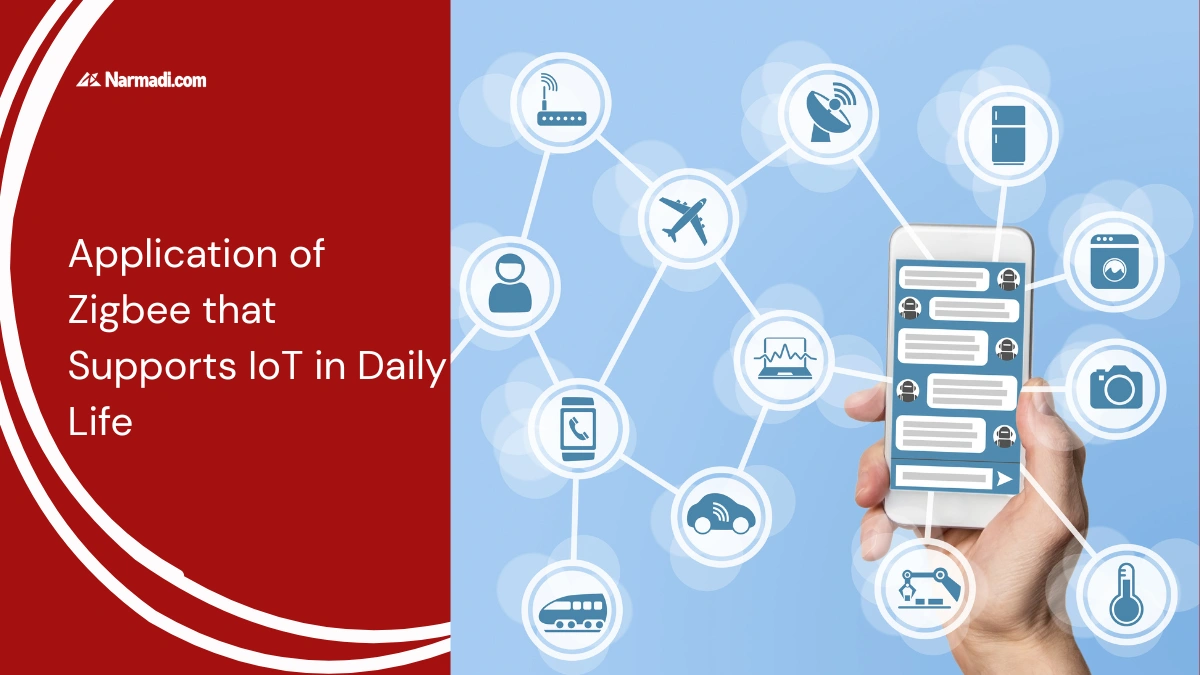
    7 Application of Zigbee that Supports IoT in Daily Life

    Zigbee innovation continues to evolve in support of increasing digitalization. Its application is designed to support the Internet of Things (IoT) in everyday life.

    The most common application of Zigbee with which we are familiar is its use in smart homes. In fact, this technology is utilized in many other areas, ranging from industrial control to medical monitoring.

    In this article, we will share 7 application of Zigbee that support IoT in everyday life.

    Application of Zigbee in Daily Life

    7 Application of Zigbee that Supports IoT in Daily Life - Update 2

    Zigbee-based sensor networks are widely used and can help achieve goals more effectively. Applications of Zigbee technology include smart homes, industrial control, automatic meter reading, medical monitoring, sensor network applications, telecommunications applications, and warehouse logistics systems.

    Here are 7 application of Zigbee in everyday life:

    1. Smart homes

    There are many Zigbee applications in electrical and electronic devices in the home. Examples include lights, televisions, refrigerators, washing machines, computers, air conditioners, and other household appliances.

    The application of Zigbee wireless communication technology in smart home devices can increase user comfort and reduce household operating costs. Additionally, this wireless communication technology also offers a practical anti-signal interference function, thereby reducing signal interference for other users.

    2. Smart apartments

    7 Application of Zigbee that Supports IoT in Daily Life - Update 3

    The application of Zigbee in smart apartments is designed to provide residents with a diverse range of lifestyle options. For example, increasing rent for residents, saving energy, and collecting valuable data on the resident population in return.

    This smart apartment solution is primarily intended for channel dealers and apartment managers. Examples of its use include Zigbee gateway hubs, access control systems, smart locks, thermostats, smart meters, liquid leak sensors, human motion sensors, smart outlets, and smart switches.

    3. Sensor network applications

    Sensor networks are also the focus of current research and have promising applications in various fields. Examples include goods tracking, building monitoring, and environmental protection.

    Zigbee is an ideal technical choice for sensor network applications thanks to its advantages in networking and low power consumption. In addition, sensor systems utilize efficient control, programmed organization, basic maintenance, and reliable quality.

    4. Automatic meter reading

    Zigbee is also used for automatic meter reading. The Zigbee network transmits meter readings as digital signals directly to gas or water providers via sensors.

    The use of Zigbee for meter reading also offers other benefits. For example, gas or water companies can send information directly to users or combine it with energy-saving programs.

    This system can automatically reduce usage speed when it detects that energy is being used too quickly.

    5. Warehouse Logistics System

    7 Application of Zigbee that Supports IoT in Daily Life - Update 4

    With the development of warehousing and logistics systems, the demand for seamless data transmission systems is on the rise. ZigBee is a wireless network that is well-suited for warehousing and logistics systems thanks to its security, reliability, multi-path routing, and other characteristics.

    Among other things, ZigBee is used to overcome the difficulty of ensuring transmission distance with traditional wireless communication protocols. It is typically implemented in places such as warehouses and logistics facilities.

    6. Smart elderly care

    Zigbee is also widely used in the field of smart elderly care. IoT-based elderly care solutions at home enable seniors to live independently for longer.

    This system can monitor the activity patterns of seniors and also protect their safety. The system utilizes non-intrusive wireless sensors, installed throughout the home, to analyze the daily behavior patterns of seniors and detect changes in behavior that may raise concern.

    7. Medical monitoring

    Electronic medical monitoring is the latest research center. Many sensors are attached to a person’s body to measure various physiological parameters, including pulse, blood pressure, and health conditions.

    Monitors and alarms are also installed in hospital wards to monitor physical conditions continuously. If a problem occurs, a response can be made quickly, for example, by notifying hospital staff.

    Through ZigBee technology, these sensors, monitors, and alarms can be connected to form a monitoring network. Because this is wireless technology, no cable connection is required between the sensors, and the person being monitored can move freely.

    That is how the application of Zigbee supports IoT in everyday life. With this, we can gain a deeper understanding of the practical applications of this technology. [UN]

  • 6 Zigbee Variants That Many People Don’t Know Yet

    6 Zigbee Variants That Many People Don’t Know Yet

    Zigbee technology continues to innovate in its development. This makes Zigbee variants develop various kinds.

    Zigbee variants that are commonly introduced may only be Zigbee 3.0 and Zigbee Pro. But it turns out that there are several other Zigbee variants that you may not know about.

    This article will inform you about Zigbee variants from Zigbee 3.0 to variants that many people may not know.

    6 Zigbee Variants

    Get to know the Zigbee Variants That Many People don't Know Yet 2

    Broadly speaking, there are two variants of Zigbee, including Zigbee 3.0 (the latest) and Zigbee Pro. However, there are several other variants designed for specific domains/applications including Zigbee Green Power, Zigbee Smart Energy, Zigbee Light Link, and Zigbee Home Automation.

    Each variant has its unique features and capabilities, but all are designed to work together in a Zigbee network.

    The following will explain the various Zigbee variants:

    1. Zigbee 3.0

    Zigbee 3.0 is the latest version of Zigbee, the wireless communication standard for IoT devices. It is planned to give upgraded highlights and capabilities compared to past forms of Zigbee. Here are some of the key features that Zigbee 3.0 provides:

    • Interoperability across different device types and vendors
    • Enhanced security features such as encryption and authentication
    • Increased network scalability with support for more devices
    • Optimized for low power consumption
    • Improved network performance and reliability

    2. Zigbee green power

    Zigbee Green Power (ZGP) is a special version of Zigbee that is optimized for low power consumption and battery-powered devices and has features that enable energy-efficient communication and security in device networks. Here are some of the key features that Zigbee Green Power provides:

    • Devices can communicate with each other without the need for a central hub or coordinator
    • Less energy with power-saving features such as sleep mode and power-saving design
    • Larger networks more devices and better security features

    3. Zigbee smart energy

    Get to know the Zigbee Variants That Many People don't Know Yet 3

    Zigbee Smart Energy (ZSE) is a specialized version of ZSE designed specifically for use in energy management applications, such as smart meters, load control, and advanced metering infrastructure (AMI). Here are some of the key features that Zigbee Smart Energy provides:

    • Using the Zigbee Smart Energy Application Profile (SEP)
    • Different types of energy management devices work together seamlessly.
    • Has automatic meter reading (AMR) feature
    • Capable of remote disconnection/reconnection and demand response
    • Features advanced security Advanced Encryption Standard (AES) encryption
    • Enhances secure over-the-air (OTA) to protect the network and connected devices

    4. Zigbee light link

    Zigbee Light Link (ZLL) is a special version of Zigbee optimized for lighting applications. Here are some of the key features that Zigbee Light Link provides:

    • Has color and intensity control
    • Features a “touchlink commissioning” setup process
    • Has a “light linking” feature allowing lights to be grouped and controlled together
    • Compatible with other Zigbee devices, can connect with other Zigbee-based ecosystems

    5. Zigbee home automation

    Zigbee Home Automation (ZHA) is a more generalized version of Zigbee and is designed for use in a variety of home automation applications and has features that allow for more complex network topologies and a wider range of devices to be integrated into a single network. Here are some of the main features that Zigbee Home Automation provides:

    • Using Zigbee Application Profiles (ZAPs)
    • ZHA is more power-efficient
    • Suitable for battery-powered devices

    6. Zigbee pro

    Zigbee Pro is designed for use in commercial and industrial applications. Here are some of the key features that Zigbee Pro provides:

    • Greater network capacity
    • Longer battery life
    • High level of security
    • Sophisticated networking
    • Easy device commissioning.

    It is designed to provide robust, scalable, and secure wireless communication solutions for commercial and industrial applications such as building automation, industrial control systems, and smart energy management.

    Those are the various variants of Zigbee that not many people know. By knowing the various variants of Zigbee, it will add to the variety of Zigbee variants.

    As additional information, every Zigbee product on the market must go through a test and certification process first. If you have difficulty taking care of the test and certification process, you can contact us.