
Indonesia, Malaysia, and Singapore met to discuss regulatory updates in the telecommunications industry, at the 2nd Special Trilateral Meeting on Earth Stations In Motion (ESIM) and the 5th Special Trilateral Meeting on Frequency Registration, Coordination Guideline, and Compilation of Agreements, in Jakarta.
Located at the Mercure Hotel, Central Jakarta, the meeting of the three countries in discussing regulatory updates in the telecommunications industry was held for 3 (three) days, starting on July 15- 17, 2025.
In discussing regulatory updates in the telecommunications industry, the Indonesian delegation was represented by Adis Alifiawan as Director of SFR Arrangement, Satellite Orbit and Digital Infrastructure Standardization.
The Malaysian delegation was represented by Mohd Redza Fahlawi Mohd Abdullah as Director II Spectrum Coordination and Policy Department, while the Singapore delegation was represented by Leck Leng Chye as Deputy Director Infocomm Resource and Networks.
Discussion on Regulatory Updates in the Telecommunications Industry
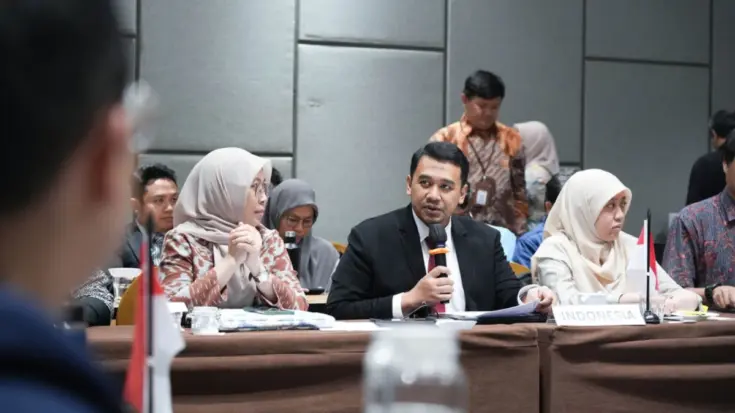
One of the agenda items that was highlighted at the meeting of the three countries discussing regulatory updates in the telecommunications industry was related to the implementation of the use of ESIM in Indonesia.
According to Adis Alifiawan, the development of telecommunications provides greater flexibility and paves the way for ESIM deployment.
“ESIM is a technology that has tremendous potential to improve mobility connectivity and digital services in our country, especially in remote and less developed areas,” Adis said as quoted from the Postel.go.id website.
Adis added that there is a demand for seamless high-capacity broadband connectivity on land, sea and air, requiring the provision of reliable satellite communications on ships, planes, and other mobile platforms.
Mohd Redza Fahlawi Mohd Abdullah, as the Malaysian delegate, admitted that this meeting was a place to learn from neighboring countries regarding their countries’ preparation in making regulatory procedures for ESIM management.
Singapore representative Leck Leng Chye also recognized the important role of ESIM in improving telecommunications connectivity of global communication networks and encouraging innovation in various sectors, such as transportation and emergency response.
This meeting is felt to have a positive impact on all parties by sharing cases experienced to be able to accelerate the growth of telecommunications in each country.
Three Countries Commit to Collaboration
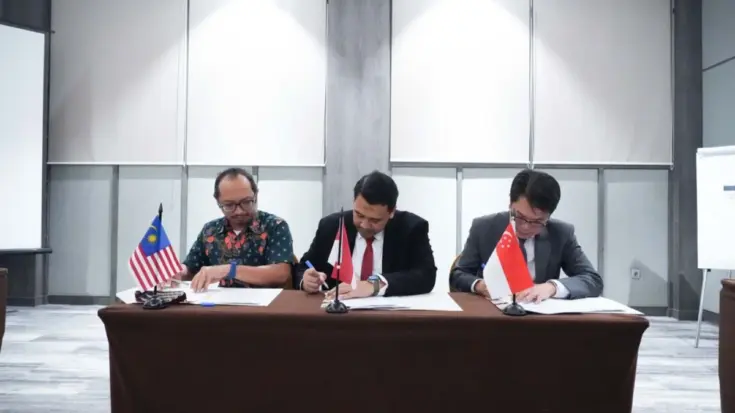
As neighboring countries, Indonesia, Malaysia, and Singapore are committed to collaborating on regulatory updates in the telecommunications industry.
This collaboration will certainly encourage the exchange of each country’s knowledge to address technical and regulatory challenges as deployment continues to evolve to support an integrated digital region.
Each delegation hopes that the outcome of this meeting will support long-term sustainable and closer cooperation between the three countries.
What Is ESIM?
Don’t confuse it with the eSIM in your phone. In this meeting, ESIM stands for Earth Stations In Motion. Simply put, these are satellite earth stations that work while they are moving.
As mentioned above, there is a demand for seamless high-capacity broadband connectivity on land, sea, and air. This requires reliable satellite communications on ships, planes, and other mobile platforms. ESIM is one of the ways to provide it.
Why Neighboring Countries Need to Talk
Ships and planes move across borders. Satellite signals do not stop at the border line either. That is why neighboring countries need to coordinate how frequencies are registered and used.
This is also why the meeting was not only about ESIM. It was also the 5th Special Trilateral Meeting on Frequency Registration, Coordination Guideline, and Compilation of Agreements. Coordination helps each country avoid interference and use the spectrum well.
Key Points From the Meeting
- The meeting was held in Jakarta, at the Mercure Hotel, Central Jakarta, on July 15–17, 2025.
- One highlighted agenda was the implementation of ESIM in Indonesia.
- Indonesia sees ESIM as a technology with great potential for mobility connectivity, especially in remote and less developed areas.
- Malaysia saw the meeting as a place to learn from neighboring countries about preparing ESIM regulatory procedures.
- Singapore recognized the role of ESIM in global communication networks and innovation in sectors such as transportation and emergency response.
- The three countries committed to collaborate on regulatory updates.
What Does It Mean for the Industry?
For companies in satellite and telecommunications, this meeting shows the direction of the region. Three neighboring countries are preparing their rules for ESIM and working together on frequency coordination.
So, if your business deals with satellite communication equipment for ships, aircraft, or vehicles, it is a good idea to follow the regulatory updates from these three countries closely.
Frequently Asked Questions
Who represented Indonesia?
Adis Alifiawan, Director of SFR Arrangement, Satellite Orbit and Digital Infrastructure Standardization.
Who represented Malaysia and Singapore?
Mohd Redza Fahlawi Mohd Abdullah for Malaysia, and Leck Leng Chye for Singapore.
What do the delegations hope for?
Long-term, sustainable, and closer cooperation between the three countries.
Need type approval for your product?
Tell us your product and target countries. A project handler replies with requirements, lead time and cost.
Request a quote