Author: Muhammad Rifqi Rihza Rahman

  • Challenges and Certification Requirements for Wireless Power Transmission in Indonesia

    Challenges and Certification Requirements for Wireless Power Transmission in Indonesia

    Wireless Power Transmission (WPT) in Indonesia has developed very rapidly both in terms of providing infrastructure and supporting technology.

    Wireless Power Transmission is especially useful for devices connected with dangerous cables. Wireless Power Transmission in Indonesia is a fairly new technology, but market demand has seen a significant increase.

    Along with this development, standardization activities have also been carried out. WPT regulations in several countries also continue to be promoted in the hope of harmonization of rules/laws in the implementation of Wireless Power Transmission in everyday life.

    In this article, we will provide information about the challenges of wireless power transmission in Indonesia and certification regulations.

    Challenges of Wireless Power Transmission in Indonesia

    1. Limited transmission range

    At present, WPT technology is generally still effective for short-range applications. In Indonesia, attempts are being made to apply WPT over longer distances, such as in large office spaces or public facilities.

    These trials are not without their problems; they still face challenges relating to efficiency. Energy loss increases as the distance between the power source and the receiver grows. 

    This is what makes it less effective for large areas. To overcome this, additional amplifiers are required to boost the signal.

    2. Potential for interference and environmental impact

    In principle, any use of electromagnetic waves has the potential to cause interference with other electronic devices operating on similar frequencies. WPT also has the potential to cause the same issue.

    In Indonesia, many urban areas are saturated with wireless devices, resulting in a relatively high risk of interference. This needs to be taken into account when devices utilize WPT technology.

    3. Energy efficiency still needs to be improved

    WPT often has lower energy efficiency compared to the use of cables. This means that some energy is lost as heat during the transmission process. Therefore, innovations are needed to improve the energy efficiency of WPT.

    This needs to be taken into account when implementing WPT in Indonesia, given the high electricity tariffs in some regions. For business applications, this will inevitably increase operating costs. 

    4. High implementation costs

    In Indonesia, WPT is currently more commonly used in consumer electronics such as wireless mobile phone chargers. There have not yet been any large-scale implementations.

    This is because implementing WPT requires a relatively expensive investment in equipment compared to traditional wired systems. These high costs act as a barrier to its adoption, particularly for small and medium-sized enterprises.

    DJID Certification for Wireless Power Transmission (WPT) in Indonesia

    In Indonesia, devices equipped with Wireless Power Transmission (WPT) technology are required to undergo type approval certification. This certification is regulated by the DJID (Directorate General of Digital Infrastructure) under the Ministry of Communication and Digital Affairs (KOMDIGI).

    This certification is also known as DJID certification. It is conducted to ensure that WPT devices operate safely and do not interfere with other radio frequencies when in use.

    WPT technical standards were originally outlined in Ministerial Decree No. 260 of 2024 as part of the broader technical standards for Short-Range Devices (SRD). However, effective February 18, 2025, WPT technical standards are governed by KOMDIGI Ministerial Decree No. 46 of 2025.

    In this latest regulation, the technical requirements for WPT devices are set out in greater detail. These include a reorganized and expanded list of permitted frequency allocations, as well as additional provisions regarding antenna use and testing procedures.

    WPT devices will undergo testing to ensure they function in accordance with current requirements. Once the devices have been tested, you will receive a Test Results Report. This report serves as the basis for assessing the devices’ compliance before they are permitted to be distributed in Indonesia.

    Does your company want to market WPT equipment in Indonesia? Narmadi Company is ready to help you navigate the DJID certification process. We will ensure that all your technical and administrative requirements are met and comply with applicable standards.

  • Advantages of Wireless Power Transmission and Application

    Advantages of Wireless Power Transmission and Application

    There is no need to doubt the advantages of Wireless Power Transmission (WPT) because it has been widely applied in various industries. The application of WPT technology is used from the telecommunications industry to the automotive industry.

    Of the many advantages of wireless power transmission, do you know any? Or maybe you have often come into contact with this technology in your work environment or even in everyday life.

    In this article, information will be provided regarding The Advantages of Wireless Power Transmission and The Application on Several Industries.

    The Advantages of Wireless Power Transmission

    The Advantages of Wireless Power Transmission and Its Application on Several Industries 2

    1. Convenience without tables

    One of the main advantages of wireless power transmission is the ease and comfort of the user. There are no annoying or damaged cables, so the device can be charged simply by placing it near the charger.

    This is very beneficial for users of electronic devices such as cellphones, smartwatches, and other IoT devices.

    2. Supports IoT and smart home innovation

    This technology also opens up great opportunities for the development of smart homes and IoT devices. With WPT, smart home devices can be charged automatically without the need for manual interaction. For example, lights or sensors can remain active and charged without cables, which increases efficiency and comfort of use.

    3. Increased security in industrial environments

    In the industrial sector, reducing cables means reducing the risk of accidents such as tripped cables or short circuits. This makes wireless power transmission ideal for environments with a lot of moving equipment or in dangerous places.

    4. Reduces the risk of wear and damage

    With no cables that need to be plugged in and unplugged, the risk of damage to ports and cables is reduced. This also makes WPT technology more environmentally friendly, because it reduces cable waste and devices damaged due to cable use.

    Application of WPT in Various Industries

    The Advantages of Wireless Power Transmission and Its Application on Several Industries 3

    1. Consumer electronics

    WPT was first introduced in consumer devices through wireless charging for cell phones. Now, this technology is expanding to various other devices such as smartwatches, headphones, and electric toothbrushes, providing convenience for everyday users.

    2. Manufacturing and industry

    WPT is used in factories to power automated machines and industrial robots. Without cables, these machines can move more flexibly and reduce the need for maintenance on power cables. This increases production efficiency and reduces the risk of accidents.

    3. Health and Medical

    In the health sector, WPT is starting to be applied to various non-implantable medical equipment that supports patient comfort. For example, wireless charging technology in health monitoring devices and mobility aids such as electric wheelchairs.

    With WPT, the device can be easier to use without the need to frequently change batteries or rely on cables, which can improve patient comfort and mobility.

    4. Automotive

    In the automotive sector, WPT technology is starting to be introduced through the concept of wireless charging for electric vehicles. Although wireless charging stations are not yet widely available in Indonesia, it is hoped that this technology will be adopted in the future.

    Currently, WPT technology is more widely applied to supporting devices, such as portable charging devices and other electric vehicle supporting devices, which make charging easier without cables.

    These are some of the advantages of wireless power transmission and its applications in various industries. From the continued innovation carried out to develop WPT, it is hoped that it can expand to other sectors by applying this technology.

    What needs to be noted is that each WPT product innovation circulating on the market must go through tests and certification from the authority. We are ready to assist you for obtaining Type Approval in your country. [UN]

  • What is Wireless Power Transmission?

    What is Wireless Power Transmission?

    Without realizing it, we have enjoyed many benefits of Wireless Power Transfer (WPT) technology in various fields, from wireless cell phone charging to applications in the industrial and healthcare sectors. But do you know what this technology actually is?

    Since its invention in the 19th century, wireless power transmission technology has continued to evolve and penetrate various aspects of our lives. This technology, which enables the transmission of electrical energy from one point to another without the use of physical cables, also offers benefits in terms of mobility, time efficiency, and global connectivity in our daily lives.

    This article will discuss wireless power transmission in more depth, including its definition, history, benefits, and regulations. This way, you can learn more about this technology.

    What is Wireless Power Transmission?

    Wireless power transmission (WPT) is a technology that transmits electrical energy from a source to a device without the use of physical cables. This technology utilizes electromagnetic fields, electric fields, or magnetic fields to replace physical cables for power transfer.

    The goal is to reduce dependence on cables that are cumbersome, dangerous, or impractical in certain applications. It is commonly used in electronic devices, electric vehicles, and medical equipment.

    A Brief History

    Wireless Power Transmission History, How it Works, and Regulations 2

    Exploring wireless power transmission also requires an understanding of its origins. This technology originated in the 1890s when Tesla began experimenting with wireless energy transmission using the principles of resonant inductive coupling and coils.

    1893 marked the first year of wireless lighting with the illumination of a Geissler lamp. Nine years later, a small flying machine successfully flew 30 meters using energy transmission from space during the St. Louis World’s Fair. Research in Goldstone, California, in 1975 successfully transferred several kilowatts of energy using microwave transmission over a distance of 1 kilometer. 

    In the modern era, researchers at the University of Washington introduced “trickle-charging” technology in 2015. This research discovered the use of WiFi signals capable of powering cameras and sensors without batteries up to a distance of 6 meters. Today, WPT technology has been commercialized in various devices, including phone chargers and electric cars. 

    How Does it Work?

    Wireless Power Transmission History, How it Works, and Regulations 3

    Wireless power transmission technology works based on several principles, namely:

    • Laser-based power transmission: Uses a laser beam directed at a receiver that can convert light energy into electrical energy. This application is designed for devices that require minimal power.
    • Inductive coupling (electromagnetic induction): This technique transfers power through an electromagnetic field between two coils that are close together. It is commonly used in wireless chargers for cell phones and other small devices.
    • Resonant inductive coupling: Uses a matching resonance frequency between the transmitter and receiver to increase power transfer efficiency over longer distances. Commonly used in wireless charging for electric vehicles.
    • Microwave power transmission: Uses microwaves to transmit energy over longer distances. This technology is more common in projects that require long-distance power transmission.

    The Advantages

    Here are the advantages of wireless power transmission:

    • Supports IoT and smart home innovation: Enables smart home devices to charge automatically without requiring manual interaction. 
    • Convenience without cables: There are no cables to get in the way or break, so devices can be charged simply by placing them near the charger.
    • Reduced risk of wear and tear: With no cables to plug in and unplug, the risk of damage to ports and cables is reduced. 
    • Enhanced safety in industrial environments: In industrial settings, wireless power transmission reduces the risk of accidents such as tripping over cables or short circuits.

    Usage Regulations

    Wireless Power Transmission History, How it Works, and Regulations 4

    Wireless Power Transmission that operates within a specific frequency spectrum. In every country, all WiFi-based wireless devices are required to have Radio Frequency (RF) Certification.

    WPT regulations require all radio frequency-based devices to meet certain technical standards before they can be sold in that country. This certification ensures that the product complies with government safety and quality regulations and does not interfere with other communication devices.

    The certification process involves technical testing, including frequency adjustment, safety checks, and verification of compatibility with the surrounding environment. Once testing is complete, products that pass will be listed in a Test Report, confirming that they are safe and ready for sale. This report assures customers that the product meets technical standards and is secure.

    For companies wishing to sell the WPT product, We are ready to assist you on this process. This service includes preparing technical and legal documents, conducting the necessary testing, ensuring regulatory compliance, helping companies streamline the certification process, and providing consumers with confidence in certified products. [UN]

  • Understanding the 5 Types of VoIP Phones

    Understanding the 5 Types of VoIP Phones

    Voice over Internet Protocol (VoIP) phone technology is very useful for business people, especially for small businesses. VoIP phones can be used from wherever employees are, and calls can be transferred seamlessly from office phones to mobile phones.

    VoIP phones can also extend conversations from SMS to voice calls to video conference calls, all in the same application.

    The flexibility, security, and affordability of VoIP phones are a technology to consider for your business. However, you have to adjust the types of VoIP that are suitable for your business.

    In this article, you will be informed about the types of VoIP phones, which can add to your knowledge regarding VoIP.

    5 Types of VoIP Phones

    Voice-over IP technology is very versatile. This technology can be used on traditional desktop phones, USB headsets, conference phones, cell phones, and almost any computer, smartphone, or tablet that can download apps.

    1. Standard desktop phones

    Desktop IP Phones look and function similar to a traditional office phone. The difference is that these phones connect via an Ethernet cable and send voice calls using VoIP.

    VoIP desk phones for business offer the most comprehensive range of features available. Most have an LCD screen that displays important information, including caller ID.

    More advanced models have full-color touch screens for advanced productivity and can handle more than a dozen unique phone lines. Some models are equipped with Bluetooth technology, which allows users to use wireless headsets.

    2. USB phones

    USB Phones are simple devices that can be connected directly to a computer via USB. This device provides an easy and affordable VoIP phone solution for small business users.

    USB phones generally don’t have LCD screens or any advanced features. Call management is usually handled via a computer connected to a USB phone. USB phones are generally used in conjunction with “softphones”, which are explained below.

    3. Softphones

    A softphone is a virtual phone that resides in a software application installed on your computer, smartphone, or tablet. Softphones are not tied to any physical location and therefore provide substantial flexibility.

    Softphones can be used in combination with physical devices, such as headsets or USB phones. Many businesses simply run a softphone on a desktop computer, paired with a USB or Bluetooth headset.

    4. Conference phones

    VoIP conference phones are designed to improve voice quality during conference calls. This device has multiple microphones, and each microphone is electronically balanced to improve call clarity.

    Conference phones are often V- or Y-shaped and have two to three separate audio speakers. Different speakers, combined with digital balancing, ensure that every sound in the room is conveyed clearly.

    5. Video phones

    Video Phones are similar to standard Desktop Phones. The only difference is that these phones have a built-in or USB-based camera along with a larger full-color display that is suitable for video calls.

    With the growing popularity of software-based video calling, many business owners feel a dedicated video phone is unnecessary. However, these phones can still be useful additions to certain industries.

    Is VoIP Secure?

    VoIP calls are generally encrypted when using a reputable provider, protecting conversations from being intercepted the way older analog phone lines could be. Most business-grade VoIP services also support features like secure sign-on and call encryption protocols (such as SRTP) to keep communications private.

    That said, since VoIP runs over the internet, it’s worth choosing a provider with strong security practices and keeping your network protected, just as you would for any other internet-connected business system.

    Comparing the 5 Types of VoIP Phones

    Here’s a quick side-by-side comparison to help you see how these five types stack up against each other:

    TypePortabilityTypical CostBest For
    Standard desktop phoneLow (fixed to desk, wired)Mid to highOffices needing a full-featured, reliable primary phone line
    USB phoneHigh (plug into any computer)LowSmall businesses or remote workers on a tight budget
    SoftphoneVery high (works on any device with the app)Low to none (often included with a VoIP plan)Remote or hybrid teams needing flexibility across devices
    Conference phoneLow (stationary, built for a room)Mid to highMeeting rooms and team calls requiring clear group audio
    Video phoneLow to moderateHighTeams or industries that rely heavily on face-to-face video calls

    Those are the types of VoIP phones that many people aren’t yet familiar with. Understanding the differences between them can help you choose the setup that best fits how your business actually communicates.

  • Advantages and Disadvantages of VoIP Phones and Comparison with Landline Phones

    Advantages and Disadvantages of VoIP Phones and Comparison with Landline Phones

    Voice over Web Convention (VoIP) phones bridge the crevice between phone communication and web communication, giving a smartphone framework for business.

    The benefits of VoIP phones are ample, and with RingCentral’s cordless VoIP phones, it fair got indeed better.

    This article will inform you of the advantages and disadvantages of VoIP Phones, as well as the comparison with Landline Phones.

    Benefits of Using a VoIP Phones

    Advantages and Disadvantages of VoIP Phones and Comparison with Landline Phones 2

    The following are some of the benefits that can be felt from using a VoIP system:

    1. Low communication rates

    Different from conventional telephones in general, the VoIP system allows users to communicate with anyone and anywhere as long as they are connected to an internet connection.

    Currently, there are many internet providers available that offer data packages to access networks with various Mbps capacities and varying prices.

    So, users can have many options for using the network. Apart from that, now public places such as malls, cafes, etc. provide free WiFi that can be accessed by anyone.

    2. Small bandwidth usage

    Before using the VoIP system, users making telephone calls needed large bandwidth so that the voice sent could be heard clearly to the recipient.

    However, with the development of technological systems, VoIP only requires a bandwidth of 8 kbps to make voice contacts.

    In other words, the smaller the bandwidth used, the faster the data transfer process from one device to another.

    3. Interconnection with various devices

    Another advantage is that the VoIP system is not limited to certain devices. All devices that can be connected to the internet such as computers, tablets, smartphones, and so on can be used to make online communication contacts.

    Disadvantages of Using a VoIP Phones

    Advantages and Disadvantages of VoIP Phones and Comparison with Landline Phones 3

    Like technology in general, VoIP certainly has weaknesses in its use. Here are some of the disadvantages:

    1. Rely on the internet network

    VoIP relies on an internet connection to communicate via telephone or video calls. So, when there is an internet connection problem, the data transfer process during the call will also experience problems.

    Common problems that occur due to poor connections are intermittent sound, blurry video images, delays in the response of the receiver or sender, and many more.

    2. Special configuration required

    To build a VoIP system, a device or internet needs to be connected with network address translation (NAT).

    This connecting process requires special configuration carried out by a technician or external VoIP service provider. The goal is so that the system can run as it should.

    Comparison of VoIP Phone with Landline Phones

    AspectsVoIP PhonesLandline Phones
    Connection TypeInternet Protocol (via ethernet, WiFi, mobile data, mobile voice, or direct USB connection to an internet-connected computer)Dedicated copper wire (generally via a private exchange branch phone system)
    Voice QualityHD voice – twice the audio range of traditional landlinesStandard voice
    FeaturesAdvanced features such as intelligent call routing, automated virtual attendants, call recording, video calling, SMS messaging, secure HD audio, integration with apps like Slack and Salesforce, as well as all the standard featuresStandard features such as call waiting, voicemail, and caller ID. Modern systems may have more advanced features, such as conference calling and video support.
    Versatility GreatGreat flexibility. Make and receive calls from virtually any device – and easily transfer calls between devices, wherever you are in the worldLimited flexibility. Make and receive calls from virtually any device – and easily transfer calls between devices, wherever you are in the world Limited flexibility. Calls can only be made while in the office, through phones directly connected to the office PBX system.
    ScalabilityUnlimited scalability, limited only by the strength of the internet connectionLimited by physical cable connections and the addition of additional equipment
    PriceGenerally low cost. Costs will be adjusted according to the number of users and features desired, but are usually lower than landline installation.Generally medium to high cost, especially with advanced features
    Device CompatibilityVoIP-enabled desktop phones, conference phones, computers, tablets, tablets, smartphones, and moreTraditional landline desktop phones

    Despite using VoIP technology in your daily life, you may just know about the advantages and disadvantages of VoIP Phones. Hopefully, this article has helped answer your questions about the advantages and disadvantages of VoIP phones, and also the comparison with landline phones. <UN>.

  • DECT vs WiFi Phones: Which is The Better Phone Revolution

    DECT vs WiFi Phones: Which is The Better Phone Revolution

    DECT (Digital Enhanced Cordless Telecommunications) and WiFi phones are two quite popular choices as mobility phone solutions for businesses. DECT vs WiFi certainly has advantages and disadvantages to consider.

    DECT vs WiFi is one of the technologies that has made a revolution in the development of telephones. Understanding the differences between the two before making a decision is essential.

    In this article, we will delve into the key features of DECT and WiFi phones to help you determine which is the better phone revolution.

    The Meaning of DECT vs WiFi Phones

    DECT vs WiFi Phones Which is The Better Phone Revolution 2

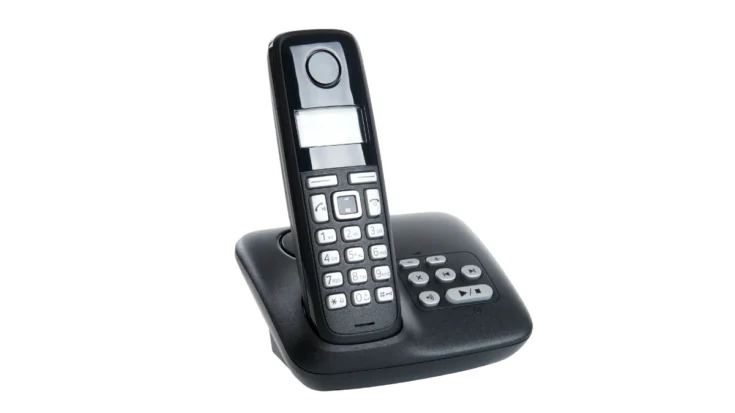
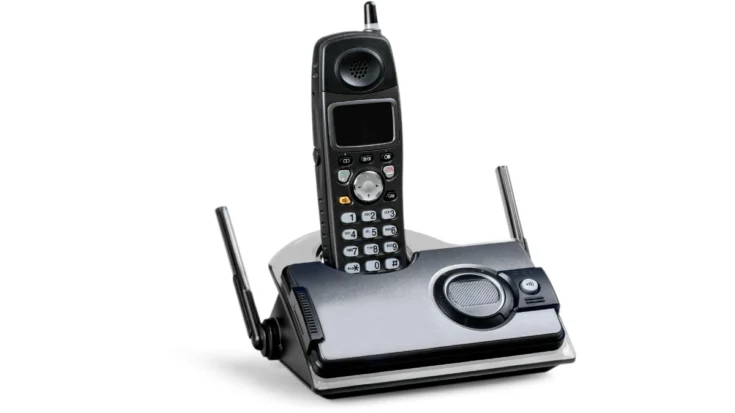
    DECT phones are remote phones that work on a committed recurrence band, giving a solid and secure association for voice calls. These phones are commonly utilized in office situations for their clear sound quality and long-range coverage.

    WiFi phones are gadgets that utilize Voice over Web Convention (VoIP) innovation to make phone calls over a WiFi organize. These phones offer the adaptability of making calls from any area with a WiFi association, making them perfect for businesses with farther or versatile workers.

    Advantages and Disadvantage of DETC vs WiFi phones

    DECT and WiFi phones have different reach, connection stability, transmission technology, radio transmitters, and battery life. You might like to read DECT VS Bluetooth on our previous article.

    The following summarizes the comparison between DECT vs WiFi phones:

    DECTWiFi
    ReachWider coverage in certain areasSusceptible to fluctuations in call quality
    Connection stabilityMore secure and interference-freeSusceptible to interference from other devices
    Transmission technologyDigital wireless technologyUses radio waves
    Radio transmittersRequire fewer radio transmittersRequires more radio transmitters
    Battery lifeLonger battery life than WiFiReduces power faster than DECT

    Advantages of DETC vs WiFi phones

    DECT vs WiFi Phones Which is The Better Phone Revolution 3

    DETC phones

    • Reliability: DECT phones offer a secure and interference-free association, making them perfect for businesses that organize call quality.
    • Range: DECT phones have a longer run than WiFi phones, permitting clients to make calls over huge office spaces.
    • Battery Life: DECT phones have a longer battery life compared to WiFi phones, decreasing the requirement for visit charging.

    WiFi phones

    • Cost-effective: Since WiFi phones utilize the web for calls, they can offer assistance to businesses spare on conventional phone line costs.
    • Mobility: WiFi phones permit clients to make calls from any place with a WiFi association, giving adaptability and convenience.
    • Integration: WiFi phones can effortlessly coordinate with other VoIP administrations, making it less demanding to oversee communication channels.

    Disadvantages of DETC vs WiFi phones

    DECT vs WiFi Phones Which is The Better Phone Revolution 4

    DECT phones

    • Limited Mobility: DECT phones have a confined run compared to WiFi phones, constraining the adaptability of making calls from distinctive locations.
    • Compatibility: DECT phones may not be congruous with other VoIP administrations, requiring extra gear for integration.

    WiFi phones

    • Dependence on WiFi: WiFi phones depend on a steady web association, which can be a challenge in zones with destitute WiFi coverage.
    • Call Quality: The quality of calls on WiFi phones can be influenced by arrange clog or transmission capacity limitations.

    In the end, if you require adaptability and portability for your representatives, WiFi phones may be the perfect choice. On the other hand, if call quality and unwavering quality are foremost, DECT phones may be the way better option.

    What needs to be noted is that each DECT or WiFi phone item innovation circulating on the market must go through tests and certification from the right type of Approval Certification Services for ICT Products in your country. <UN>