
New Zealand Type Approval Summary
New Zealand has become a highly developed and stable telecommunications market. According to Mordor Intelligence, the overall Information and Communication Technology (ICT) sector is significantly larger, driven by cloud investments from global giants such as Microsoft, AWS, and Google.
Although considered an oligopoly and beginning to face disruption from global satellite technology, New Zealand remains an attractive market. With a total land area of approximately 265,700 km² and a population of about 5,475,000, the country remains highly attractive for exploration and investment.
To market ICT devices in New Zealand, manufacturers or importers must be aware of the applicable compliance requirements there. This requirement is known as the “Supplier Declaration of Conformity (SDoC).”
The SDoC is a compliance declaration overseen by Radio Spectrum Management (RSM), a business unit under the Ministry of Business, Innovation, and Employment (MBIE). RSM is responsible for managing the radio spectrum in New Zealand.
In this regard, RSM enforces compliance with licensing requirements. Within the scope of type approval, its responsibilities include monitoring compliance with SDoCs and enforcing regulations.
To enter this advanced ICT market, manufacturers and importers should begin by familiarizing themselves with the SDoC process and requirements. This will make it easier to market their products in New Zealand.
Who Can Be an Applicant?
- Local representative
- Required
Anyone who wants to supply products to the market in New Zealand can become a supplier. A supplier in New Zealand is any person who supplies electrical, electronic or radio products to the market. A supplier can be an importer, distributor, manufacturer, installer, or a seller.
Applicants need to register as a 'responsible supplier' with the Electrical Regulatory Authorities Council (ERAC). ERAC is a national database used by both New Zealand and Australian suppliers. Registering with ERAC gives the applicant the right to use the RCM compliance mark and R-NZ label on the products.
When applicants have registered, they will get a supplier number, a username, and a password for the database. Applicants can use this to log in and register the equipment.
Application Method
- In-country testing
- No
- Paperwork only
- Yes
New Zealand Compliance distinguishes between two product categories: radio products and EMC products. This affects the level of compliance and the testing standards used.
Level of Conformity
Each EMC or Radio product applicant supply will need to meet a pre-defined level of conformity. Conformity requirements are based on the potential radio frequency interference (RFI) of a particular product. The applicant will need to decide which level of conformity applies to the product and conduct compliance actions accordingly.
There are 6 levels of conformity: 1, 2, 3, A1, A2, and A3:
- Levels 1, 2 and 3: For EMC products and a small number of radio products that are harmonised with Australia.
- Levels A1, A2 and A3: For the majority of radio products supplied in the New Zealand market.
When submitting an SDoC, test reports submitted through either laboratories in New Zealand or overseas laboratories that comply with RSM standards are accepted. Testing must be conducted at an ISO 17025-accredited laboratory.
New Zealand applies various international references as technical compliance standards. These references include ETSI EN, IEC, CFR, ANSI/TIA, and AS/NZS (joint Australia/New Zealand standards).
Test reports must be submitted along with other required documents through the RMC portal. From there, RSM will evaluate the SDoC for the submitted device.
Local Testing
In New Zealand, there is a list of accredited laboratories recognized for this process. Applicants can find out which testing laboratories can be used by visiting https://www.ianz.govt.nz/directory/.
Sample Requirements
If testing is conducted at an accredited laboratory in New Zealand, the testing lab requires samples in accordance with European Union (EU) standards. This generally includes one normal sample and one conducted sample (depending on the technology of the product being certified).
Document Requirements
Here’s the Documents Requirement:
- Product description: details of what the product is used for the product’s brand name and model number, a list of modular pieces or accessories packaged with the product, the product’s installation manual.
- Clear photo of the product
- Circuit diagram
- User manual or specifications
- SDoC (contains the product description, and a statement noting that the product complies with the required standards)
- Test report
Submission process
- Submission
- Online
To ensure product compliance in New Zealand, all required documentation must be submitted through the RMC portal. This portal is used to handle all matters related to the import and use of telecommunications and radio communication products, including product compliance.
The portal is also used to process various permits, such as radio permits, spectrum permits, and frequency permits.
Lead Time of Certification
- Lead time
- 2 weeks
Lead time for getting SDoC from RSM is about two weeks from all document requirements being submitted to the RMC portal.
Validity Period
- Validity
- Permanent
Approved products have an indefinite validity period. Suppliers can use the SDoC or Mark as long as there are no modifications to RF specification devices.
Label Requirements
- Product label
- Required
- Approval mark
- Required
- E-labeling
- Allowed
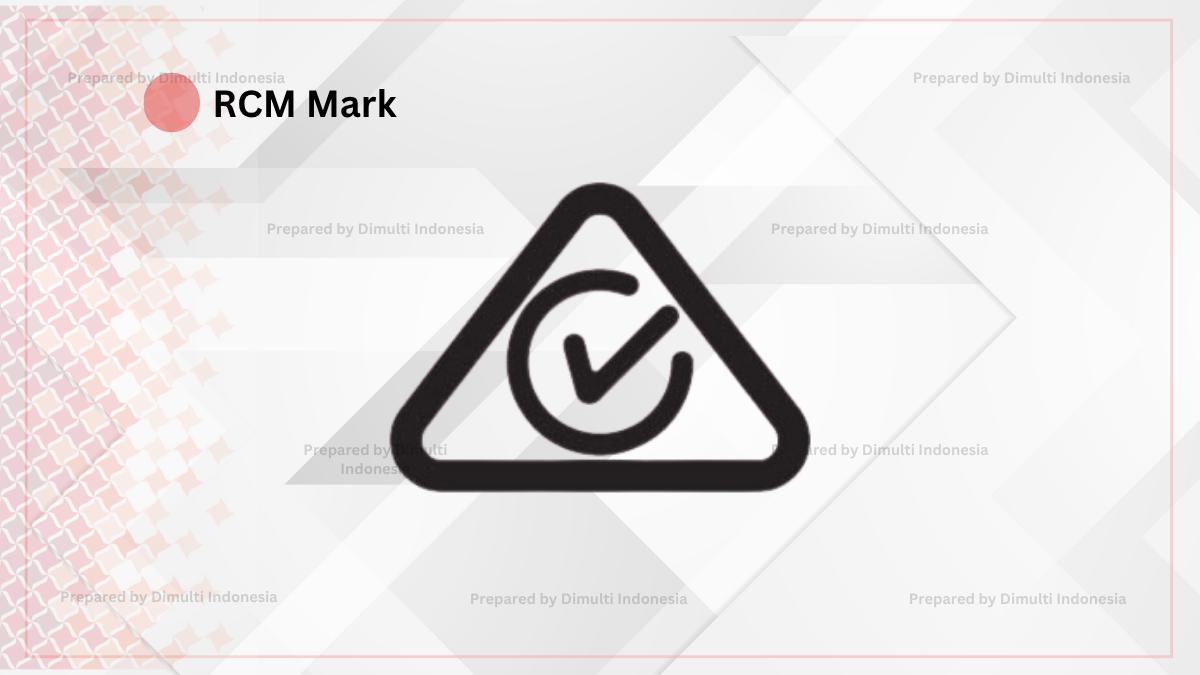
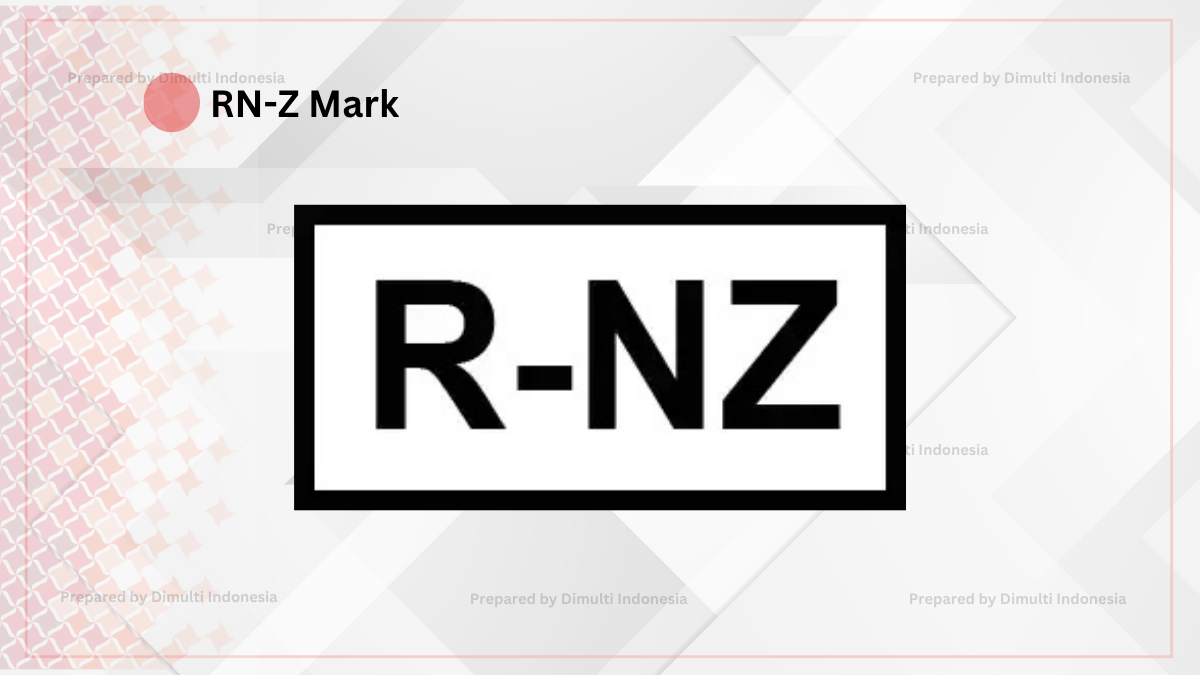
Applicant must label any products you intend to sell with a compliance mark before can supply them to the market. In New Zealand products can be labelled with one of two compliance marks — the Regulatory Compliance Mark (RCM) or the R-NZ.
Labels must be legibly and durably applied on an external surface of a product. If it’s not practical to apply the compliance mark to the product, you can use an alternative labelling method. The compliance mark can be applied to the outer surface of the packaging, the instructions for use, or product’s guarantee or certificates. A label must be no smaller than 3mm in height for the compliance mark or the characters R-NZ.
RCM Mark
For radiocommunications and EMC products where the level of conformity is 1, 2 or 3, applicant need to use the RCM Mark.
RN-Z Mark
When the product is a radio transmitter in a class where the level of conformity is A1, A2 or A3, applicant need to use the R-NZ compliance mark. The R-NZ is a New Zealand-only radio label for radio products not harmonised with Australia.
New Zealand has mutual recognition agreements with Australia and China, which provide some labelling exemptions. Products are exempt from New Zealand labelling requirements if they were supplied in accordance with that agreement.
More on Labeling
If a product has a built-in display, it can be labelled electronically as long as:
- The documentation accompanying the product explains how the compliance mark is applied
- The compliance mark is applied to the product in a way that would make it difficult to delete, modify, or prevent it displaying
Alternative Country Names
Aotearoa, Neuseeland, Nouvelle-Zélande, Novi Zeland, Nuova Zelanda, Nueva Zelanda, Новая Зеландия, ニュージーランド, Nya Zeeland, 뉴질랜드, NZ
Rules by Technology
Allowed, approval required
- Wi-Fi 2.4 GHz
- Wi-Fi 5 GHz
- Wi-Fi 6E (6 GHz)
- Wi-Fi 7
- Bluetooth Classic
- Bluetooth Low Energy
- NFC
- RFID
- UWB
- Zigbee
- Thread
- Z-Wave
- DECT
- 2G/3G
- 4G LTE
- 5G NR
- NB-IoT
- LTE-M
- LoRa / LoRaWAN
- Sigfox
- Automotive radar (77 GHz)
- Short-range radar (24 / 60 GHz)
- GNSS (GPS)
- Satellite communication
- Wireless charging (Qi)
- PMR / Walkie-talkie
- Amateur radio
- Passive Optical Network (PON)
- Wavelength Division Multiplexing (WDM)
- Coaxial Cable
- ISDN
- Ethernet
- VoIP
- IPv6
- Power Line Carrier
- Microwave Link
- Free Space Optics
- Digital Audio Broadcasting (DAB)
Talk to our project handler
Send your product details and we reply with the RSM requirements, lead time and cost.
Request a quote