
Australia Type Approval Summary
Australia is one of the most mature and advanced markets serving as a hub for the telecommunications industry in the Asia-Pacific region. This is due to the rapid adoption of the Internet of Things (IoT), high smartphone penetration, and strong consumer demand for electronics. The market is valued at approximately USD 66.2 billion.
This is what makes Australia an attractive region for marketing your telecommunications products. To access the Australian telecom and wireless markets, you must comply with a regulatory requirement known as “ACMA certification.”
ACMA stands for the Australian Communications and Media Authority. It is an independent government agency that oversees radiocommunications, broadcasting, and telecommunications in Australia.
Obtaining ACMA type approval certification can be challenging. However, there’s no need to worry—Narmadi Company can be your ideal partner. We’ll guide you through the certification process smoothly and in line with your desired goals. Of course, this is all thanks to our experience, expertise, and extensive global network in the field of certification.
Who Can Be an Applicant?
- Local representative
- Required
The applicant for type approval certification must be an Australian local importer. This entity will be responsible for signing the SDoC.
Not only must the entity be a local importer, but it must also be registered on the Australian government portal. Without meeting this requirement, the certification cannot be processed.
Application Method
- In-country testing
- No
- Paperwork only
- Yes
Australia's ACMA certification process differs from most other countries. In fact, it might not even be called a "Type Approval Certification" process. Rather, it's called a Self-Declaration of Conformity (SDoC).
The certification process is achieved through a Self-Declaration of Conformity (SDoC) prepared by the importer. The SDoC serves as proof that the product meets applicable Australian standards.
The Certification Body will issue the Declaration of Conformity after the manufacturer submits RF, EMC, and safety reports. The test reports must be issued by an accredited testing laboratory to the certification body.
Australia benchmarks against European standards, so they generally accept CE-compliant reports. However, FCC test reports are also acceptable.
Afterward, the ACMA will assist the new importer in applying for the Regulatory Compliance Mark (RCM).
Sample Requirements
Australian Type Approval uses the SDoC (Statement of Conformity) or written documentation approach. Applicants are not required to undergo local testing to apply for certification.
Therefore, no samples are required. However, this approach requires applicants to already have RF and EMC test reports issued by an international testing laboratory.
Document Requirements
To obtain the declaration, several document requirements must be met, including:
- Specification sheet
- Product photos
- Device label artwork, including the RCM mark
- User manual
- Full CE RF and safety test reports
- Importer information
In addition to the documents listed above, the importer’s details will also be required. It is important to have the information for the local representative or importer before applying for certification.
This is because the importer will be the signatory on the SDoC certificate issued by the Certification Body.
Submission process
- Submission
- Online
The process of applying for type approval certification in Australia is not handled by a government agency. Instead, it is carried out through a designated LSPRo/CB.
Therefore, the submission of required documents is not done through an official portal. Applicants simply need to submit them online via email to the relevant LSPRo/CB.
Lead Time of Certification
- Lead time
- 5 business days
Australian Type Approval, conducted through a document-based approach, takes only about five business days. The turnaround time for this process is relatively faster than in other countries because local testing is not required.
The process begins when the responsible certification body receives the documents, reviews them, and issues a statement of compliance. This statement serves as proof that the product meets the applicable standards in Australia.
Validity Period
- Validity
- 5 years
In Australia, type approval certification is valid for five years from the date the certificate is issued. This is the period during which manufacturers or importers may import, sell, or use their products.
After 5 years, the certificate must be renewed. The renewal process is the same as the process for applying for a new certificate and requires the same documents.
Label Requirements
- Product label
- Required
- Approval mark
- Required
- E-labeling
- Allowed
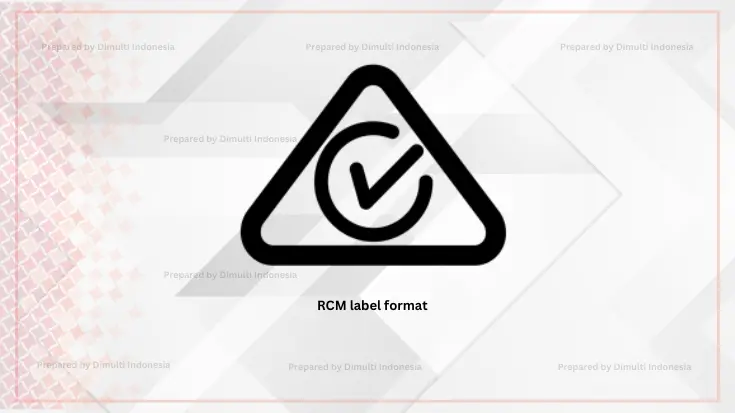
Telecommunications and wireless products in Australia must display the RCM Mark in a visible location on the product. This mark must be printed, affixed as a sticker, or embossed.
However, if the product is too small, an electronic label may be used, provided that instructions on how to access it are included in the packaging.
Please note that the RCM Mark is not limited to telecommunications. It covers safety, EMC, telecommunications, and RF compliance.
Here is an example of the RCM mark:
Product Scope
ACMA certification is not limited to telecommunications products. Rather, this certification is also mandatory for all products that have telecommunications or radio frequency features.
Some examples of products that are required to apply for ACMA certification include:
Rules by Technology
Allowed, approval required
- Wi-Fi 2.4 GHz
- Wi-Fi 5 GHz
- Wi-Fi 6E (6 GHz)
- Wi-Fi 7
- Bluetooth Classic
- Bluetooth Low Energy
- NFC
- RFID
- UWB
- Zigbee
- Thread
- Z-Wave
- DECT
- 2G/3G
- 4G LTE
- 5G NR
- NB-IoT
- LTE-M
- LoRa / LoRaWAN
- Sigfox
- Automotive radar (77 GHz)
- Short-range radar (24 / 60 GHz)
- GNSS (GPS)
- Satellite communication
- Wireless charging (Qi)
- PMR / Walkie-talkie
- Amateur radio
- Passive Optical Network (PON)
- Wavelength Division Multiplexing (WDM)
- Coaxial Cable
- ISDN
- Ethernet
- VoIP
- IPv6
- Power Line Carrier
- Microwave Link
- Free Space Optics
- Digital Audio Broadcasting (DAB)
Talk to our project handler
Send your product details and we reply with the ACMA requirements, lead time and cost.
Request a quote